Complete Guide to Wireless EMS Suits
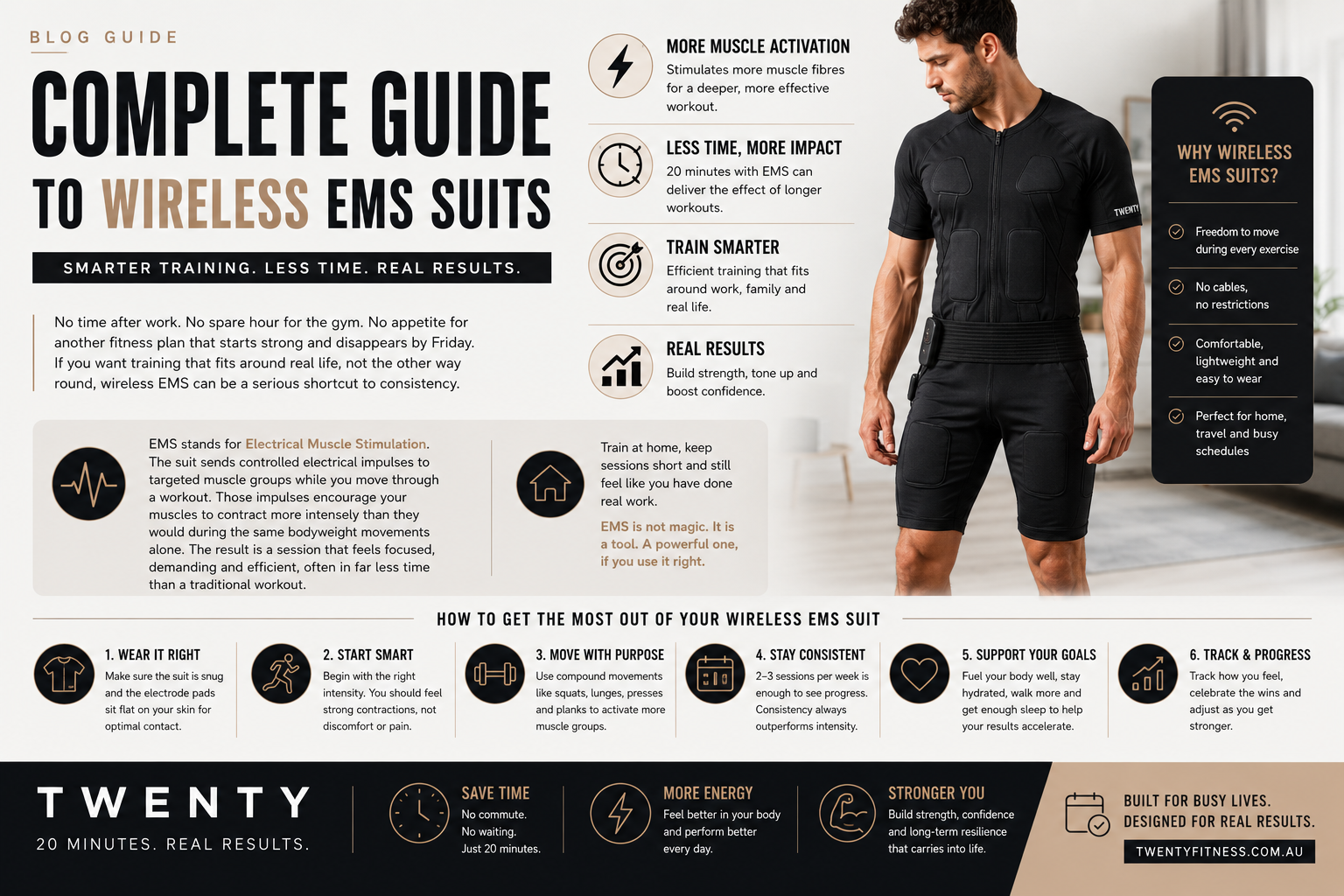
No time after work. No spare hour for the gym. No appetite for another fitness plan that starts strong and disappears by Friday. That is exactly why this complete guide to wireless EMS suits matters. If you want training that fits around real life, not the other way round, wireless EMS can be a serious shortcut to consistency.
EMS stands for Electrical Muscle Stimulation. In simple terms, the suit sends controlled electrical impulses to targeted muscle groups while you move through a workout. Those impulses encourage your muscles to contract more intensely than they would during the same bodyweight movements alone. The result is a session that feels focused, demanding and efficient, often in far less time than a traditional workout.
The appeal is obvious. You can train at home, keep sessions short and still feel like you have done real work. But wireless EMS suits are not magic. They are a tool. A powerful one, if you understand what to expect and how to use it well.
What wireless EMS suits actually do
A wireless EMS suit is a fitted training garment with built-in electrodes placed over major muscle groups such as the legs, glutes, core, chest, back and arms. Once connected to an app or control unit, the suit delivers adjustable impulses while you exercise.
The wireless part matters more than it might seem. Older EMS systems often relied on cables and bulky studio setups. Wireless suits remove much of that friction. You can move more freely, train in your own space and avoid the feeling that you are strapped into a machine. That makes the whole experience more practical for busy people who want fitness to feel doable.
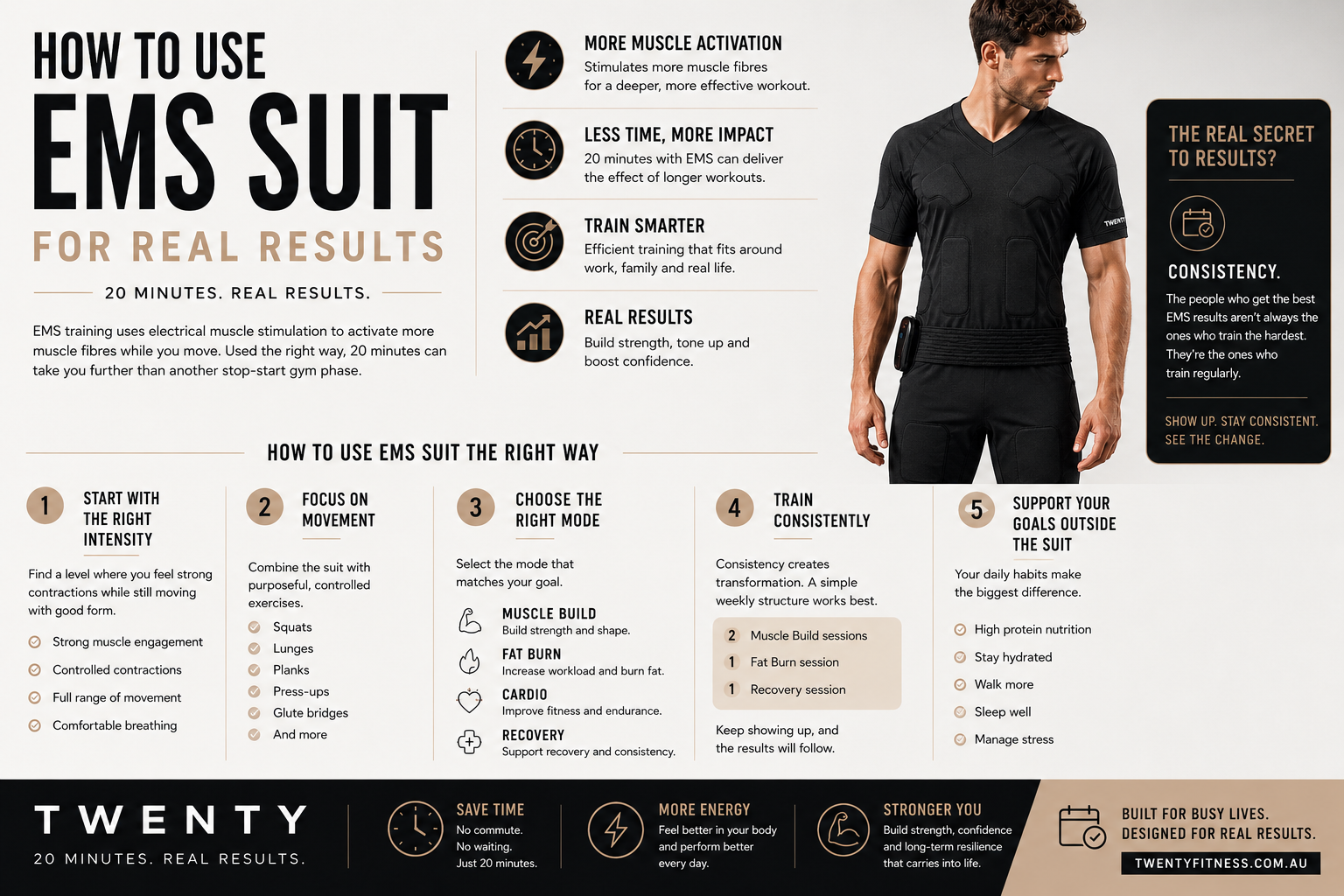
Most modern suits let you control intensity by muscle group and select training modes based on your goal. That could mean a session built around muscle tone, fat burn, cardio conditioning, recovery or even low-intensity mobility work. The best systems turn what sounds technical into something simple - put the suit on, choose your focus, train for 20 minutes, get on with your day.
Complete guide to wireless EMS suits: how they feel in use
The first thing most people want to know is whether EMS hurts. Usually, no. But it does feel unusual if you have never tried it before. You will notice a pulsing or vibrating sensation as the impulses fire, followed by stronger muscle engagement during each movement.
At the right level, it should feel challenging but manageable. Think of it as added demand, not pain. If the intensity is too low, the session may feel underwhelming. Too high, and your technique can suffer because the contractions become distracting. That is why gradual adjustment matters.
There is also a learning curve. Your first session may feel more mentally intense because your body is adapting to a different training stimulus. After a few uses, most people settle into it and get better at matching the right level to the right movement.
Who wireless EMS suits are best for
Wireless EMS suits tend to suit people who are short on time, struggle with consistency or simply want a more structured way to train at home. If you are a working professional trying to fit fitness around meetings, school runs and basic life admin, the efficiency is a major advantage. The same applies if long gym sessions feel unrealistic or if commuting to train is what usually kills your momentum.
They can also work well for people who need more variety to stay engaged. Switching between training modes and targeting different muscle groups can make short sessions feel purposeful rather than repetitive.
That said, they are not automatically the right answer for everyone. If you love lifting heavy in a gym, enjoy endurance sport or want a social training environment, EMS may be better as a complement than a replacement. And if you expect a suit to deliver results while you stay passive, you will be disappointed. You still need movement, effort and consistency.
What results can you realistically expect?
This is where honesty matters. Wireless EMS suits can support fat loss, improved muscle tone, better workout efficiency and stronger training consistency. They may also help some people feel more connected to muscle activation, especially in areas that are easy to neglect during standard home workouts.
But results depend on more than the suit. Frequency, intensity, recovery, sleep and food choices still matter. A 20-minute EMS session can be highly effective, but it cannot fully cancel out a sedentary week and poor habits elsewhere.
The real advantage is leverage. For people who often skip training because they think they need 60 minutes and a full gym setup, EMS lowers the barrier. When workouts become easier to start, results become easier to build. That is often the difference between another failed routine and actual progress.
How to choose the right wireless EMS suit
Not all suits are built the same, and this is where buyers should slow down. A smart purchase is not about flashy claims. It is about fit, control, comfort and usability.
The fit needs to be secure enough for the electrodes to sit properly against the body. If the suit shifts too much, the stimulation can feel inconsistent. Good sizing matters, and so does material quality. You want something that feels supportive, not restrictive.
Control is the next big factor. App-based personalisation is a genuine benefit because it lets you adjust intensity by muscle group rather than treating the body as one setting. That matters if your legs can handle more than your core, or if you want to focus on glutes one day and upper body the next.
Battery life, ease of setup and guided training options also make a difference. If using the suit feels complicated, many people will stop using it. Simplicity wins. The strongest systems are advanced in the background and straightforward in practice.
Complete guide to wireless EMS suits for safe, effective training
The safest way to start is conservatively. Begin with lower intensity than you think you need, especially on larger muscle groups. Let your body learn the sensation and focus first on clean movement. Once you know how the suit feels, you can increase the challenge.
Keep your first sessions short and purposeful. Squats, lunges, hinges, presses, rows and core exercises usually work well because the stimulation adds to movements your body already understands. Random flailing does not become smart training just because the suit is on.
Recovery matters too. EMS can create a strong muscular demand, so more is not always better. Depending on intensity, two to four sessions a week may be enough for many users. It depends on your training history, overall fitness and what else you do alongside it.
Hydration is worth taking seriously. Well-hydrated muscles tend to respond better, and you will generally feel more comfortable during the session. It is a small habit that can improve the whole experience.
Common mistakes that hold people back
The biggest mistake is chasing maximum intensity too soon. More stimulation does not always mean better training. If the setting is so high that your form falls apart, the session becomes less effective.
Another common problem is inconsistency. People get excited, use the suit three times in one week, then leave it untouched for ten days. The same rule applies here as with any fitness method - regular effort beats occasional extremes.
There is also the mindset issue. Some buyers treat EMS like a shortcut that removes the need for discipline. It does not. What it can do is make discipline easier by reducing time, friction and decision fatigue. That is a major advantage, but you still have to show up.
Is a wireless EMS suit worth it?
If your main obstacle is time, convenience or keeping a routine going, a wireless EMS suit can be a very smart investment. It compresses training into a format that feels manageable. For many people, that alone is transformative.
If your goal is elite sport performance in one specific discipline, the answer is more nuanced. You may still benefit from EMS, but as part of a broader plan rather than the whole plan. And if you dislike guided tech or prefer the ritual of the gym, it may not replace what you already enjoy.
For the right person, though, the appeal is hard to ignore. Efficient sessions. Home-friendly training. Personalised intensity. Less faff, more action. That is why brands like TWENTY Fitness have resonated with people who are tired of stop-start fitness and want something that works with modern life, not against it.
A wireless EMS suit will not do the work for you. What it can do is make the work easier to start, easier to repeat and easier to fit into a full day. And when your training finally fits your life, results stop feeling far away.