EMS Workout for Beginners Made Simple
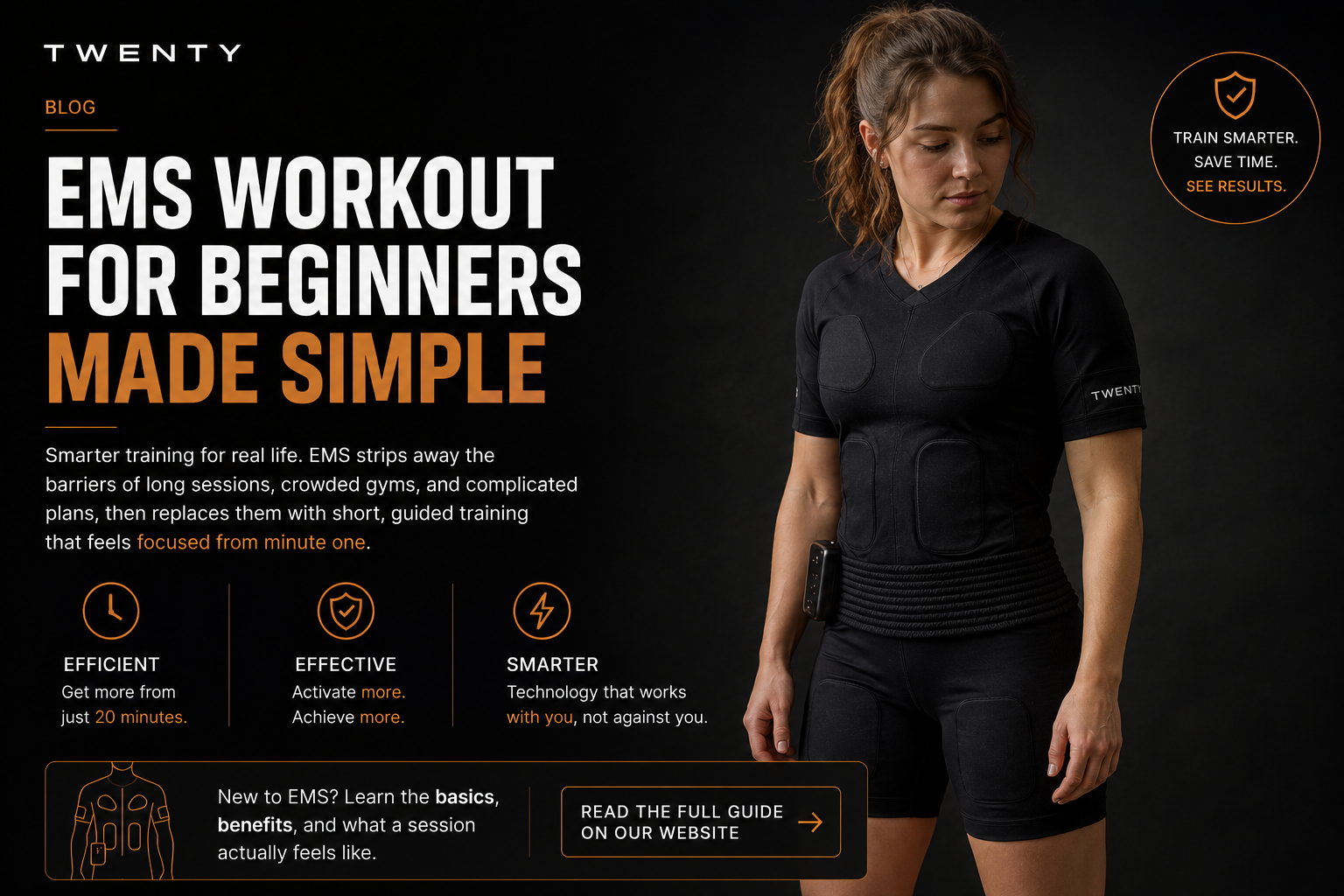
You do not need more motivation. You need a method that fits real life. That is exactly why an ems workout for beginners appeals to so many busy people - it strips away the usual barriers of long sessions, crowded gyms, and complicated plans, then replaces them with short, guided training that feels focused from minute one.
If you are new to EMS, the first thing to know is that it is not magic and it is not a shortcut that asks nothing from you. It is a more efficient way to train. Electrical Muscle Stimulation sends controlled impulses to your muscles while you move through simple exercises, helping more muscle fibres engage at the same time. Done properly, that can mean a tougher session in less time.
What an EMS workout for beginners actually feels like
Most first-timers expect something extreme. The reality is more controlled than dramatic. You put on the suit, adjust the fit, select the muscle groups and intensity, then begin with basic movements. As the impulses start, you feel a pulsing contraction across the targeted areas. It is unusual for the first few minutes, but not painful when set correctly.
Think of it as your body getting clearer instructions. Squats feel more switched on. Lunges demand more control. Core work becomes harder to ignore. Even simple holds can feel surprisingly demanding because the muscles are being prompted to contract more deeply than they would in a standard low-effort session.
That said, beginner intensity matters. More is not better on day one. If you go too hard too early, you are likely to feel wiped out, sore, and reluctant to train again. A good start should feel challenging but manageable, with enough effort to know you have trained and enough control to finish feeling confident.
Why beginners often do well with EMS
The biggest problem for most people is not knowing what to do. It is doing enough, often enough, to create results. Traditional fitness can ask for an hour here, a commute there, and a level of consistency that collides with work, parenting, travel, or plain fatigue. That is where EMS makes sense.
A 20-minute session can deliver serious muscular demand without taking over your day. For beginners, that lower time barrier can be the difference between another false start and a routine that actually sticks. You are far more likely to stay consistent when your workout fits between meetings, school runs, or dinner rather than forcing you to rearrange your life.
There is also a confidence factor. Many newcomers feel intimidated in a gym. With EMS, the structure is simpler. You are not wandering between machines or guessing which plan to follow. You are working through guided movements with adjustable support, which makes the process feel more direct and less overwhelming.
How to start your first EMS session
The best first session is boring in the best possible way. It is controlled, well-paced, and built around learning your response. Start with a short warm-up to raise your body temperature and loosen your joints. Once the suit is fitted properly, begin at a low to moderate intensity across the major muscle groups.
Focus on foundational movements such as squats, split squats, glute bridges, presses, rows, planks, and marching or stepping patterns. These movements are easy to follow and give you a clear sense of how the stimulation changes muscular effort. You do not need fancy exercises. You need clean movement and steady tension.
A beginner session should prioritise rhythm over speed. Move slowly enough to stay in control. Pay attention to posture. Breathe through each contraction. If the stimulation pulls you out of good form, the intensity is too high. Bring it down and continue. Progress comes from repeatable quality, not from proving a point in one session.
How hard should beginners train?
This is where a lot of people get it wrong. Because EMS feels advanced, some assume they should start at a high setting to get faster results. That usually backfires. Your muscles and nervous system need time to adapt to the sensation and workload.
A sensible starting point is an intensity that feels strong but not aggressive. You should be able to speak, keep your posture, and complete the movement pattern without bracing against discomfort. If every pulse makes you grimace, you have gone too far.
It also depends on your training background. If you are returning after a long break, keep the session gentler than someone who already has a regular exercise base. If you are carrying extra fatigue, sleeping badly, or under stress, reduce the intensity again. Smart training is not about chasing maximum effort every time. It is about using the right dose so you can come back and do it again.
How often to do an EMS workout for beginners
For most beginners, one to two sessions per week is enough at the start. That may sound modest, but EMS can be demanding. Your muscles need recovery time, especially early on. Training too frequently can flatten your energy, increase soreness, and reduce the quality of each session.
If you are completely new to exercise, start with one session a week for the first two to three weeks. Once your body adjusts, move to two sessions if recovery feels good. If you already walk regularly, do some strength work, or have a decent fitness base, two sessions per week may be appropriate from the beginning.
On non-EMS days, keep things simple. Walking, mobility work, light cycling, and stretching pair well with EMS and help you stay active without overloading your body. You do not need to stack punishing workouts on top. Better results usually come from a balanced routine you can sustain.
What results can beginners expect?
You can expect to feel the difference before you see the difference. Many people notice better muscle awareness, higher effort in short workouts, and a stronger sense of structure within the first few sessions. That matters because momentum is often the first win. Once training feels doable, consistency improves.
Visible changes depend on your starting point, training frequency, sleep, nutrition, and intensity. Some beginners notice improved tone and posture within a few weeks. Others feel fitter, stronger, and more energised before the mirror shows much. If fat loss is the goal, EMS can support it, but it still works best alongside sensible eating habits and regular movement.
The key is to judge progress honestly. Better energy, fewer skipped workouts, stronger core control, and clothes fitting differently all count. Results are not only about dramatic before-and-after photos. They are also about building a system you can actually live with.
Common beginner mistakes to avoid
The first mistake is treating EMS like a gimmick. If you stand still, rush through setup, or ignore form, you will not get the best from it. The suit supports the workout, but you still need intent and proper movement.
The second mistake is going too hard too soon. High intensity might feel productive in the moment, but if it ruins your recovery, it slows you down. A better approach is gradual progression. Let your body adapt, then increase the challenge over time.
The third mistake is expecting EMS to replace every other healthy habit. It can make training dramatically more efficient, but sleep, food quality, hydration, and daily activity still matter. If your lifestyle is chaotic, EMS helps most when it becomes the anchor that pulls the rest into place.
Getting more from your setup at home
Home training only works when it feels friction-free. Set aside a regular time, charge your equipment, and know your session plan before you start. Remove as many excuses as possible. When the setup is quick, you are far more likely to follow through.
It helps to track how each session felt. Note the intensity, muscle groups, exercises, and recovery the next day. That gives you a clearer picture of what works for your body and when to progress. With an app-controlled system like TWENTY Fitness, that personalisation becomes much easier because you can adjust the session around your goal rather than forcing yourself into one generic routine.
Keep your expectations grounded and your standards high. Not every session will feel brilliant. Some days you will feel strong, others flat. That is normal. What matters is that the process is simple enough to repeat and effective enough to keep earning its place in your week.
Is EMS right for everyone?
Not always. If you have certain medical conditions, implanted electrical devices, or health concerns, you should get proper medical advice before starting. EMS is powerful training technology, which is exactly why it should be used responsibly.
Even without medical limitations, it may not suit someone who hates guided structure or wants long endurance sessions as their main form of exercise. But for busy adults who want strength, tone, energy, and better consistency without losing hours to the gym, it can be a very strong fit.
The best way to approach EMS is not as a trend, but as a tool. Used well, it saves time, sharpens effort, and makes training easier to keep. And if fitness has felt like something you keep restarting, that shift alone can change more than your workouts.