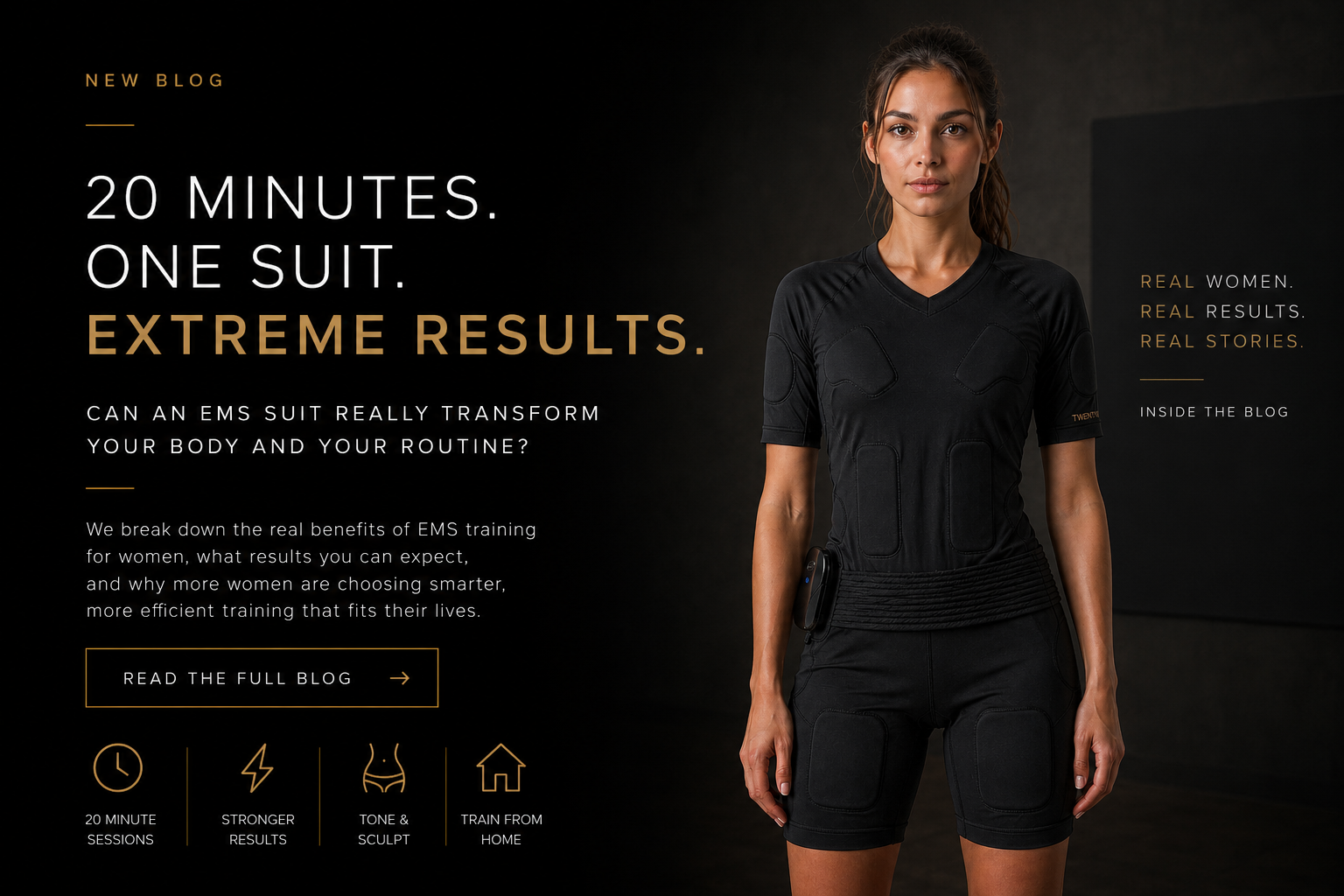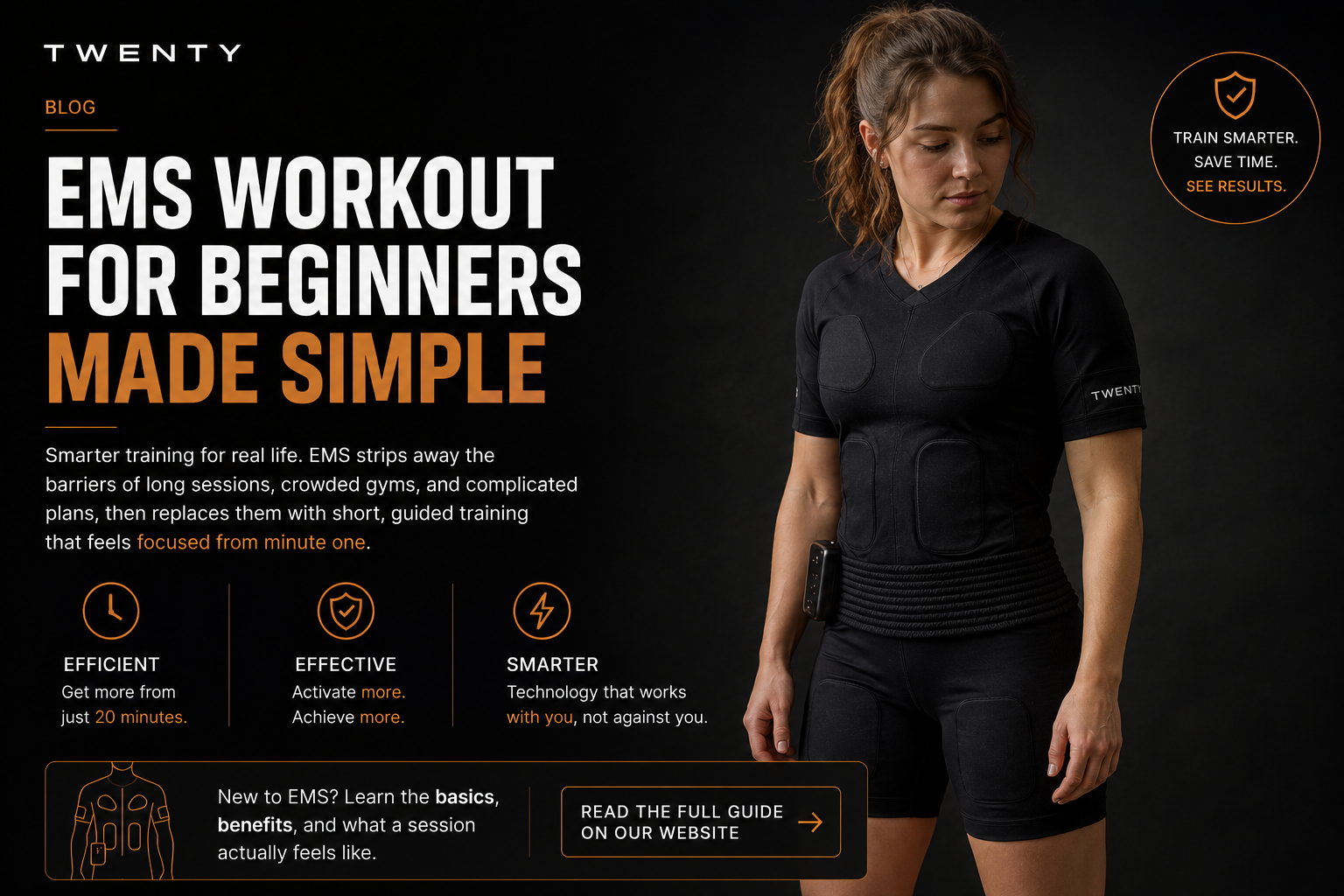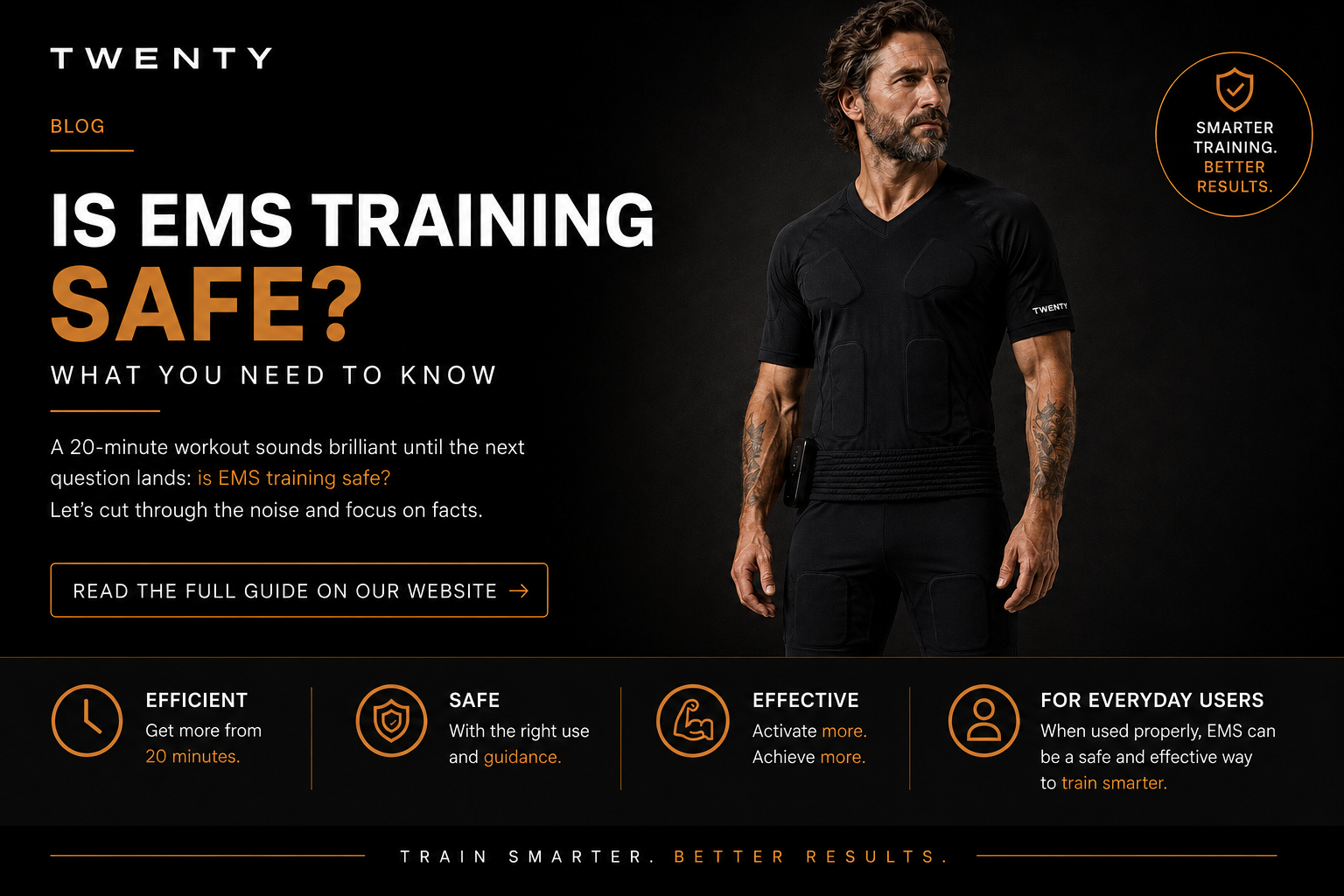
Is EMS Training Safe? What You Need to Know
A 20-minute workout sounds brilliant until the next question lands: is EMS training safe? Fair question. When a suit uses electrical impulses to make your muscles contract, you want facts, not hype.
The short answer is yes, EMS training can be safe for most healthy adults when it is used properly. The catch is that proper use matters. Intensity, session length, recovery, hydration, health conditions, and product quality all shape the experience. Used well, EMS can be an efficient training tool. Used badly, it can feel unpleasant, overly intense, or simply wrong for your body.
Is EMS training safe for everyday users?
For many people, yes. EMS has been used in fitness and rehabilitation settings for years, and the basic principle is straightforward. Electrical impulses stimulate muscle contractions, which can increase training intensity without needing hours in the gym.
That does not mean more is always better. A common mistake is assuming that if some stimulation works, maximum stimulation must work faster. It does not. Smart EMS training is controlled, progressive, and personalised. That is especially true for busy people returning to exercise after a long break, because the muscles can be challenged before your brain fully registers how hard they are working.
For everyday users, safety usually comes down to three things. First, using an EMS system designed for guided home use rather than improvised or low-quality devices. Second, starting at a manageable intensity. Third, respecting recovery instead of stacking session after session because you are chasing quick results.
How EMS works without becoming unsafe
EMS does not replace your body’s natural movement. It adds stimulation to your muscles while you perform exercises or training programmes. That can make a squat, lunge, plank, or cardio movement feel more demanding in less time.
The reason people ask whether EMS is safe is simple: electricity sounds dramatic. In reality, fitness EMS uses controlled impulses created to stimulate muscles, not to shock you. A good setup allows you to adjust intensity by muscle group, so the session feels strong but manageable rather than harsh or uncontrolled.
The biggest safety issue is not the technology itself. It is misuse. If intensity is too high too soon, if sessions are too long, or if you train too often without recovery, you increase the chance of excessive soreness and unnecessary strain.
Who should be more cautious?
This is where nuance matters. EMS is not a blanket yes for everyone.
If you have a pacemaker or another implanted electrical medical device, EMS is generally not appropriate unless a medical professional explicitly says otherwise. The same caution applies if you are pregnant, have epilepsy, significant heart conditions, or certain neurological disorders. People recovering from surgery, injury, or a major illness should get proper medical advice before starting.
There is also a practical point for complete beginners. If you have done little or no exercise for months, your safest route is not to prove how tough you are on day one. It is to build gradually. EMS can help you regain consistency, but consistency only works when your body can recover and come back again.
How to use EMS safely and still get results
The safest approach is not the slowest one. It is the one you can actually sustain.
Start with conservative intensity. You should feel the muscles working clearly, but you should still be in control of the movement. If the sensation makes your form fall apart, the setting is too high. Results come from repeatable training, not a single heroic session.
Keep session length within the manufacturer’s guidance. With EMS, efficiency is the whole point. You do not need marathon workouts to make it effective. In fact, trying to stretch a short, focused format into something longer can undermine both safety and recovery.
Rest matters. If your muscles are still heavily fatigued, give them time before the next hard session. That is not slacking. That is how progress works.
Hydration matters as well. Well-hydrated muscles and sensible recovery habits support a better training experience. It is not glamorous advice, but it is the sort that keeps people consistent enough to see change.
And pay attention to fit. A well-designed suit should sit properly against the body so stimulation feels even and controllable. Poor contact or awkward placement can make the session less comfortable and less effective.
Is EMS training safe compared with traditional workouts?
This is the wrong comparison if it turns into a fight between methods. Traditional training is not automatically safer, and EMS is not automatically riskier. Both depend on programming, technique, recovery, and the individual using them.
A rushed gym session with poor form and too much weight can go wrong. So can an EMS session with intensity turned up far beyond your tolerance. On the other hand, both can be safe and effective when used intelligently.
For busy adults, EMS can actually improve consistency because it removes some of the barriers that cause fitness routines to collapse. Less time, more structure, and guided progression can reduce the chaos that often leads people to overdo one week and skip the next two. That consistency has its own value.
Signs you are training at the right level
Safe EMS training should feel challenging, focused, and controlled. You should notice strong muscle engagement, but you should still be able to breathe steadily, move with intention, and finish the session feeling worked rather than flattened.
Afterwards, some fatigue and soreness can be expected, especially in the early phase. What you do not want is a recovery curve so brutal that daily life becomes difficult. If walking downstairs feels like a crisis, your setup likely needs adjusting.
The right level is the one that allows you to train again in a sensible rhythm. That is where transformation happens - not in one punishing workout, but in a pattern your body can handle.
Why guidance matters with home EMS
Home training is convenient, but convenience should not mean guesswork. The best EMS systems make safety easier by giving you control over intensity, structure over your sessions, and enough guidance to avoid the classic beginner errors.
That is one reason app-led systems can be useful. They help turn advanced training technology into something practical for everyday life. Instead of winging it, you follow a format, adjust settings with purpose, and build confidence as you go.
TWENTY Fitness is built around that idea. Efficient sessions, guided control, and a setup that fits real schedules. That does not remove the need for common sense, but it does make common sense easier to follow.
The honest answer
So, is EMS training safe? Yes, for most healthy adults it can be - when the equipment is well designed, the intensity is sensible, and the user respects recovery and personal limits.
It is not magic, and it is not reckless by default. It is a tool. Use it with patience, pay attention to your body, and let progress build properly. The goal is not to survive your workout. The goal is to feel stronger, more confident, and more in control every time you put the suit on.