Best Home Fitness Tech for Weight Loss
You do not need another abandoned workout app, a folding treadmill turned clothes rail, or a plan that asks for 90 spare minutes you simply do not have. The best home fitness tech for weight loss works because it removes friction. It makes training easier to start, easier to stick with, and far more realistic when your diary is already full.
That matters more than most people realise. Weight loss is rarely blocked by lack of information. Most adults already know they should move more, train consistently, and eat better. The real problem is time, energy, and staying on track long enough to see change. Good fitness tech does not just count reps or show graphs. It helps you train when life is busy, messy, and unpredictable.
What home fitness tech for weight loss actually needs to do
If a piece of kit is going to earn space in your home, it needs to do more than look impressive. For weight loss, the winning tools usually share three qualities. They save time, they create structure, and they keep you engaged long enough to build momentum.
Saving time is obvious, but often misunderstood. A machine that promises results is not useful if setup takes ages, the workout library is confusing, or the sessions are longer than your lunch break. Structure matters because decision fatigue is real. If your tech tells you exactly what to do next, you are much more likely to do it. Engagement matters because boredom kills consistency faster than hard work ever will.
This is why flashy features are not always the deciding factor. A smart mirror with endless classes might be perfect for one person and completely overwhelming for another. A simple but guided system that gets used four times a week will beat a premium machine gathering dust every time.
The main types of home fitness tech for weight loss
There is no single best option for everyone. It depends on your goal, your schedule, your training style, and how much space and patience you have.
Cardio machines
Treadmills, exercise bikes, rowing machines and cross trainers still have a place. They are familiar, straightforward, and effective for calorie burn. If you enjoy steady-state cardio or prefer switching off mentally while you move, they can work well.
The trade-off is time. Cardio equipment often delivers best results when used regularly for longer sessions, and that can be hard to maintain. It also tends to take up more room and cost more than people expect once you move beyond entry-level models.
Wearables and smart trackers
Watches, heart rate straps and fitness bands can be helpful, especially if data motivates you. They make progress visible. Step targets, activity reminders and sleep tracking can all support better habits around weight loss.
Still, wearables are support tools, not the engine. A tracker can tell you that you are inactive. It cannot train for you. For some people, too much data becomes noise. If every missed target feels like failure, motivation drops quickly.
Interactive workout platforms
These include app-led strength training, on-demand classes, smart mirrors and connected home gyms. Their biggest advantage is guidance. You press play and follow along. That removes hesitation and gives your workouts a clear beginning and end.
The challenge is fit. Some platforms are brilliant for people who love variety and coaching. Others become another subscription you forget about. Results depend on whether the format suits your routine, not whether the production quality looks expensive.
Recovery and body feedback devices
Massage guns, smart scales and body composition tools can help you monitor progress and manage recovery. They are useful, but they are secondary. They support a weight-loss plan rather than drive it.
A smart scale, for example, can show trends over time, but it cannot fix inconsistency. If your core training setup is weak, recovery gadgets will not make up the difference.
EMS training systems
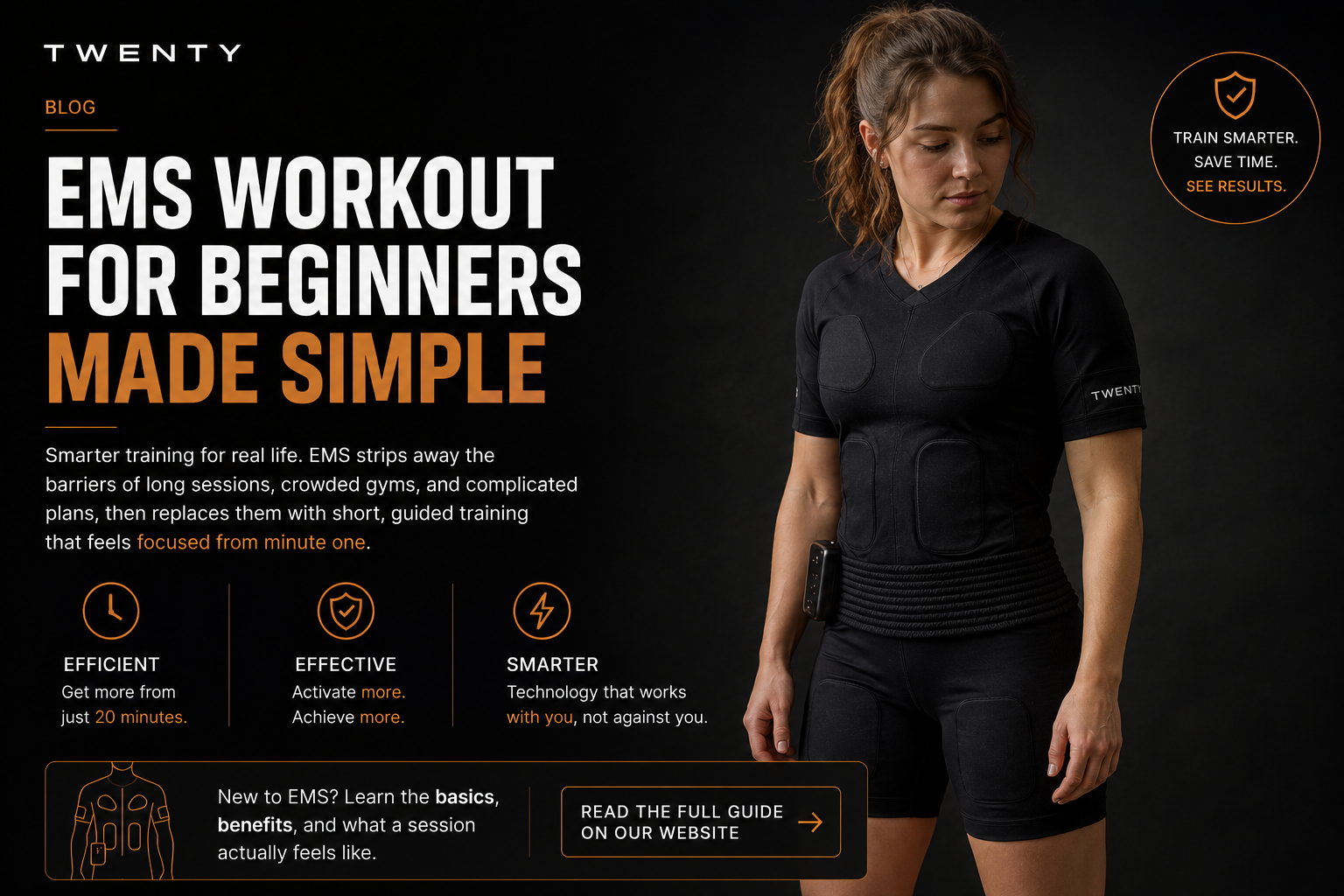
This is where home fitness tech starts to feel genuinely different. EMS, or Electrical Muscle Stimulation, adds targeted muscle activation to exercise through wearable technology. In practical terms, it means you can make short sessions work harder by engaging multiple muscle groups at once.
For busy adults, that matters. Instead of trying to carve out long gym visits, you can complete guided sessions at home in a fraction of the time. The appeal is not magic. It is efficiency. When your schedule is packed, efficient training is often the difference between staying consistent and giving up again.
Why efficiency matters more than intensity
A lot of weight-loss advice still assumes you have endless willpower and a flexible calendar. Most people do not. They have work, family, errands, travel, bad sleep, and the usual daily chaos. That is why the best tech is not always the most extreme. It is the one you will keep using.
Twenty hard minutes done consistently will usually beat occasional heroic workouts that leave you sore, drained, and ready to quit. This is especially true if you are restarting after a long break or trying to fit training around a demanding routine.
That is one reason EMS systems have gained attention. They are designed around output per minute. You are not spending ages moving between machines or guessing what to do next. You are following a guided session with technology that increases the training demand across key muscle groups. For people who feel they never have enough time, that can be a serious shift.
How to choose the right home fitness tech for weight loss
Start with honesty, not ambition. The right question is not, what looks most impressive? It is, what will fit my real week?
If you enjoy long runs and have space for a treadmill, a cardio machine may be a strong choice. If you need accountability and enjoy coached sessions, an interactive platform could suit you better. If your biggest barrier is time, then high-efficiency training tech deserves a proper look.
Think about setup as well. The easier it is to begin, the better your chances of staying consistent. Complicated equipment loses appeal quickly after the first burst of motivation. Guided systems, app control and simple progression matter because they reduce mental effort.
You should also consider physical impact. Some people love high-impact cardio. Others need lower-impact options because of joint strain, fatigue, or previous injuries. Weight loss does not require punishment. It requires a method you can repeat.
Where EMS fits into a modern weight-loss routine
EMS is not a replacement for sensible eating, daily movement, or sleep. Nothing is. But it can make your training side far more practical.
A well-designed EMS system lets you train at home with targeted intensity, guided modes and a session length that actually fits adult life. That is why it appeals to professionals, parents, and anyone who is tired of the all-or-nothing cycle. You do not need a full gym setup. You need a plan you will follow next Tuesday when work runs late and motivation is low.
TWENTY Fitness is built around that exact reality. The idea is simple: make advanced training feel doable at home, keep it guided, and make 20 minutes count. That combination of wearable hardware and app-based control solves a problem many people have struggled with for years. Not lack of effort. Lack of a system that works in real life.
There is still a learning curve, as with any newer technology. You need to get comfortable with the settings, understand intensity, and use it properly. But once that becomes part of your routine, the convenience is hard to ignore.
The biggest mistake people make with fitness tech
They buy for motivation instead of behaviour.
Motivation is useful at the start, but behaviour decides the outcome. If your chosen device relies on perfect energy, lots of spare time, and constant enthusiasm, it is probably the wrong tool. Good home fitness tech for weight loss supports you on ordinary days, not just your most motivated ones.
That is why short, guided, efficient systems tend to win with busy adults. They lower the barrier to entry. You do not have to psych yourself up for a major event. You just get started.
And once results begin to show, motivation usually follows. More energy. Better routine. Clothes fitting differently. A stronger sense that you are back in control. Those changes matter because they keep the cycle moving in the right direction.
The smartest fitness technology does not promise perfection. It helps you stop stopping. Choose the option that respects your time, fits your life, and gives you a reason to come back tomorrow.