How to Use EMS Suit for Real Results
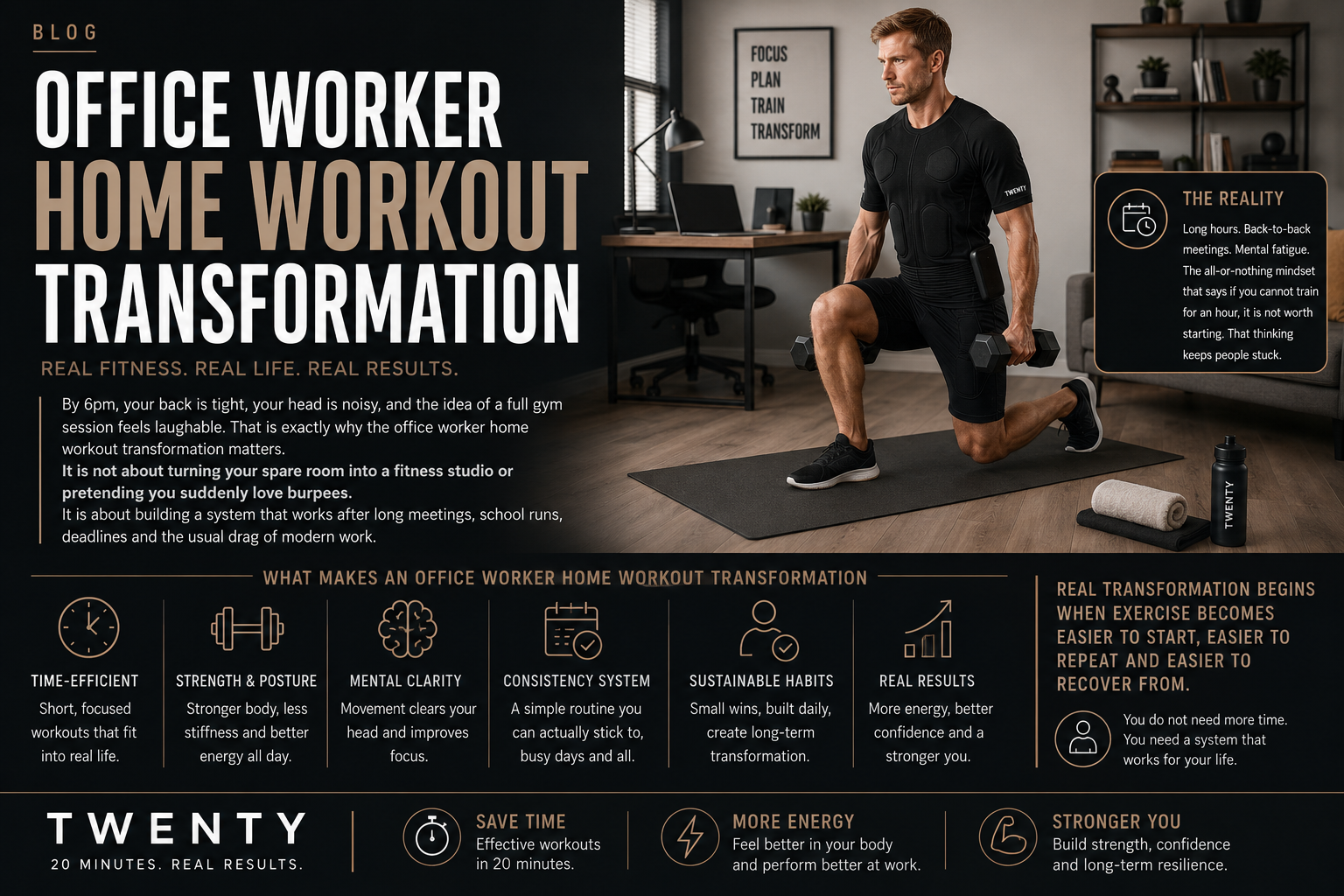
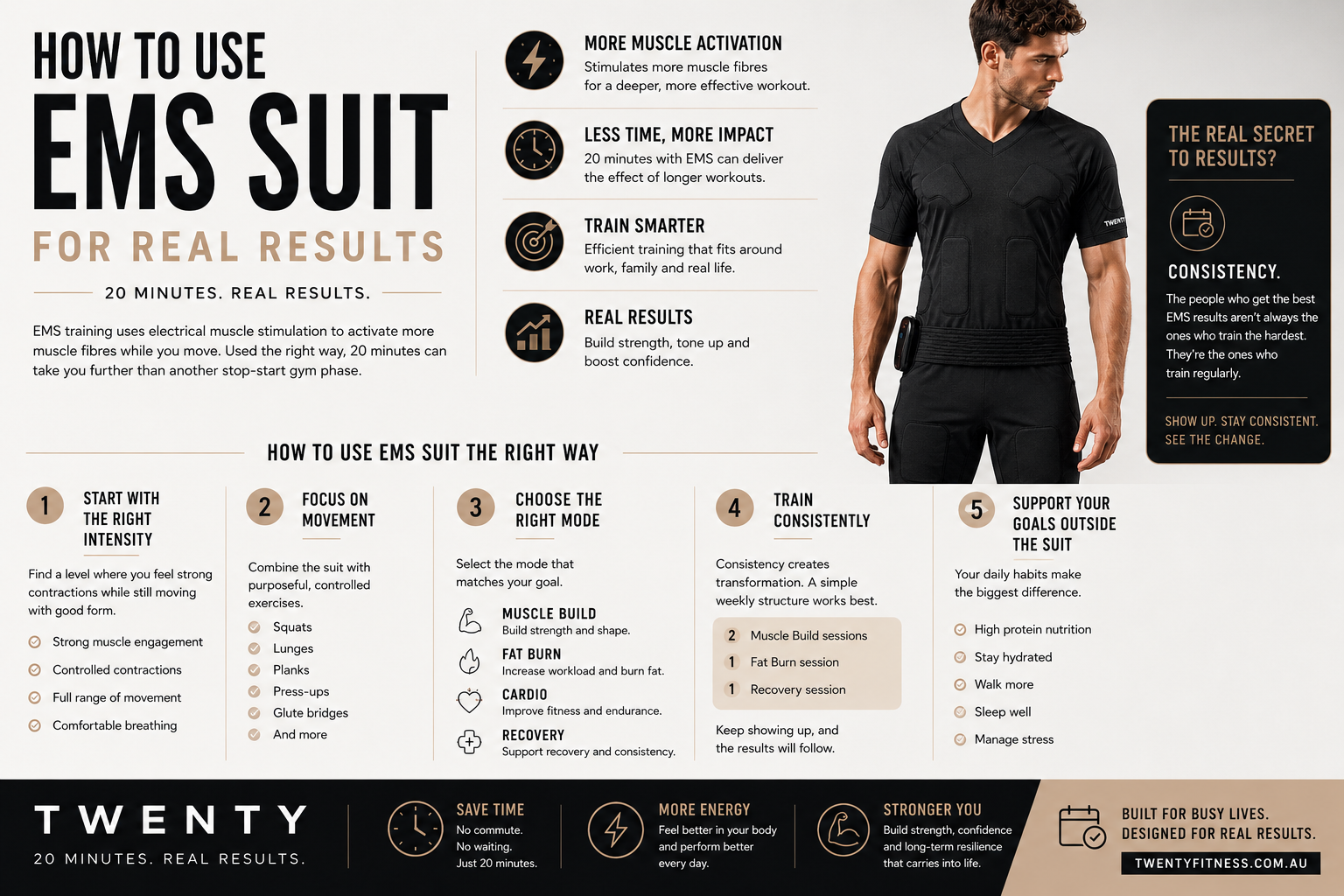
You do not need another fitness plan that asks for an hour you have not got. If you are here to learn how to use EMS suit training properly, the good news is simple: it is designed to fit real life. Twenty minutes, a clear setup, the right intensity, and a bit of consistency can take you further than another stop-start gym phase.
How to use EMS suit the right way
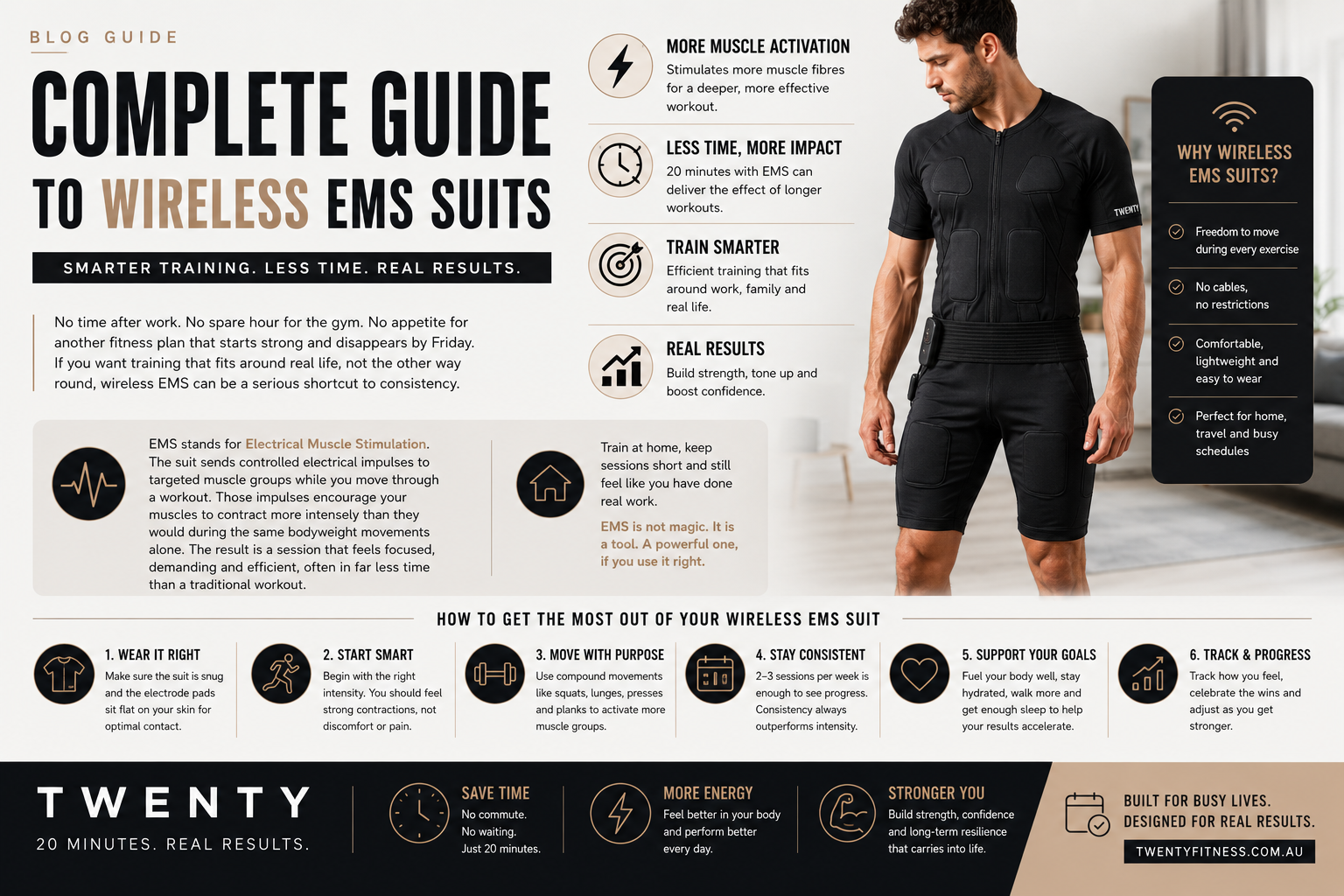
An EMS suit sends electrical impulses to targeted muscle groups while you move through a workout. That means your muscles are being activated from two directions at once - your own movement and the suit stimulation. Used well, it can make short sessions feel focused, demanding, and efficient. Used badly, it can feel uncomfortable, too intense, or simply ineffective.
The right way to start is not to chase maximum power on day one. It is to build control. Think of your first sessions as calibration, not a test of toughness. Your aim is to learn how the suit feels on each muscle group, how your body responds, and what level lets you move with good form.
Before your session, make sure the suit fits close to the body. Contact matters. If the electrodes are not sitting properly against the skin, the stimulation can feel patchy or weaker than it should. Once the suit is on, connect it to the app, choose your mode, and check each area one by one instead of turning everything up at once.
Start with setup, not intensity
Most people make the same mistake when they first use EMS. They assume stronger always means better. It does not. The best session is the one you can complete with control, steady movement, and enough challenge to feel your muscles working hard without fighting the suit.
Begin at a lower intensity across the main muscle groups - legs, glutes, core, back, chest, and arms. Then increase gradually until each area feels clearly active but still manageable. You should feel a strong contraction, not a sharp shock. If one zone feels far more intense than the rest, bring it down and rebalance.
It is normal for different muscles to tolerate different levels. Glutes and thighs often handle more. Arms, abdominals, or lower back may need a gentler setting at first. This is where app-based control matters. Personalisation is not a bonus feature. It is how you make the workout effective.
Hydration helps too. Well-hydrated muscles tend to respond better, and you will generally feel more comfortable during training. Drink water before and after your session, especially if you are using the suit as part of a fat-loss or cardio-focused routine.
Pick the mode that matches your goal
If your goal is fat loss, choose a mode that keeps you moving consistently while the suit supports full-body activation. If you want stronger muscle definition, use a muscle build setting and slow the pace slightly so you can focus on tension and form. If energy, mobility, or recovery is the priority, lower-intensity modes such as yoga or relaxation can make more sense.
This matters because the best results do not come from using every mode randomly. They come from matching the session to the result you want and repeating that often enough for your body to adapt.
What a first EMS session should look like
Your first session should feel controlled, not chaotic. Start with a short warm-up without rushing. Bodyweight squats, arm circles, marching on the spot, lunges, and gentle core activation are enough to get your body ready.
Once the suit is active, keep the movements basic. Squats, glute bridges, lunges, standing rows with resistance bands, press-ups against a wall or bench, and controlled planks work well. The suit adds intensity, so you do not need complicated exercises to make the session count.
Aim for around 20 minutes in total. That is usually enough for a beginner session. Longer is not automatically better, especially when your muscles are adapting to electrical stimulation for the first time. Short, focused sessions are the point.
A smart first-week approach is two sessions with rest days in between. That gives your body time to recover and lets you judge how you feel afterwards. Some people are surprised by delayed muscle soreness, especially if they start too hard. That is another reason to ease in.
Move with the contraction, not against it
One of the fastest ways to improve your EMS training is to time your movement with the contraction pulse. When the stimulation rises, work with it. Lower into the squat, brace the core, or drive through the movement deliberately. When the pulse eases, reset.
That rhythm makes the session smoother and helps you stay in control. It also reduces the temptation to rush through reps. EMS works best when you stay precise.
Common mistakes that slow down results
If you are wondering why an EMS session sometimes feels less effective than expected, the answer is usually not the technology. It is usually the approach.
The first mistake is going too hard too soon. Chasing the highest possible setting often leads to poor form, early fatigue, and a session that feels more uncomfortable than productive. The second is using the suit without a plan. If every session is different and there is no clear target, progress becomes hard to measure.
Another common issue is inconsistency. EMS can make training more efficient, but it cannot replace regular effort. Two or three sessions a week done properly will outperform random bursts of motivation every time. Results come from repeatable habits.
Then there is recovery. Because EMS creates strong muscle contractions, rest matters. If you train too frequently at high intensity, performance can drop and soreness can build up. For most people, two to three quality sessions a week is a strong place to start.
How often should you use an EMS suit?
It depends on your training history, recovery, and goal. Beginners usually do well with two sessions a week. If you recover well and want faster progress, three sessions may fit. More than that is not always necessary, particularly in the first month.
Think in blocks, not isolated workouts. Four steady weeks will tell you far more than one intense weekend. If your goal is visible toning, pair regular EMS sessions with a sensible eating routine and enough sleep. If your goal is strength support or improved consistency, build the suit into your week at fixed times so it becomes automatic.
For busy professionals and parents, this is where EMS has real value. It reduces the friction. You are not commuting to a gym, waiting for equipment, or losing an evening to one workout. You are training with purpose in a format that respects your schedule.
Signs your intensity is about right
You should feel clear muscle activation in the targeted areas, and the session should feel challenging by the end. Your form should still look controlled. Breathing should be elevated but steady in cardio-style sessions, and you should be able to finish without needing to stop because the stimulation is overwhelming.
If you are tensing up, holding your breath, or avoiding full range of motion, the setting is probably too high. Bring it down. Better execution beats ego every time.
Safety and comfort matter
EMS training should feel strong, focused, and deliberate. It should not feel erratic. If the sensation is uneven, check the fit of the suit and the contact points. If a specific area feels too sharp, reduce that channel and test again.
Do not use the suit on broken or irritated skin, and if you have a medical condition, implanted device, or any concern about electrical stimulation, get professional advice first. That is not hesitation. That is common sense.
Comfort also improves confidence. Once you know how your body responds, sessions become easier to set up and easier to repeat. That is when momentum starts to build.
How to get visible results faster
The fastest route is not intensity alone. It is alignment. Use the right mode for the goal, train consistently, progress gradually, and keep the rest of your routine supportive. Eat enough protein if muscle tone is the target. Maintain a calorie deficit if fat loss is the focus. Sleep properly if recovery and energy have been slipping.
If you are using a system like TWENTY Fitness, the biggest advantage is that the guidance and control are already built in. You are not guessing your way through advanced training. You are making high-efficiency exercise part of normal life.
That is the real shift. Once you stop treating fitness like an event that needs perfect timing, and start treating it like a repeatable 20-minute commitment, results become far more realistic. Put the suit on, set the intensity with intention, and make each session count. Your schedule does not need to get lighter for your body to get stronger.