Office Worker Home Workout Transformation
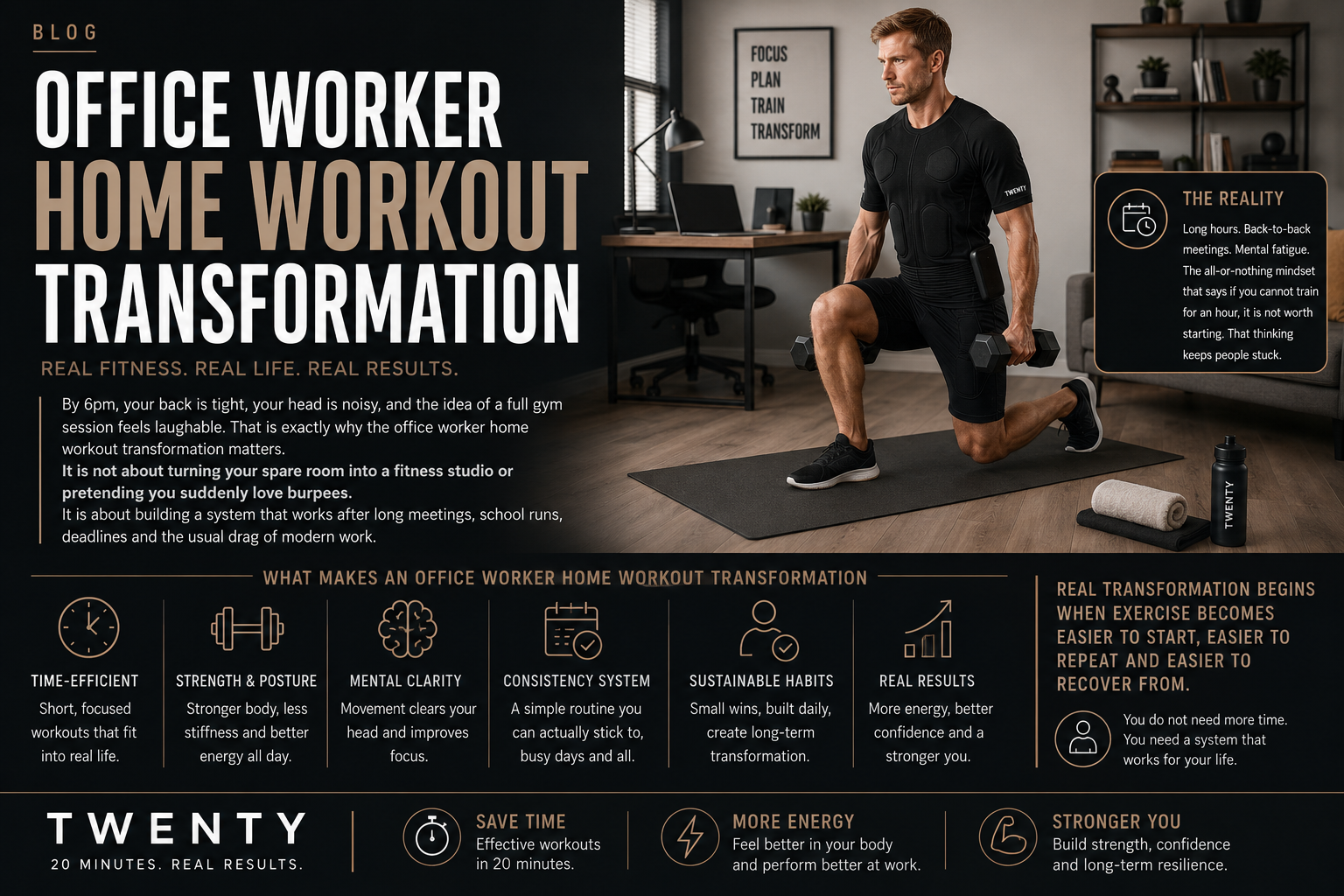
By 6pm, your back is tight, your head is noisy, and the idea of a full gym session feels laughable. That is exactly why the office worker home workout transformation matters. It is not about turning your spare room into a fitness studio or pretending you suddenly love burpees. It is about building a system that works after long meetings, school runs, deadlines and the usual drag of modern work.
For most office workers, the biggest problem is not motivation. It is friction. The commute home, the late finish, the mental fatigue, the all-or-nothing mindset that says if you cannot train for an hour, it is not worth starting. That thinking keeps people stuck. Real transformation begins when exercise becomes easier to start, easier to repeat and easier to recover from.
What makes an office worker home workout transformation stick
The people who change their body and energy levels at home are rarely the ones chasing perfect plans. They are the ones who make training simple enough to repeat on ordinary days. That means short sessions, low setup time and a clear structure.
An office job creates a very specific kind of fatigue. You may not be physically exhausted, but you are mentally drained and often stiff from sitting. So your training needs to wake the body up without feeling like another major task. Twenty focused minutes can be enough to train properly, especially when the session is structured around big movement patterns and progressive effort.
There is also a confidence piece here. Many people who work at a desk all day feel disconnected from their body. They know they should move more, but they do not feel athletic. Home training removes some of that pressure. No crowded gym floor. No travel time. No waiting for equipment. Just a direct route from intention to action.
Start with the real goal, not the fantasy one
Most office workers say they want to get fitter, but that is too vague to drive change. The better question is this: what do you actually want your week to feel like?
For some, the goal is fat loss and better definition. For others, it is less stiffness, better posture and more energy in the afternoon. Sometimes it is simply being able to train consistently without blowing up the calendar. These goals lead to different training choices.
If you want visible body changes, you need resistance and progression, not just random movement. If your main issue is stress and soreness, mobility and recovery work matter more than chasing intensity every day. If your problem is consistency, the best plan is the one with the lowest barrier to entry. It depends on what is getting in your way right now.
The smartest home setup is the one you will actually use
You do not need a room full of kit for results. In fact, too much equipment can become another form of procrastination. A mat, a small clear space and one or two versatile tools are enough for most people to begin.
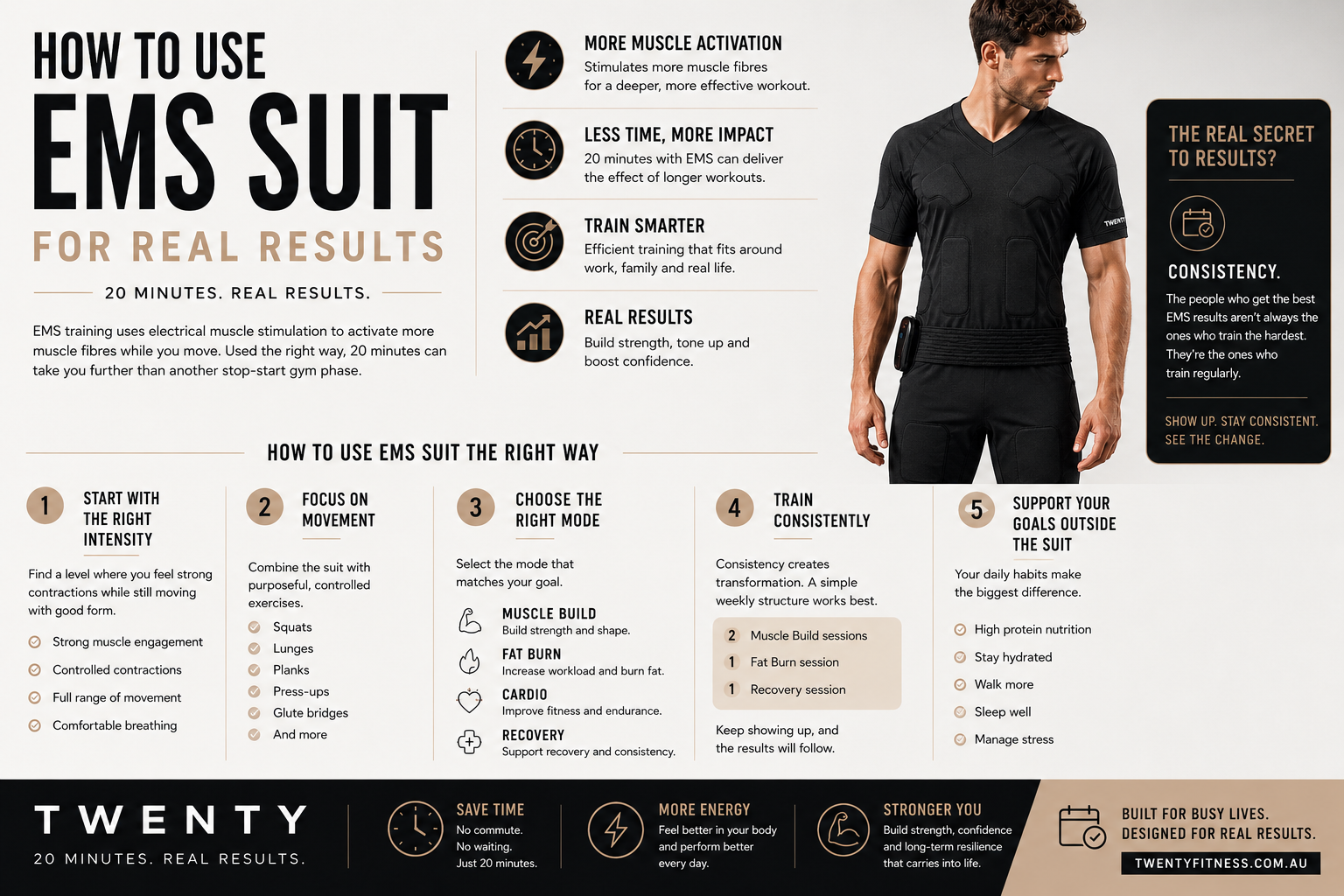
Bodyweight sessions work well when they are programmed properly. Squats, split squats, press-ups, glute bridges, rows and core work can carry a lot of progress, especially in the early stages. Bands or adjustable dumbbells can add challenge without taking over the house.
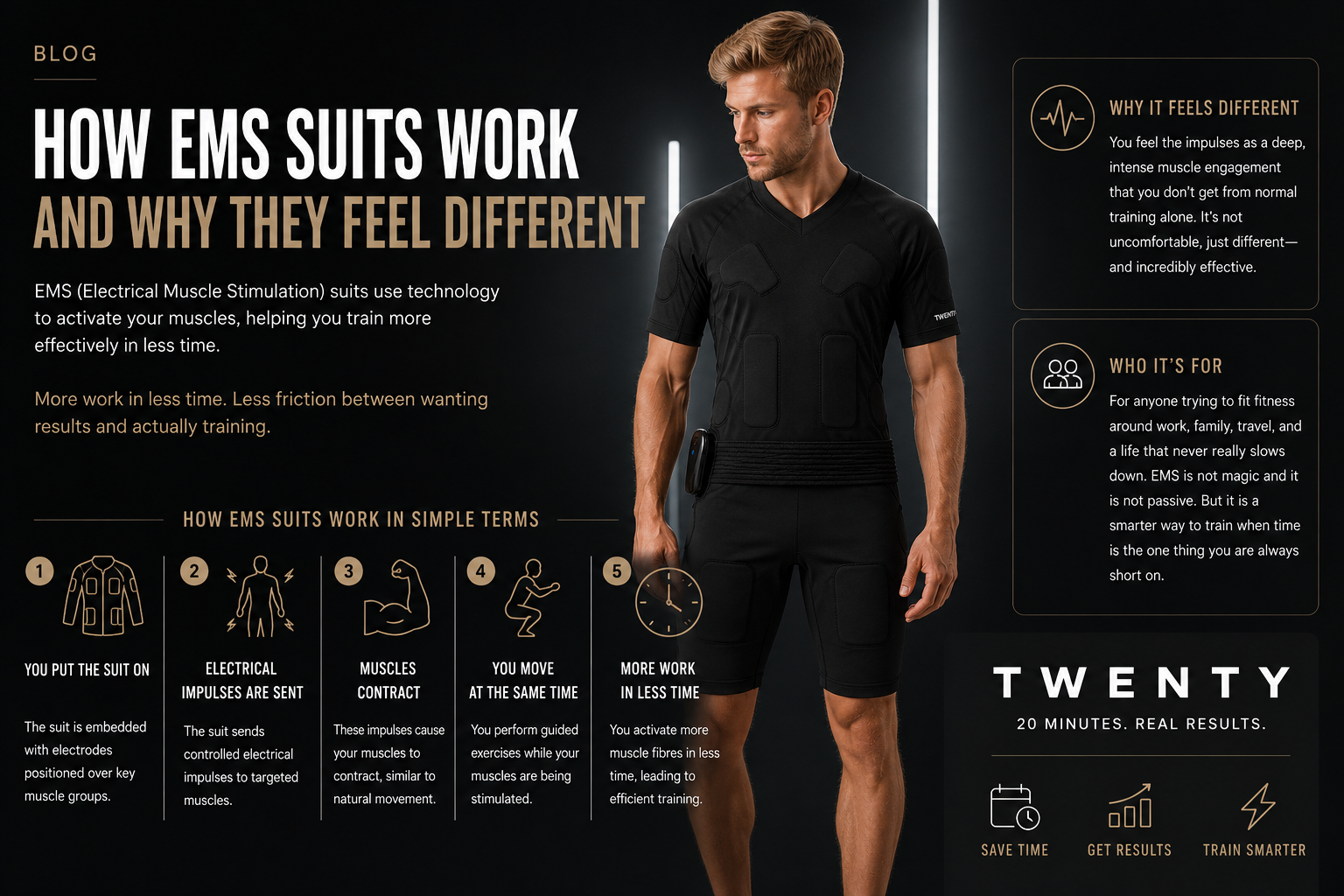
For busy professionals who want more from less time, tech-led training has obvious appeal. EMS systems are a good example. They are designed to make training more efficient by stimulating multiple muscle groups during short, guided sessions. That can be useful for people who struggle to fit longer workouts around work and family life. The trade-off is simple: it is a more premium route, but for the right person, the time saving and structure can make consistency far easier.
A weekly plan that fits office life
The biggest mistake is trying to train hard seven days a week after doing very little for months. Your body might cope for a week. Your schedule probably will not.
A better approach is three focused training sessions a week, plus short movement breaks on workdays. That is enough to create momentum without making fitness feel like a second job.
A practical week could look like this. On Monday, a 20-minute strength session focused on lower body and core. On Wednesday, an upper body and posture session to counter all that desk time. On Friday or Saturday, a full-body session with a slightly faster pace to push fitness and burn energy. On the days in between, ten minutes of walking, mobility or light recovery work is enough to keep the body moving.
This is where many office workers finally break the cycle. They stop waiting for the perfect window and start using the available one.
Why short workouts work better than you think
There is still a strange loyalty to the idea that longer always means better. It does not. Better means targeted, challenging and repeatable.
If you only have 20 minutes, you are more likely to stay focused. You move with intent. You waste less time. You recover better and come back again two days later. That repeatability is where transformation happens. One heroic 90-minute session followed by six days of nothing is far less powerful than three efficient sessions every week.
Short training also suits the nervous system of a tired office worker. After a demanding day, the goal is not to crush yourself. It is to create a positive signal - train hard enough to improve, but not so hard that you dread the next session.
The office worker home workout transformation is really about identity
At some point, this stops being about squeezing in exercise and starts being about becoming someone who trains as part of normal life. That shift matters more than any single workout.
When you identify as a person who moves regularly, small choices begin to change. You stand up more often. You take the stairs. You eat with a little more awareness because the workout gave the day some structure. Your posture improves. Your energy improves. You stop negotiating with yourself so much.
This is why visible results often arrive after the mental shift, not before it. Fat loss, tone and strength come from consistent inputs. Consistent inputs come from a routine that feels realistic, not heroic.
Common mistakes that slow progress
The first is doing too much too soon. Soreness may feel productive, but if it wipes out the next three days, it is not helping. Build gradually.
The second is training randomly. If Monday is yoga, Thursday is ten minutes of jumping about and the next week disappears completely, progress will be patchy. A simple repeatable structure wins.
The third is expecting home workouts to feel exactly like gym workouts. They are different. The advantage is convenience and speed. The challenge is that you need a bit more intention. Good programming fixes that.
The fourth is ignoring recovery. Office workers often underestimate how draining sedentary work can be. Poor sleep, high stress and endless screen time all affect performance. Sometimes the next best move is not another hard session. It is a walk, an early night and a proper reset.
How to keep momentum when work gets hectic
There will be busy weeks. That is not failure. That is life. The answer is not to quit until things calm down. It is to scale the routine without breaking it.
On chaotic weeks, cut the session length before you cut the habit. Ten or fifteen focused minutes still count. Swap perfection for continuity. If travel, deadlines or family demands hit, reduce the plan to the minimum effective dose and keep moving.
This is where guided systems can help. The less decision-making required, the easier it is to stay on track. TWENTY Fitness is built around that reality - efficient sessions, app-led structure and a training experience that fits into real schedules instead of fighting them.
What results can you realistically expect?
In the first two weeks, most people notice energy and stiffness changes before visual ones. They feel less sluggish in the morning. Their body feels more awake. By weeks three to six, consistency usually starts to show up in posture, strength and body composition, especially if nutrition improves alongside training.
The speed of change depends on your starting point, session quality, sleep and how often you actually train. That is the honest answer. But if you can stay consistent with three efficient workouts a week, the difference over three months can be serious. Not because the plan is magical, but because it is finally doable.
You do not need more guilt, more complexity or another plan that collapses by Thursday. You need a system that respects your time, meets you where you are and gives your body a reason to change. Start there, keep it simple, and let the results catch up with the effort.