Can EMS Help Weight Loss? The Real Answer
If your weeks feel packed and your workouts keep slipping to the bottom of the list, the question is fair: can EMS help weight loss, or is it just another fitness promise dressed up as technology? The honest answer is yes - but not in the lazy, sit-still-and-melt-fat way people sometimes hope for. EMS can support weight loss when it is used properly, consistently, and alongside the basics that still matter most.
That matters because most people do not fail on effort alone. They fail on time, friction, and consistency. When training feels like a two-hour production, it is easy to skip. EMS changes that equation by making short sessions work harder, which can make staying on track far more realistic.
Can EMS help weight loss in real life?
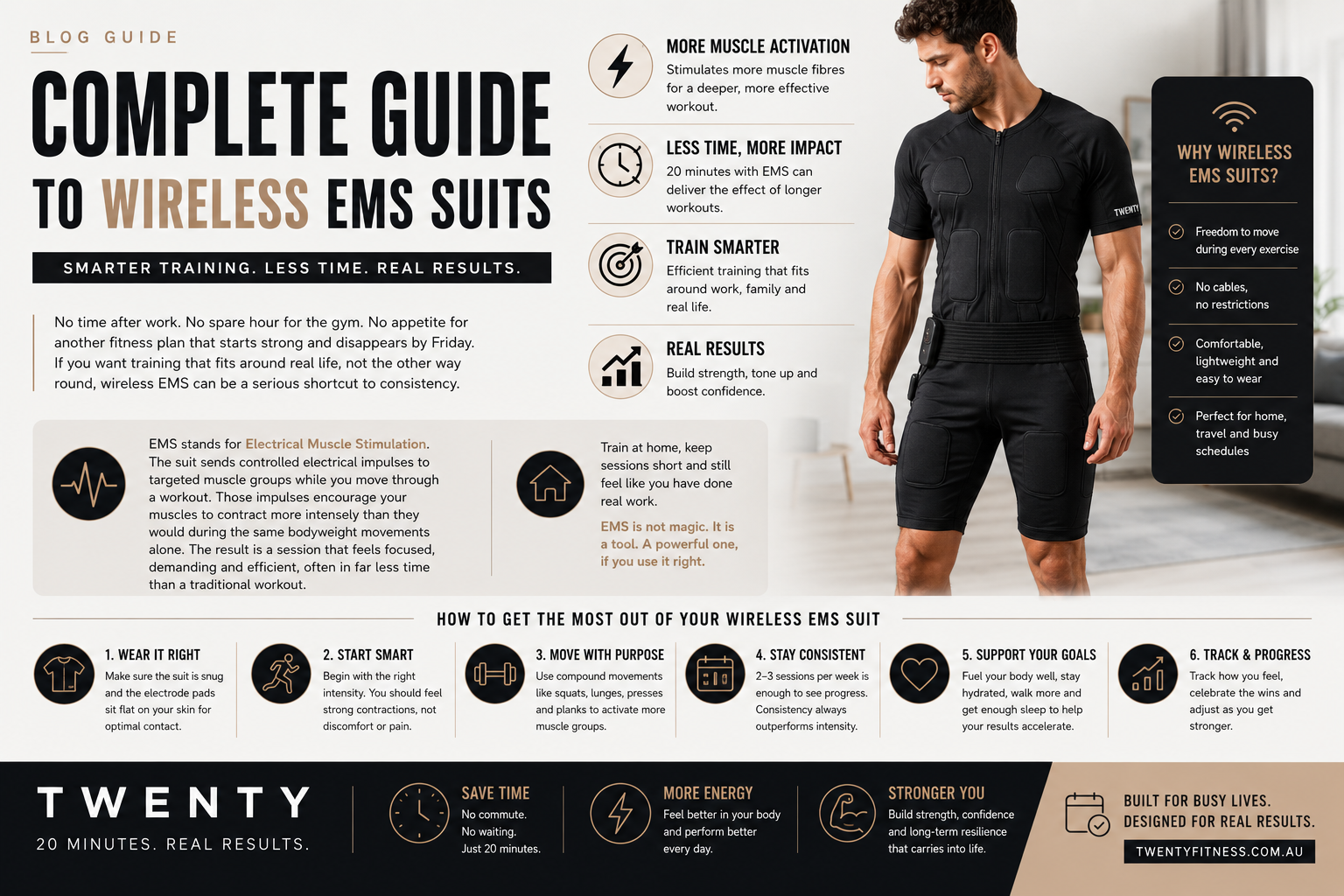
Yes, EMS can help weight loss in real life because it adds intensity and muscle engagement to short workouts. Electrical Muscle Stimulation sends impulses to your muscles so they contract more deeply during exercise. That means a 20-minute session can feel far more demanding than a standard low-effort home workout.
Weight loss still comes down to energy balance. If you regularly take in more calories than you use, no device will magically override that. But EMS can push up training quality, improve consistency, and help preserve or build lean muscle while you lose fat. Those three things matter more than gimmicks ever will.
For busy adults, this is where EMS becomes useful. It does not replace discipline, but it can reduce the amount of time and mental effort needed to train well. That is a big deal if your routine has to fit around work, school runs, travel, or family life.
What EMS actually does during a workout
EMS activates muscle fibres through controlled electrical impulses. In a normal workout, your brain tells your muscles to contract. With EMS, the suit adds another layer of stimulation, so more muscle fibres are recruited while you move through exercises such as squats, lunges, core work, planks, or low-impact cardio.
This matters for weight loss because harder-working muscles need more energy. It also matters for body shape because muscle tone changes how your body looks even before the scales move dramatically. Many people say they want weight loss, but what they really mean is they want to feel tighter, lighter, and more confident in their clothes. EMS can support that outcome when paired with structured training.
It can also make low-impact sessions more effective. That is useful if you do not want endless running, or if high-impact exercise does not suit your joints.
Where EMS helps fat loss - and where it does not
The strongest case for EMS is not that it directly burns huge amounts of fat on its own. The strongest case is that it helps you train efficiently enough to keep showing up.
That is the trade-off to understand. A single EMS session is not a shortcut past nutrition or daily habits. If your eating is chaotic, your sleep is poor, and you spend most of the day barely moving, EMS will not fix everything. But if the main thing blocking progress is lack of time or inconsistent training, EMS can be a very smart tool.
Think of it this way. Fat loss usually improves when you can do three things well: train consistently, maintain muscle, and create a manageable calorie deficit. EMS supports the first two extremely well. It helps with the third indirectly because people who feel stronger and more structured often find it easier to make better food choices and stick to a routine.
What it does not do is target fat loss from one body part. No technology can promise that. If you want to lose fat around the stomach, thighs, or arms, overall fat loss is still the route.
Why short EMS sessions can still work
A lot of people still believe results only count if they come from long gym sessions. That belief is one of the main reasons routines collapse. If fitness only works when life is quiet, it is not a real-life system.
EMS works well for people who need efficiency. Because the muscles are being stimulated throughout the session, you can get a strong training effect in a short window. That makes it easier to fit exercise into lunch breaks, early mornings, or the gap between work and dinner.
No time? No excuses only works if the training actually fits your life. That is the practical strength of EMS. It lowers the time barrier without turning the workout into fluff.
With a guided suit setup and app-based controls, you can also adjust the intensity and training mode to suit your goal. If the aim is fat loss, your sessions can focus on full-body work, steady progression, and regular frequency rather than random effort.
Can EMS help weight loss better than normal workouts?
Sometimes yes, sometimes no. It depends on what your normal workouts look like.
If you already train hard four or five times a week, lift properly, walk plenty, sleep well, and eat with consistency, EMS is more likely to be a useful addition than a dramatic upgrade. But if your current routine is rushed, irregular, or low intensity, EMS can be a major improvement because it makes each session count more.
That is why comparison matters. EMS is not competing with your best possible routine on paper. It is competing with the workout you actually do in the middle of a busy week. For many people, 20 focused minutes done consistently will beat 90-minute gym plans they never manage to follow.
This is also why home-based EMS training appeals to professionals and parents. Less travel, less setup, less wasted time. More chance of sticking with it.
The habits that make EMS work for weight loss
The people who get the best results with EMS usually treat it as part of a system, not a stand-alone fix. They train consistently, eat with some structure, and keep expectations realistic.
A good starting point is two to four EMS sessions per week, depending on your fitness level and recovery. Pair that with daily movement such as walking, a protein-focused diet, and enough sleep to recover properly. You do not need perfection. You need repeatability.
It also helps to track something beyond body weight. Progress photos, waist measurements, energy levels, strength, and how your clothes fit often tell the real story sooner than the scales do. Because EMS can support muscle tone, body composition may improve even when weight changes slowly.
For some people, that is the missing piece. They have chased lower scale numbers before, but never really liked how they looked or felt. Better body composition changes that.
What results should you realistically expect?
You should expect support, not magic. If you use EMS regularly, train with intent, and keep your food intake aligned with your goal, you may notice improved muscle tone, better workout efficiency, and steady fat-loss progress over time.
How fast that happens depends on your starting point. Someone returning to exercise after months of inconsistency may feel and see changes relatively quickly. Someone already lean and active may notice subtler gains, such as stronger contractions, better definition, or easier routine adherence.
The first win is often momentum. You start finishing workouts instead of postponing them. You feel more engaged during training. That consistency then creates the physical change.
Used well, a system like TWENTY Fitness is built for exactly this kind of real-life progress - not endless gym hours, but guided, efficient sessions that slot into your day and keep moving you forwards.
Is EMS right for everyone trying to lose weight?
Not always. If you want weight loss with zero effort, EMS is not the answer. If you dislike any form of structured training, it will not solve that either. And if you have certain medical conditions or implanted devices, you should always check whether EMS is suitable before using it.
But for people who are willing to train and simply need a smarter way to do it, EMS can be a strong fit. It suits the person who wants results without building their whole week around the gym. It suits the person who has started and stopped too many times because the routine asked for more time than life could give.
That is the real opportunity. Not less effort, but less wasted effort.
If you have been waiting for the perfect moment to get back in shape, stop waiting. Start with a method you can actually keep using, because the best fat-loss plan is the one that still fits your life next month.