Can EMS Build Muscle Tone? The Real Answer
If your week is already full before Monday lunch, the idea of spending hours in the gym can feel unrealistic. That is exactly why so many people ask, can EMS build muscle tone - or is it just another fitness promise that sounds better than it performs?
The short answer is yes, EMS can help build muscle tone. But the result depends on how you define tone, how consistently you train, and whether your routine gives your muscles a real reason to adapt. EMS is not magic. It is a tool. Used properly, it can make training more efficient, help activate more muscle fibres, and support the firmer, more defined look most people mean when they talk about being toned.
What muscle tone really means
Most people do not mean “tone” in a technical sense. They mean visible shape, firmer muscles, and a leaner look. In practice, that usually comes from two things happening at once: building or maintaining muscle, and reducing the layer of body fat covering it.
That matters because no training method, including EMS, can create definition in isolation. If you build stronger glutes, legs, arms, or core but your overall body-fat level stays the same, the visual change may be slower. On the other hand, if you combine muscle stimulation with movement, sensible nutrition, and consistency, the results become much easier to see.
So when people ask whether EMS builds muscle tone, the better question is this: can it help your muscles work hard enough to become firmer and more defined over time? Yes, it can.
How EMS actually works
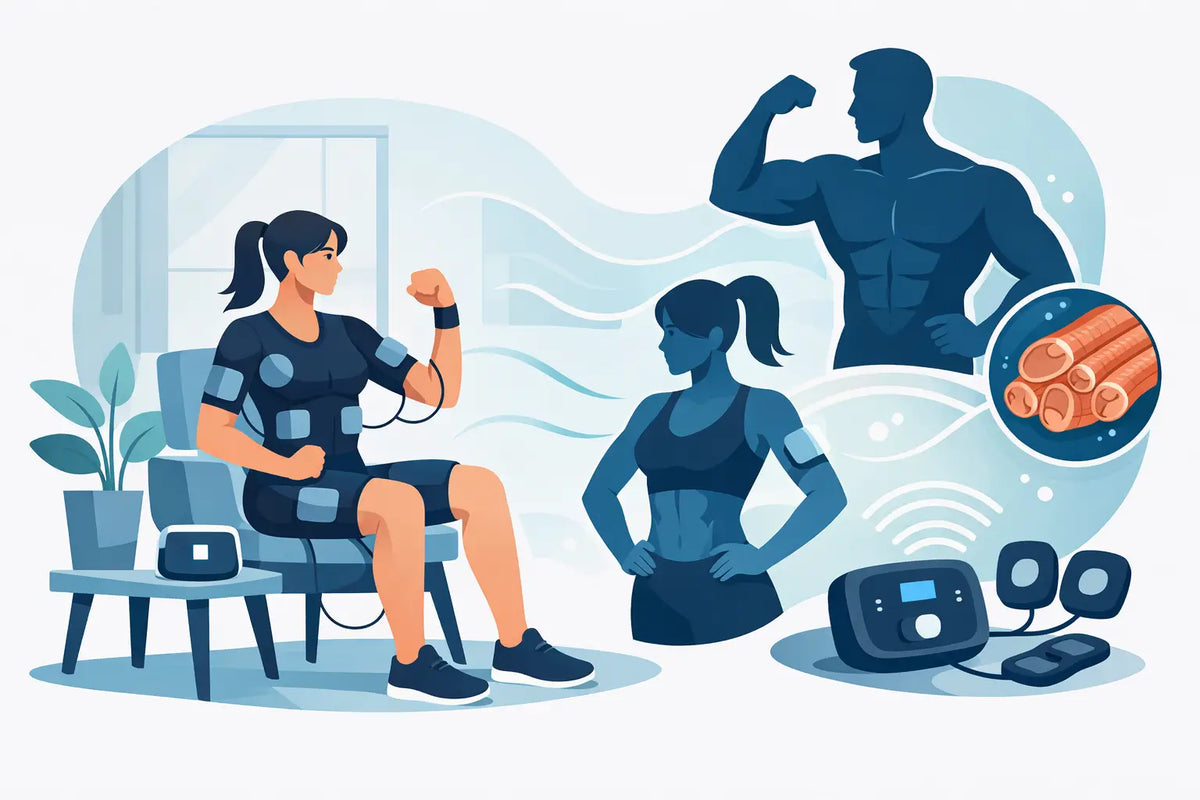
EMS stands for Electrical Muscle Stimulation. The system sends controlled electrical impulses to targeted muscles, causing them to contract. Your body normally does this through signals from the brain. EMS adds an external signal that can increase muscle recruitment during exercise or stimulate contractions in specific training modes.
That is why EMS feels different from a standard home workout. Instead of relying only on your conscious effort to engage the right areas, the suit helps trigger those muscles directly. For busy people who want more from shorter sessions, that is the big appeal.
In a well-designed EMS workout, you are not simply standing still while the suit does everything. You are moving through guided exercises while the stimulation increases the workload. Squats, lunges, presses, core work and cardio-based movements all feel more demanding because the muscles are being asked to contract more intensely.
Can EMS build muscle tone better than regular exercise?
Better is not always the right word. More efficient can be.
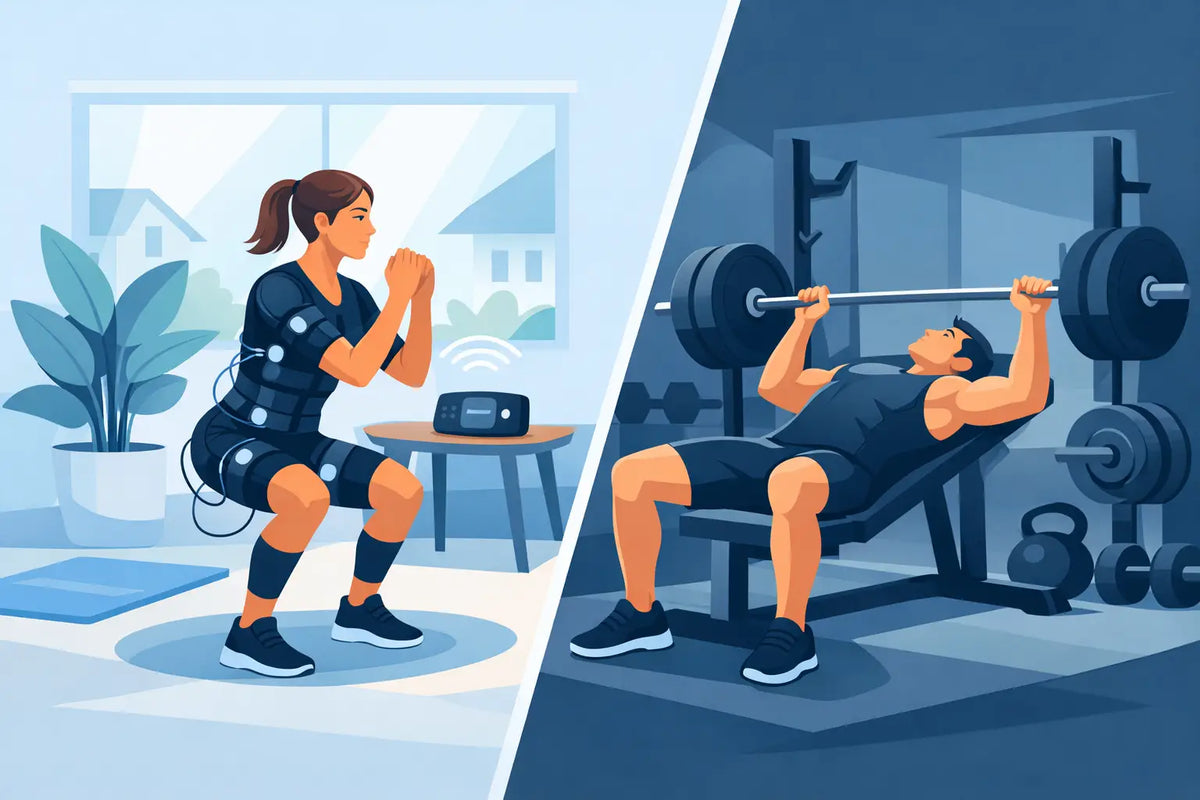
Traditional resistance training works. There is no debate there. If you have the time, the structure, and the consistency to train several times a week with progressive overload, you can absolutely build muscle and improve definition that way.
Where EMS stands out is in efficiency and accessibility. It can help you create a high training stimulus in a much shorter session. That makes it especially useful for people who struggle to fit longer workouts into real life. If your choice is between a focused 20-minute EMS session and skipping exercise altogether, EMS is the stronger option every time.
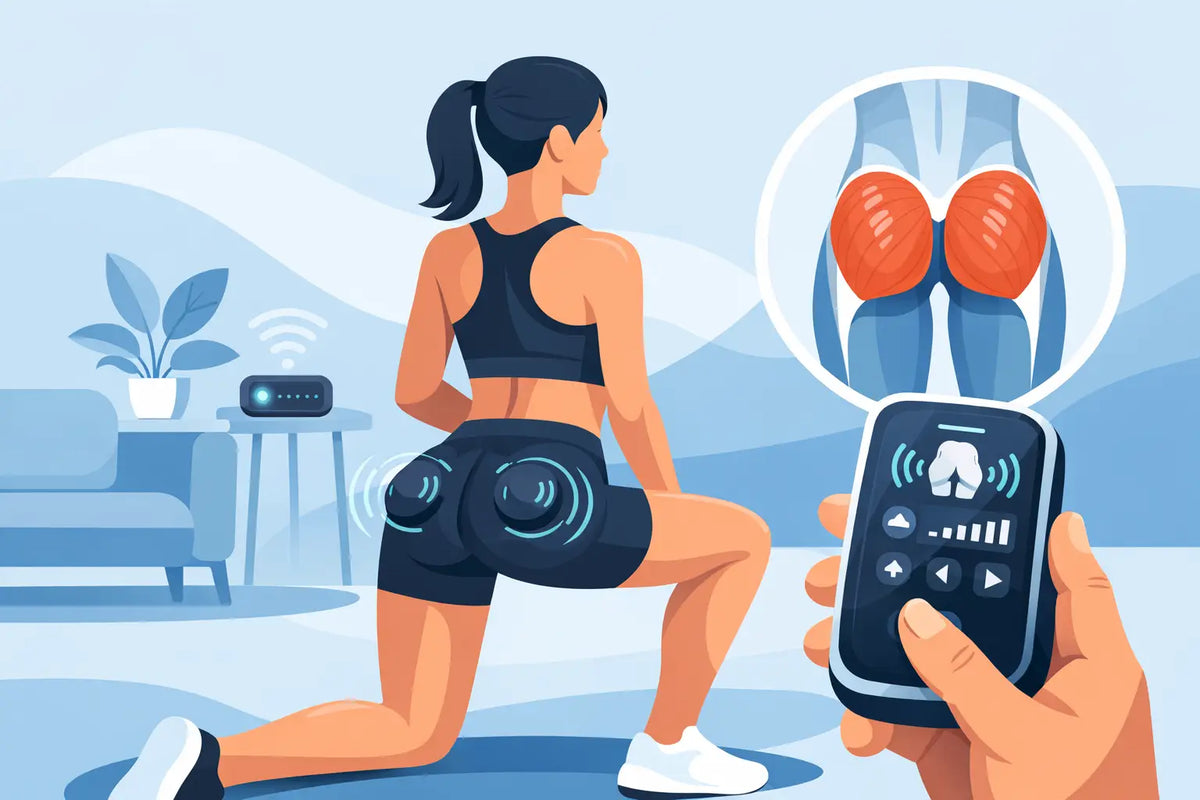
It can also be useful for people who find it hard to activate certain muscles. Glutes and core are common examples. A lot of people go through workouts thinking they are training those areas when, in reality, other muscles are taking over. EMS can improve that mind-muscle connection and make the session feel more effective.
Still, there is a trade-off. If your only goal is maximum muscle size, heavy resistance training often has the edge because load matters. EMS supports muscle development, but it does not completely replace the benefits of lifting progressively heavier weights. For tone, firmness, and visible definition, though, EMS can be a very smart fit.
Why EMS can help create a toned look
The reason EMS works for tone is simple. It increases the demand on the muscles.
When muscles contract more intensely and more frequently during training, they have to adapt. Over time, that can improve muscle strength, endurance, and firmness. You may notice your body feels tighter, your posture improves, and areas like your stomach, thighs, arms, and glutes start to look more defined.
EMS also suits people who need structure. One of the biggest reasons results stall is inconsistency. Long programmes sound impressive, but they often collapse under the pressure of work, family, commuting, and everything else. Short, guided EMS sessions are easier to repeat. And repeated effort is what changes your body.
That is where systems like TWENTY Fitness make sense in everyday life. You can train at home, control the intensity, target muscle groups, and keep the habit going without needing a perfect schedule.
What results should you realistically expect?
This is where honesty matters. You are unlikely to go from inactive to sharply defined in two weeks. You can, however, start feeling a difference quickly.
Many people notice stronger contractions, better muscle awareness, and a post-workout feeling that is closer to resistance training than a standard light home session. Within a few weeks of regular use, it is realistic to feel firmer and more engaged through the core, glutes, legs, or upper body. Visible changes often follow after that, especially if nutrition and general activity also improve.
The pace depends on your starting point. If you already have a relatively low body-fat level, small increases in muscle firmness can show up quite fast. If you are carrying more body fat, EMS can still help, but visible tone may take longer because the muscle is less obvious beneath the surface.
That does not mean the training is not working. It means body composition is part of the picture.
How to use EMS for muscle tone effectively
If you want results, treat EMS like training, not like a shortcut. The strongest outcomes usually come from consistency, progression, and enough recovery to let the body adapt.
Start with a realistic schedule you can maintain. Two to four sessions a week is often a strong range, depending on intensity and your wider activity levels. More is not always better. Muscles need challenge, but they also need time to recover.
Use enough intensity to make the contractions meaningful. If the setting is too low, the training effect will be limited. If it is too high too soon, your form and comfort may suffer. Build steadily. Strong but controlled is the goal.
Move properly during the session. EMS works best when paired with purposeful exercises, not passive use alone. Squats, lunges, hinges, presses, rows, planks and cardio intervals all give the stimulation a job to do.
And do not ignore food. If you want more visible tone, protein intake matters because your muscles need the raw material to recover and grow. If fat loss is also a goal, your overall diet has to support it.
Common reasons people do not see tone from EMS
Usually, it comes down to one of three issues.
The first is inconsistency. A great session once in a while will not reshape your body. The second is low intensity. If the contractions are mild, the muscles are not being challenged enough. The third is expecting EMS to solve body composition on its own. If sleep, food, and general movement are all out of balance, progress will be slower.
There is also the patience factor. Muscle tone is built through repeated stress and recovery, not a single burst of motivation. The people who see the best changes are rarely doing anything dramatic. They are simply sticking to the plan long enough for it to work.
So, can EMS build muscle tone?
Yes - if you use it properly.
EMS can help build the firmer, more defined look people want when they talk about muscle tone. It works by increasing muscle activation and making short workouts work harder. That makes it especially powerful for busy adults who want results without spending half their week chasing them.
But the smartest view is this: EMS is an accelerator, not an excuse to ignore the basics. Train consistently, push the muscles enough to adapt, eat in a way that supports your goal, and give the process time. Do that, and 20 focused minutes can start to change far more than your schedule.