Can EMS Replace Gym Sessions?
Missed another workout because the day got away from you? That’s exactly why so many people are asking, can EMS replace gym sessions? If your biggest fitness problem is not effort but time, the answer is more interesting than a simple yes or no.
EMS training has earned attention for one reason above all others - efficiency. Instead of spending an hour travelling to the gym, changing, waiting for equipment, and working through a routine, you can train multiple muscle groups at once in a far shorter session. For busy adults, that changes the conversation. The real question is not whether EMS looks like a gym workout. It is whether it can deliver enough of the same benefits to make traditional sessions optional, less frequent, or unnecessary for your goals.
Can EMS replace gym sessions for most people?
For many people, yes - at least partly, and sometimes almost entirely. If your goal is to improve muscle tone, support fat loss, build consistency, and fit training into real life, EMS can absolutely stand in for a large chunk of what people normally use the gym for.
That matters because most gym routines fail for practical reasons, not motivational ones. People do not stop because they suddenly stopped caring about their health. They stop because life gets crowded. Work runs late. Children need picking up. Energy drops. A 90-minute gym block becomes unrealistic, and once training starts to feel hard to schedule, consistency disappears.
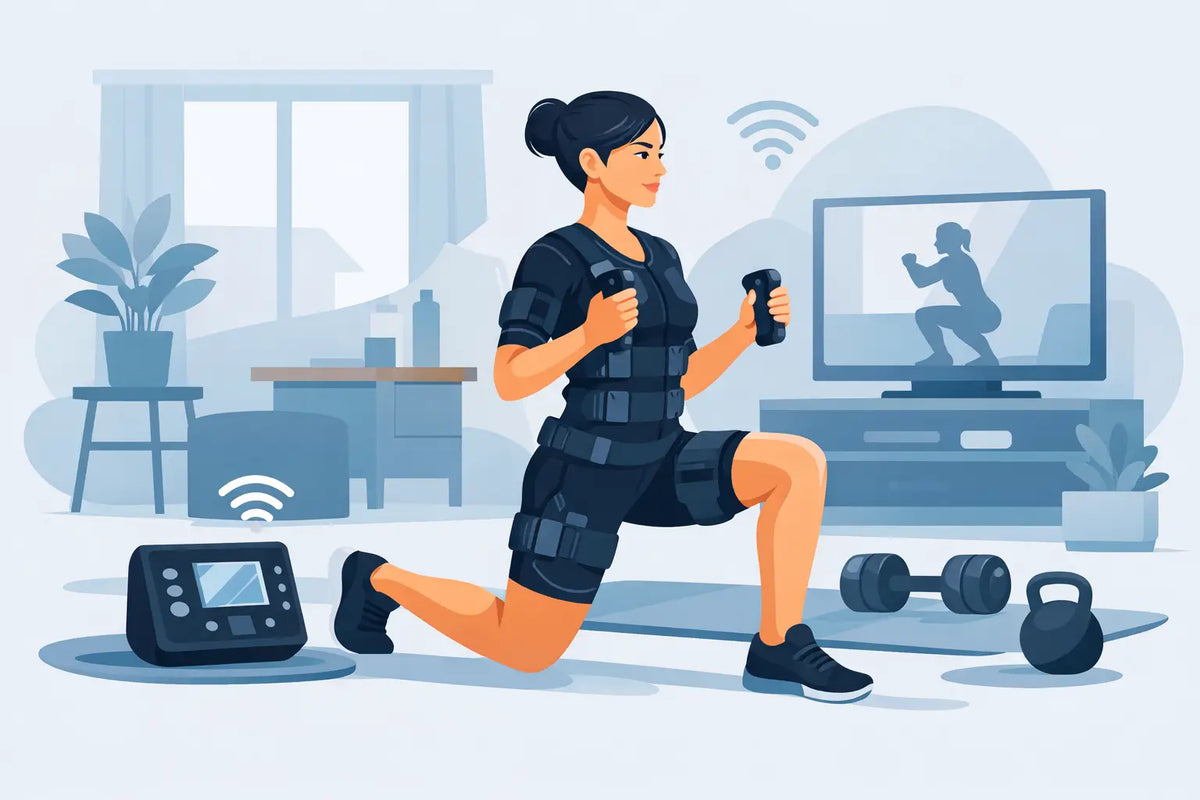
EMS changes that by reducing the friction. It is structured, targeted, and short. A 20-minute session can stimulate major muscle groups at the same time while you move through guided exercises. That gives you a training effect that feels surprisingly demanding for the time involved. No wasted minutes. No wandering from machine to machine. No trying to work out what to do next.
For someone who wants a practical route to getting fitter, stronger-looking, and more consistent, that is not a compromise. It is often a smarter system.
Where EMS works brilliantly
The strongest case for EMS is not that it copies every part of the gym. It is that it solves the biggest reason many people never get results from the gym in the first place.
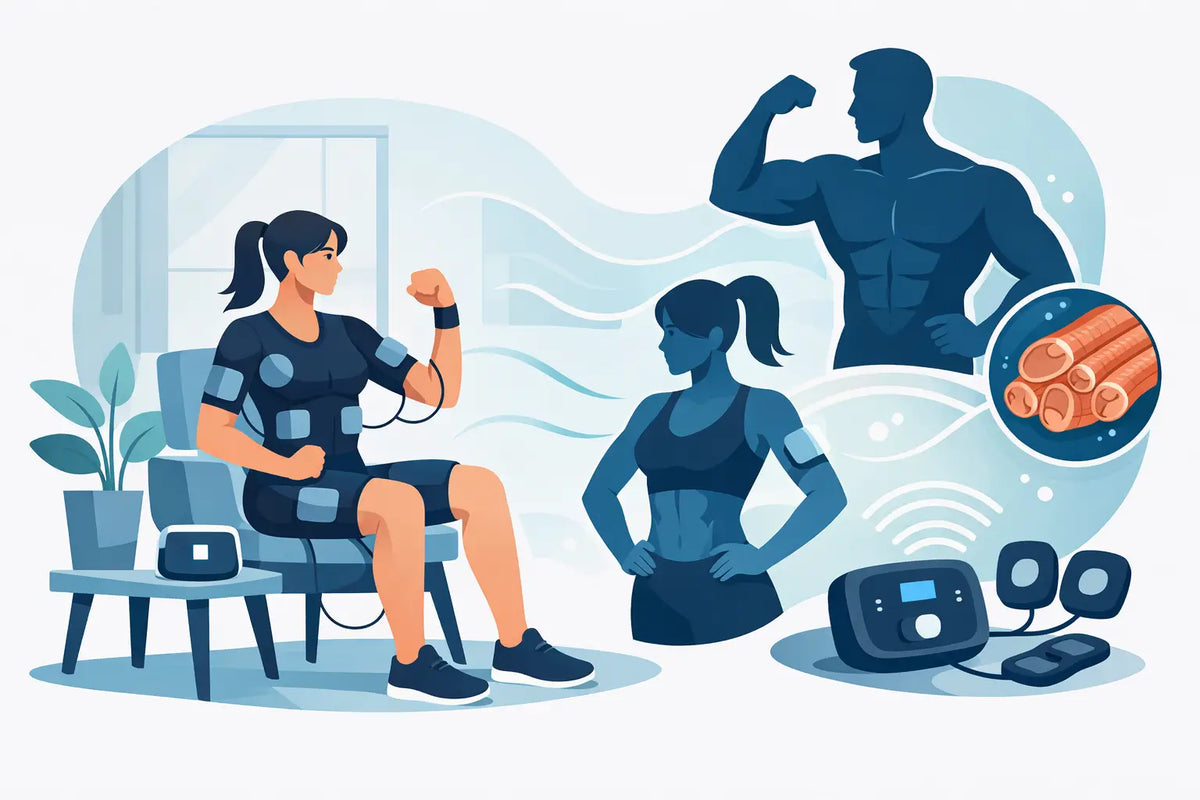
EMS is especially effective for people who want efficient full-body training. Because electrical muscle stimulation activates muscles during movement, sessions can feel intensive without needing the same amount of external load as conventional resistance training. This can help support muscle engagement, improve training efficiency, and make shorter workouts feel genuinely productive.
It also works well for people rebuilding consistency. If you have spent months starting and stopping with gym plans, a shorter and more accessible format can help you stick with it. Fitness changes fast when you stop negotiating with your schedule every day.
There is another advantage too. Some people feel overwhelmed by gym culture. The noise, the travel, the self-consciousness, the time commitment - it all adds up. Training at home with guided EMS removes that barrier. You still work hard, but the process feels simpler and easier to repeat. That matters more than people think.
For body toning, general strength support, calorie-burning workouts, and staying active with a demanding schedule, EMS can be a serious replacement for conventional gym sessions.
Where the gym still has an edge
This is where honesty matters. EMS is powerful, but it is not magic, and it is not identical to every form of gym training.
If your goal is maximal strength with heavy barbells, specialist powerlifting performance, or sport-specific loading, the gym still offers tools EMS cannot fully replace. Lifting very heavy weights develops skill, coordination under load, and specific strength adaptations that come from moving external resistance in a traditional way.
The same goes for people who love the gym environment itself. Some thrive on longer sessions, a social atmosphere, or access to a huge range of machines and equipment. If that keeps you motivated, it has value.
There are also people who simply enjoy endurance training in a gym setting, whether that is long treadmill runs, rowing sessions, or cycling classes. EMS can support conditioning, but it does not replace every experience or every training style.
So if you are asking whether EMS can replace 100 per cent of every possible gym benefit for every person, no. That is too simplistic. But that is not really how most people train in real life.
Can EMS replace gym sessions if your goal is weight loss?
For many busy adults, yes - because weight loss depends heavily on consistency, effort, and energy balance, not on being physically present in a gym building.
The gym often gets credit for results that actually come from routine. If someone trains three or four times a week, moves more, and eats well, progress follows. EMS can support that same consistency in a more time-efficient format. If shorter sessions mean you actually keep showing up, that can beat a perfect gym plan you rarely follow.
EMS sessions also feel intense. When muscles are working throughout guided movement patterns, the session is demanding enough to leave no doubt that you have trained. Paired with sensible nutrition and regular use, it can support the kind of body-composition changes people usually chase through gym memberships.
That is the trade-off people need to understand. The best workout is not the one that sounds impressive. It is the one you can repeat next week, and the week after that.
What about muscle building and toning?
This is where expectations need to be clear. If by muscle building you mean becoming significantly more muscular in a bodybuilding sense, traditional strength training still gives you more ways to progressively overload with heavy resistance.
But if your goal is what most people actually mean - firmer muscles, better shape, improved tone, more definition, and a stronger feel in everyday life - EMS can do a lot of the heavy lifting, literally and figuratively.
Because EMS targets multiple muscle groups in one session, it helps make training efficient and focused. You do not need a complicated split routine or a room full of equipment to work your body properly. For many users, the visible change comes less from chasing extremes and more from doing smart, regular sessions that fit around work, family, and everything else.
That is why systems like TWENTY appeal to people who want advanced training without turning fitness into a second job.
How to think about EMS versus the gym
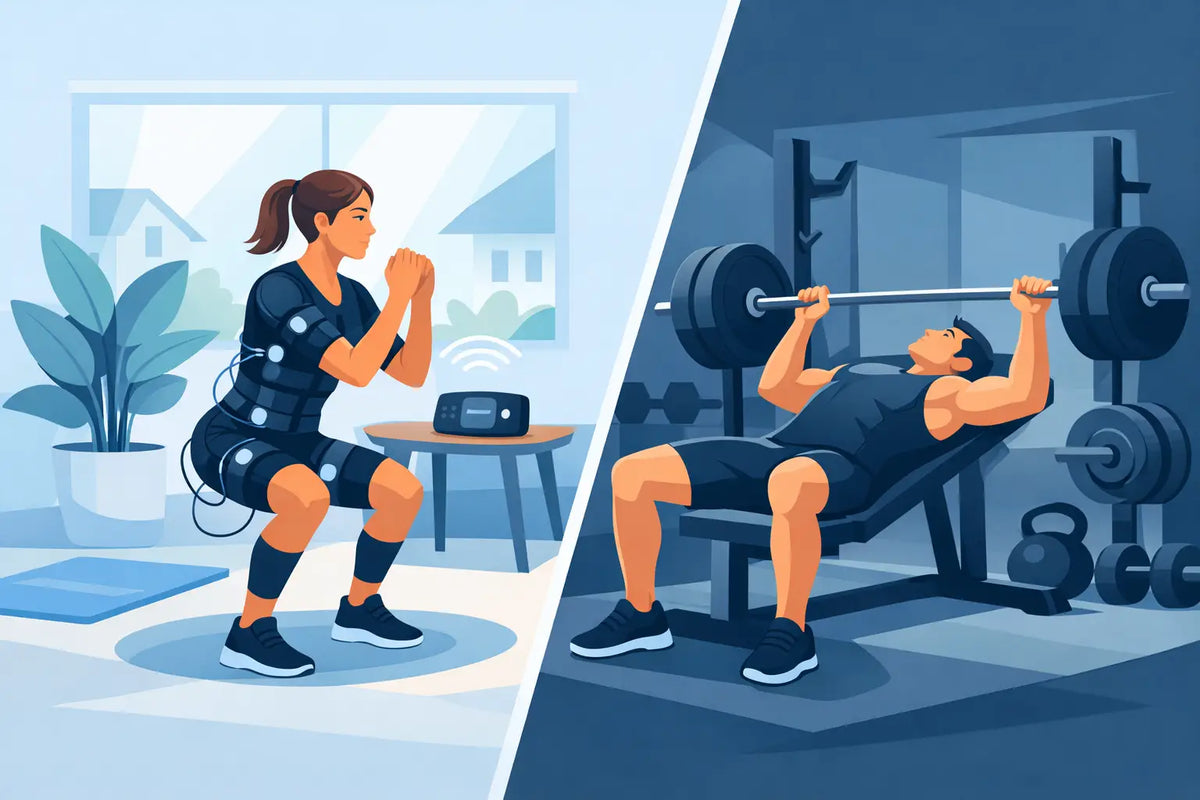
The cleanest way to answer the question is this: EMS can replace gym sessions when the gym’s main role in your life is general fitness, body toning, calorie-burning workouts, and strength support. It is less likely to replace the gym fully if your training depends on heavy external loads, specialised equipment, or sport-specific performance work.
For most adults, the first category is far more relevant.
A lot of people are not trying to become elite lifters. They want to feel fit again. They want to look better in their clothes. They want more energy, more confidence, and a routine they can keep. In that context, EMS is not some lesser version of training. It is a better-matched solution.
The gym asks for time in big blocks. EMS asks for commitment in smaller, more manageable pieces. That difference sounds small until real life gets involved.
A smarter question than “replacement”
Sometimes the better question is not can EMS replace gym sessions, but should it replace the kind of gym routine you never manage to maintain?
If your current setup leaves you inconsistent, frustrated, and always planning to start properly next Monday, then replacing some or all of those sessions may be exactly the right move. Fitness should challenge your body, not your diary.
You also do not have to be extreme about it. Some people use EMS as their main training method and add walks, runs, or occasional gym sessions around it. Others switch fully because convenience is what finally keeps them on track. Both approaches can work.
What matters is whether your training method helps you show up often enough to create change. That is the standard that counts.
So, can EMS replace gym sessions?
For a huge number of people, yes - especially if your priority is efficient training, visible results, and consistency that fits into a busy life. It may not replace every heavy lift, every machine, or every training style. But it can replace the part that matters most: having a workout system you actually use.
And that is where results begin. Not with more plans, more guilt, or more hours. Just a practical routine you can stick to, even on the weeks when life is full.
If you want fitness to work in the real world, not just on paper, that is a very strong place to start.