How to Personalise EMS Intensity Levels
If your EMS workout feels too weak, too intense, or just oddly uneven, the issue usually is not the suit. It is the settings. Learning how to personalise EMS intensity levels is what turns a generic session into training that actually fits your body, your goals, and your day.
That matters because EMS is not supposed to feel identical every time. Your legs might handle more than your core. Your recovery day should not feel like your strength day. Even stress, sleep, hydration, and where you are in your training week can change how the impulses feel. Personalisation is not a bonus feature. It is the reason EMS can work so well in real life.
Why EMS intensity should never be one-size-fits-all
A lot of people assume higher intensity always means better results. It sounds disciplined, but it is not how smart training works. EMS intensity needs to be high enough to create a meaningful muscular response, while still allowing good movement, steady breathing, and proper control.
If intensity is too low, the workout can feel underpowered and you may not recruit the muscle effectively. If it is too high, your form can break down, certain areas can dominate the session, and the whole thing becomes something you endure rather than use well. The sweet spot sits in the middle - challenging, clear, and sustainable.
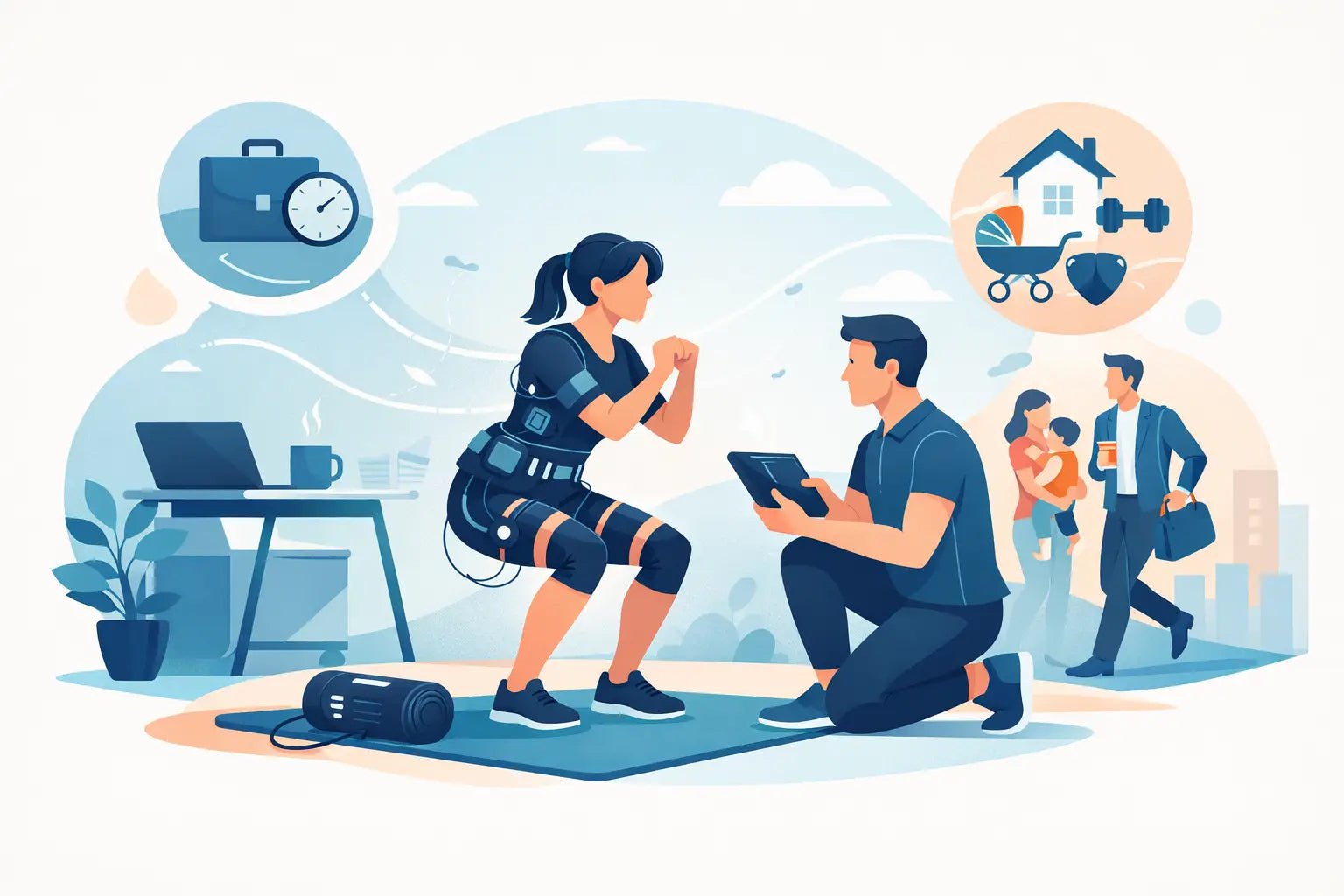
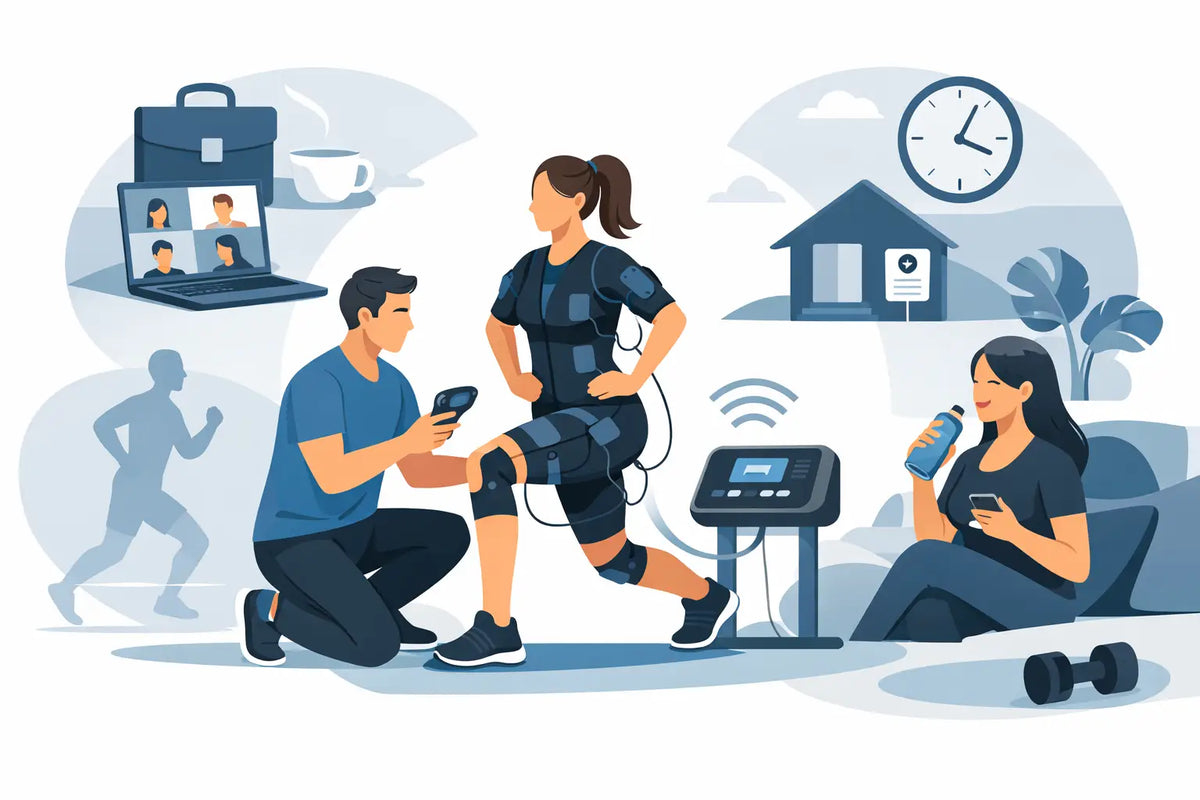
This is especially important when you are training around a busy life. If you only have 20 minutes, every minute needs to count. Personalising intensity helps you get more from the session without wasting energy on the wrong settings.
How to personalise EMS intensity levels without guessing
The best way to personalise EMS is to think in layers, not in one big jump. You are not choosing a single number and hoping for the best. You are adjusting muscle groups, workout mode, and session purpose so the intensity matches what you need that day.
Start with sensation, not ego. Each muscle group should feel active and engaged, but not sharp, cramped, or chaotic. A good setting feels firm and deliberate. You know the muscle is working, but you can still move with control. If one area feels like it is hijacking the entire session, pull it back slightly. If another barely registers, bring it up gradually.
Most users do better when they build intensity in stages over the first few sessions. That gives your body time to adapt to the sensation and helps you learn the difference between productive stimulus and simply turning everything too high. Fast progress is great. Rushing your settings is not.
Start by adjusting each muscle group separately
This is where real personalisation begins. Your body is not evenly matched from top to bottom, so your EMS settings should not be either. Glutes, quads, hamstrings, abdominals, chest, back, arms - each area can need a different level.
For example, larger lower-body muscles often tolerate stronger stimulation than smaller or more sensitive areas. Your core may need a more measured increase, especially if you are new to EMS or returning after time off. The right approach is simple: bring each muscle group up until it feels clearly activated, then stop before it affects posture or movement quality.
If you are squatting, lunging, or holding a plank, your intensity should support the exercise, not fight it. The moment the pulse starts disrupting your control, it is no longer helping.
Match the intensity to the mode
Not every session should feel the same because not every goal is the same. Cardio, fat burn, muscle build, yoga, and relaxation modes all create a different training effect, so the ideal intensity level shifts with them.
In a muscle-building session, you may want a stronger contraction through the main working muscles, especially when movement is slower and more controlled. In cardio mode, intensity often works better a touch lower so you can keep rhythm, pace, and range of motion. In yoga or recovery-focused sessions, chasing maximum stimulation misses the point. The goal there is support, activation, and flow.
This is where people often get stuck. They assume personalisation means pushing everything upwards. Often, it means being more precise instead.
What the right EMS intensity actually feels like
A well-set session feels demanding but manageable. You should notice strong muscle engagement, a clear pulse pattern, and a sense that the suit is amplifying your effort rather than replacing it.
You should not feel stabbing discomfort, numbness, or a loss of control. If you are tensing your face, holding your breath, or shortening every movement to cope with the stimulation, the intensity is too high. More is not more if the quality drops.
A useful rule is this: during work phases, the stimulation should feel like a serious challenge you can stay with. During recovery phases, it should reduce enough for you to reset properly. If both phases feel equally overwhelming, your settings need attention.
Factors that change your ideal intensity from day to day
This is the part people underestimate. The right EMS setting is not fixed forever. It changes because you do.
Hydration makes a difference. So does sleep. So does muscle soreness from your last session. A high-stress day can make the stimulation feel stronger. Training during a menstrual cycle can also affect sensitivity and comfort levels for some women. None of that means something is wrong. It just means your settings should reflect reality, not yesterday.
That is why the smartest users do a short check-in before starting. How recovered do you feel? Which muscles are fresh, and which still feel worked? Are you aiming for output today, or consistency? Those answers should shape the session.
Common mistakes when personalising EMS intensity levels
One of the biggest mistakes is increasing everything at once. It feels efficient, but it makes it much harder to tell which muscle groups are set well and which are not. Another is copying someone else’s settings. Even if their goal matches yours, their tolerance, muscle development, and movement quality may not.
Some people also leave weaker areas too low because they feel less comfortable there. That can create imbalances over time. The better move is to increase those areas gradually and consistently, rather than ignoring them.
Then there is the all-or-nothing mindset. One hard session does not beat a month of steady training. If lower intensity helps you stay consistent, move well, and come back again in two days, that is the stronger strategy.
How to progress your EMS settings over time
Progression should feel earned, not random. Once a muscle group feels familiar at a given level and your movement stays clean throughout the session, that is usually the time to increase slightly.
Small jumps work better than dramatic ones. EMS is already efficient. You do not need huge leaps to create progress. A modest increase in one or two muscle groups, or a slightly stronger setting in a specific mode, is often enough to keep training effective.
It also helps to progress with purpose. If your goal is stronger glutes, you might prioritise those settings within lower-body sessions. If you want more core definition and stability, your progression might focus there first. Personalisation is not just about comfort. It is about directing effort where it matters most.
A simple approach for beginners and returning users
If you are new to EMS, or restarting after a long break, keep the first few sessions controlled. Set each area to a level that feels clear but not intimidating. Use that time to learn your response, improve confidence, and understand how different modes affect your body.
From there, increase gradually over the next sessions based on what felt undertrained and what felt spot on. This approach may sound conservative, but it usually gets better results. You train better when you trust the process and understand the feedback your body is giving you.
With a system like TWENTY Fitness, that control is the whole point. You are not locked into a standard workout. You can shape the experience around your body, your schedule, and the result you want from those 20 minutes.
When to lower the intensity on purpose
There is nothing weak about reducing intensity when the session calls for it. Recovery days, technique-focused sessions, and stressful weeks all benefit from a smarter dialled-back approach.
Lower intensity can help you stay consistent when motivation is low or energy is limited. It can also improve form, especially if you are learning new movements or trying to reconnect with specific muscle groups. Sometimes the best session is not the hardest one. It is the one that keeps momentum alive.
The goal is not to prove how much you can tolerate. The goal is to train in a way that fits your life and still moves you forward. That is where EMS becomes more than a gadget. It becomes a practical system you can actually stick with.
The strongest habit you can build is simple: adjust with intention. If you keep listening, refining, and training at the level your body can use well, better sessions follow - and so do better results.