EMS Training Beginner Guide for Fast Results
You do not need more motivation. You need a training method that fits real life. This EMS training beginner guide is for anyone who is tired of missing gym sessions, starting over on Mondays, or trying to squeeze hour-long workouts into a packed week.
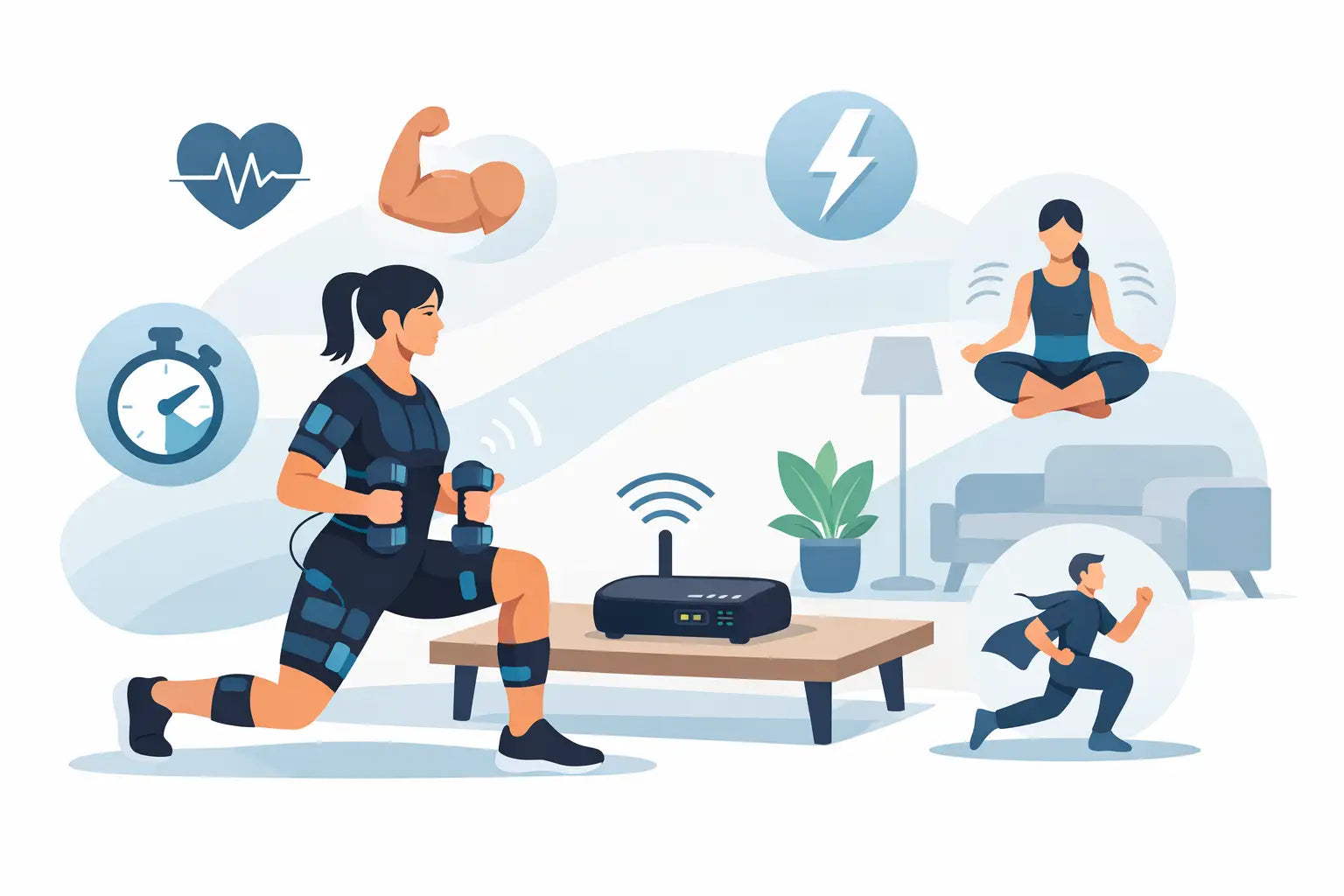
EMS can feel high-tech at first, but the idea is simple. Electrical muscle stimulation sends controlled impulses to your muscles while you move, helping them contract more intensely than they would in a standard bodyweight session alone. Done properly, it turns a short workout into a serious session. That is why EMS appeals to busy professionals, parents and anyone who wants visible progress without building their week around the gym.
What EMS training actually does
EMS training works by stimulating multiple muscle groups at the same time. Instead of relying only on voluntary contraction, the suit supports the movement with electrical impulses that increase the training demand. In practical terms, a squat feels more like a proper effort, a lunge asks more from your legs and glutes, and a core hold becomes harder to coast through.
That does not mean more is always better. The goal is not to crank the intensity to the ceiling on day one. The goal is to create enough stimulus to improve muscle tone, strength, endurance and consistency without overwhelming your body.
For beginners, that balance matters. EMS is efficient because it compresses effort, not because it skips the basics. Good form, sensible progression and recovery still count.
EMS training beginner guide: what to expect in your first week
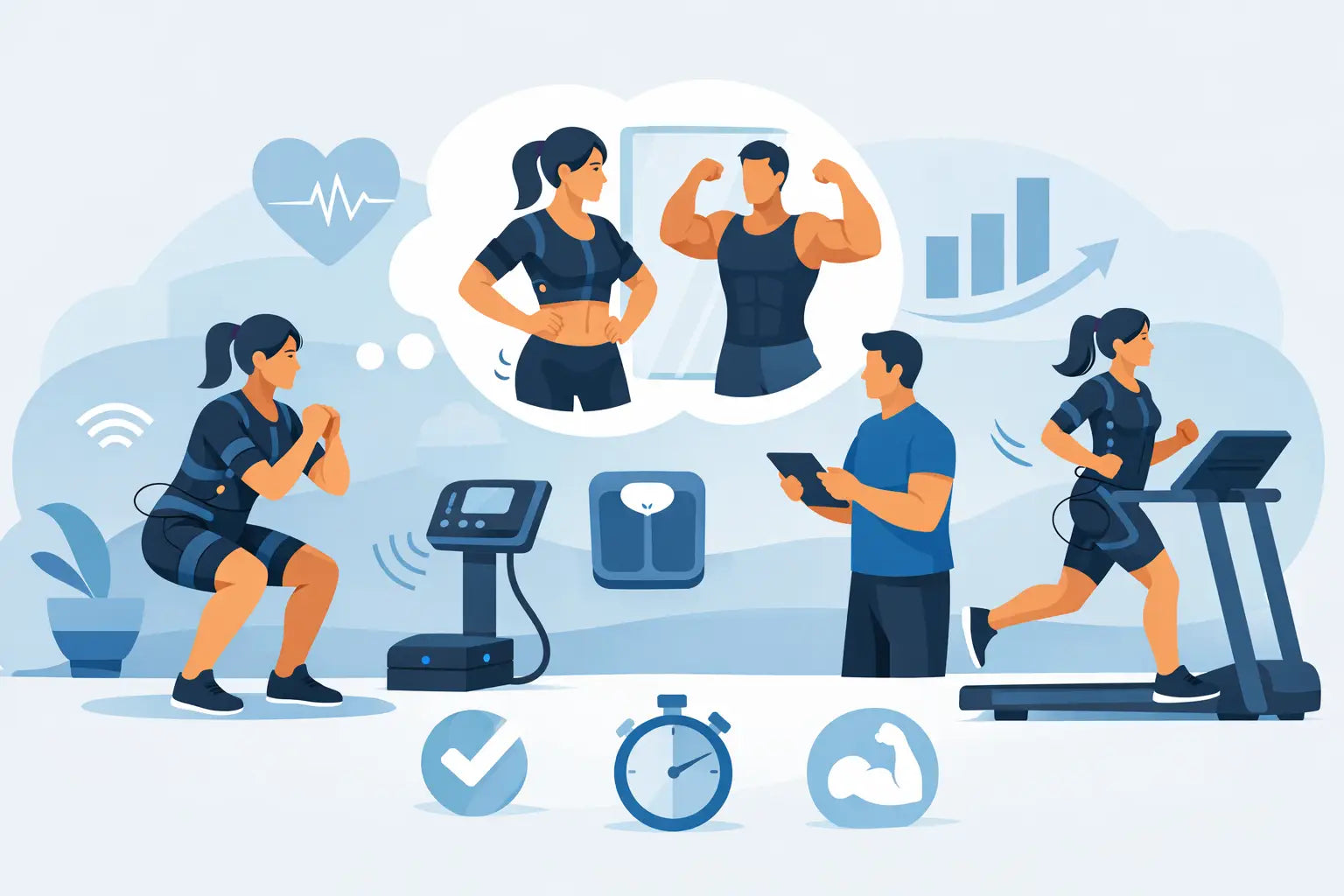
Your first few sessions should feel controlled, not heroic. Most beginners are surprised by two things. First, the pulses feel unusual for a minute or two, then your body quickly adapts. Second, 20 minutes is more than enough when the intensity is set well.
You can expect the suit to target major muscle groups such as legs, glutes, core, back, chest and arms. Depending on the system, you may also be able to adjust different zones individually. That matters because not every body responds the same way. Some people prefer more intensity through the legs and glutes, while others need to ease into abdominal work or upper-body stimulation.
Mild muscle soreness after the first sessions is normal, especially if you have not trained consistently for a while. What you do not want is to finish feeling wrecked for days. If that happens, the intensity was likely too high, the workout was too ambitious, or your recovery habits need attention.
How to start safely without wasting your first sessions
The smartest way to begin is to treat EMS like strength training, not a novelty. Start below your maximum and build up. Your body needs time to learn how the sensation feels, how to move under stimulation and how to recover from it.
Begin with two sessions per week, with at least 48 hours between them. That spacing gives your muscles time to adapt. If you already train regularly and recover well, you might add low-intensity movement between sessions, such as walking, mobility work or light cycling. If you are coming back after a long break, keep it simple. Consistency beats ambition every time.
Hydration matters more than many beginners expect. Arrive well hydrated and keep your routine consistent. It also helps to avoid training when you are exhausted, hungover or seriously sleep-deprived. EMS is efficient, but your body still has limits.
If you have a medical condition, implanted electronic devices, or any health concerns, speak to a qualified medical professional before starting. EMS is not a one-size-fits-all solution.
Getting the intensity right
This is where beginners either build momentum or ruin it. Too low, and the session feels underwhelming. Too high, and you tense up, lose form and dread the next workout.
The right intensity feels challenging but manageable. You should be able to move with control, maintain your breathing and finish the session knowing you worked hard. A good rule is this: if the pulse makes you compromise your squat depth, rush your reps or brace awkwardly, dial it back.
With app-controlled systems, one of the biggest advantages is personalisation. You can increase or reduce specific muscle groups instead of forcing the whole body into the same level. That makes the experience more useful for beginners because you can build confidence in one area without overloading another.
The best workouts for an EMS beginner
You do not need complicated programming at the start. In fact, simpler is better. Focus on basic movement patterns that train large muscle groups and reinforce control. Squats, reverse lunges, glute bridges, standing rows, presses, planks and dead bug variations are enough to create a strong foundation.
Cardio-style EMS sessions can also work well for beginners who want to improve fitness and burn calories, but they should still be structured. Short circuits with marching, step work, bodyweight squats and controlled core exercises usually beat frantic jumping around. The point is to keep quality high while the suit increases the training demand.
If your system offers modes such as fat burn, muscle build, cardio, yoga or relaxation, choose based on your immediate goal and your training background. A deconditioned beginner may do better with a lower-intensity strength or cardio setting before moving into more demanding muscle-building sessions. Someone with a decent fitness base may progress faster. It depends on where you are starting, not where you want to be by next Friday.
Common mistakes beginners make
The biggest mistake is chasing maximum intensity too soon. It feels productive in the moment, but it often leads to poor recovery and missed sessions. Fast results come from repeated good workouts, not one brutal one.
The second mistake is expecting EMS to work without effort. The suit helps your muscles work harder, but you still need to move well and show up consistently. It is not passive fitness dressed up as tech.
A third mistake is doing too much on top. If you add hard runs, heavy gym sessions and extra circuits while your body is still adapting to EMS, your recovery can fall apart. Start with a realistic weekly plan and earn the right to progress.
Finally, some beginners ignore nutrition and sleep because the workout is short. That is backwards. If 20 minutes can change everything, recovery habits are what help those 20 minutes pay off.
How soon will you see results?
This depends on your starting point, session quality, diet, sleep and overall activity. Some people notice better muscle activation and energy within the first couple of weeks. Visible changes in tone, posture and body composition usually take longer and come from consistency rather than novelty.
If your goal is fat loss, EMS can support it by making training more efficient and helping you preserve or build muscle. But it still works best alongside a sensible calorie intake and regular movement. If your goal is muscle tone, you will likely notice firmer contractions and improved shape as training accumulates. If your goal is simply to get back into a routine, EMS has a clear edge: it removes the time barrier that often kills momentum.
That is the real win for most people. Not perfection. Not punishment. Just a method you can actually stick with.
Building a weekly routine that lasts
A strong beginner routine often looks almost boring on paper, which is exactly why it works. Two EMS sessions a week, a few walks, decent hydration, enough protein and better sleep will take you further than an all-or-nothing plan.
If you enjoy structure, give each session a purpose. One can focus on lower body and core with a strength bias. The other can lean into full-body conditioning or upper-body work. Keep each session short, track how you feel, and increase intensity gradually over several weeks rather than several minutes.
For busy people, the biggest benefit is not just efficiency. It is reduced friction. When your training setup is simple, guided and easy to repeat, excuses lose their grip. That is where systems like TWENTY make sense - they turn advanced training into something practical enough for ordinary weekdays.
EMS training beginner guide: who gets the most from it?
EMS suits are especially useful for people who value time, convenience and structure. If you struggle to get to the gym, lose momentum after a long working day, or want guided sessions at home, EMS can be a very smart fit.
It can also suit people who get bored with traditional routines because the sensation feels different and the sessions are short. That said, if you love heavy barbell training and already have a routine you follow four or five times a week, EMS may work better as an addition than a replacement. The best approach depends on your goal, your schedule and what you will actually keep doing.
The beginner mindset to keep is simple: start controlled, train with intent, and let the results build. You do not need endless hours. You need a system you trust enough to keep using when life gets busy again.