Is EMS Training Effective? What Results to Expect
When your calendar is full, a 90-minute gym session can feel less like a plan and more like a fantasy. That is exactly why so many people ask, is EMS training effective, or is it just another shortcut that sounds better than it works?
The honest answer is yes, EMS training can be effective. But like any training method, results depend on how you use it, what goal you are chasing, and whether you stay consistent. Used properly, EMS can help improve muscle activation, support strength and tone, raise training intensity, and make shorter workouts far more productive. It is not magic. It is efficient training with technology doing part of the heavy lifting.
Is EMS training effective for real-world fitness goals?
For most people, the real question is not whether EMS works in a lab. It is whether it works in real life, when you are juggling work, family, tired legs and limited motivation.
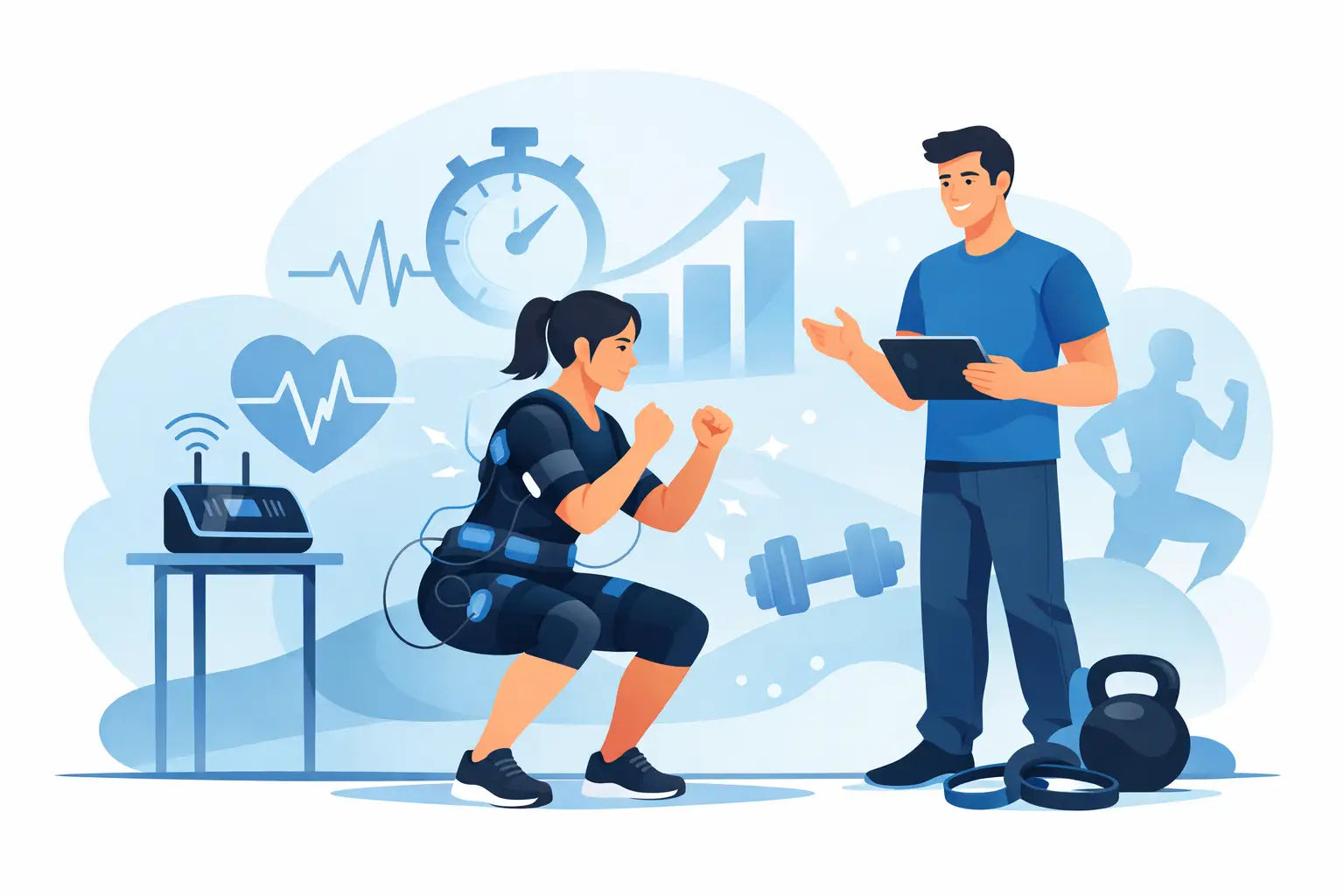
That is where EMS stands out. Electrical Muscle Stimulation sends impulses to your muscles while you move, causing deeper and more frequent contractions than many people achieve during standard low-effort workouts. In simple terms, your muscles are being asked to do more in less time.
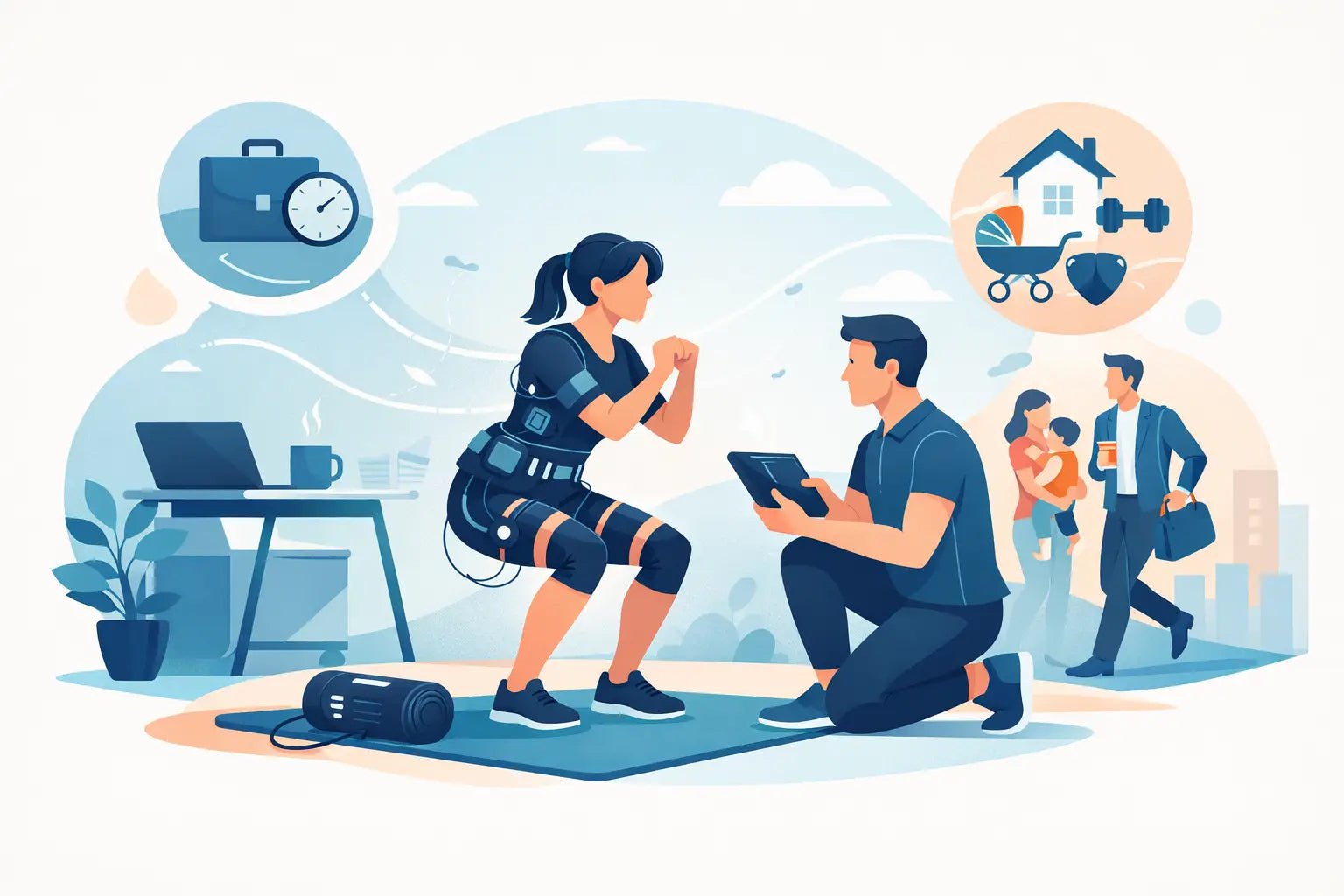
That can be especially useful for busy adults who struggle with consistency. If your main barrier is not knowledge but time, a shorter, guided, more intense session can be the difference between training regularly and not training at all. And consistency changes bodies.
EMS is often most effective when your goals include improving muscle tone, building a stronger training habit, increasing workout intensity, or supporting fat loss alongside sensible nutrition. It can also help people who do not enjoy traditional gym environments but still want structure and visible progress.
How EMS actually works
EMS training uses electrical impulses to stimulate muscle contractions. Your body already contracts muscles using electrical signals from the nervous system. EMS adds an external signal to increase the recruitment of muscle fibres during exercise.
That matters because one of the biggest limits in ordinary training is not always the exercise itself. It is whether you are activating enough muscle, with enough effort, often enough. EMS helps close that gap.
During an EMS session, the suit targets key muscle groups such as legs, glutes, abdominals, chest, back and arms. As you perform controlled movements, the stimulation increases the demand on those muscles. A squat feels more demanding. A lunge asks more of your glutes and thighs. Core work becomes harder to fake.
This is one reason people often describe EMS as intense despite the sessions being short. Twenty minutes can feel like a serious workout when multiple muscle groups are firing at once.
Where EMS training is most effective
EMS works best when it is used for what it does well rather than what people wish it did.
If your goal is muscle tone and body composition, EMS can be a strong tool. The increased muscle activation can help create a better training stimulus in less time, which is valuable if you want efficient sessions that fit around a busy life.
If your goal is strength improvement, EMS can help there too, particularly for beginners, returners to exercise, or anyone whose previous training lacked intensity. It may not replace very heavy lifting for advanced strength athletes, but that is not what most people need. Most people want to feel stronger, look fitter and stay consistent.
If your goal is fat loss, EMS can support it, but not on its own. No training system can outrun a poor diet and random habits. EMS helps by making workouts more efficient, increasing muscular demand and making it easier to train regularly. Pair that with a calorie-controlled diet and enough sleep, and it becomes much more effective.
If your goal is mobility, recovery or low-impact movement, EMS can also play a role depending on the mode and intensity used. Many people like that it offers a guided way to train without the wear and tear of high-impact routines.
Where the hype needs a reality check
Let us be clear. EMS is effective, but it is not a licence to do nothing else.
If someone promises you effortless body transformation while you sit still and ignore every other part of your lifestyle, that is marketing getting ahead of physiology. EMS is a training tool, not a free pass.
Results still depend on frequency, effort and progression. If you wear the suit occasionally, choose low intensity every time and expect dramatic change within a week, you will be disappointed. The same would be true with any fitness method.
There is also a difference between effective and optimal. For a bodybuilder chasing maximum muscle size with a highly specialised programme, traditional resistance training will still matter. For a marathon runner, sport-specific endurance work still matters. EMS is not trying to replace every method for every athlete.
But for the average person who wants better results in less time, without living in the gym, that trade-off often makes perfect sense.
Is EMS training effective compared with normal workouts?
This is where context matters.
Compared with doing nothing, EMS is obviously more effective. Compared with half-hearted home workouts that never challenge your muscles enough, EMS can be dramatically more effective. Compared with a well-designed gym programme followed consistently for years, it depends on the goal.
The real advantage of EMS is efficiency. It compresses a lot of muscular work into a short session. That is a serious benefit for people who do not have the schedule, energy or desire for long workouts.
There is also the guidance factor. Many people waste time in the gym because they are unsure what to do, switch routines constantly, or never train with enough intent. A structured EMS setup removes friction. You put the suit on, select the mode, follow the session and get to work.
That simplicity is underrated. The best programme is not the one that looks impressive on paper. It is the one you can actually stick to.
What results can you realistically expect?
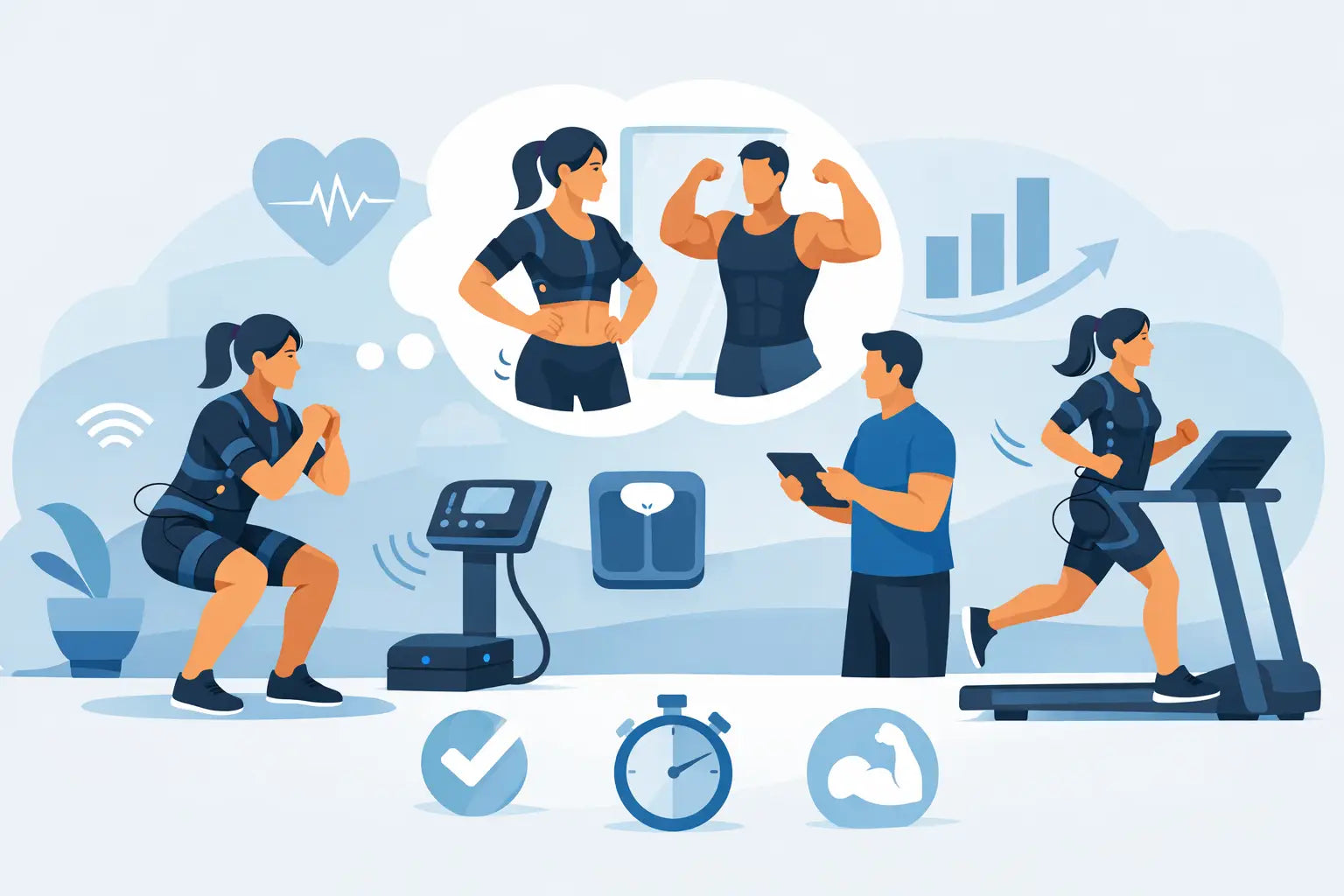
If you train consistently, eat reasonably well and use proper intensity, you can expect noticeable improvements in muscle tone, body firmness, strength and general fitness over time. Many people also report better posture, stronger core engagement and a more defined feel in areas that are easy to neglect in ordinary training.
How quickly that happens depends on your starting point. If you are coming back after months of inconsistent exercise, results often appear faster because almost any structured effort is an upgrade. If you are already fit, the changes may be subtler and more performance-focused.
A realistic expectation is progress over weeks, not miracles overnight. Think better workouts, stronger contractions, improved consistency and visible changes building steadily. That is how sustainable transformation works.
Who tends to get the most from EMS?
EMS tends to suit people who value efficiency and want less friction between intention and action. Working professionals, parents, frequent travellers and anyone bored by traditional gym routines often respond well because the method respects their time.
It can also be useful for beginners who want a guided start. When exercise feels confusing or intimidating, a more structured and targeted system can make it easier to begin and easier to continue.
The people who get the least from EMS are usually not the ones with the busiest schedules. They are the ones looking for a passive fix. If you want results, you still need to show up, push yourself and repeat the process.
How to make EMS training actually work
First, train consistently. Two strong sessions every week will beat random bursts of motivation every time.
Second, use enough intensity. EMS should feel challenging, even though it can be adjusted to your level. If it always feels easy, your body has little reason to adapt.
Third, match the mode to the goal. If you want muscle-building support, train for that. If you want cardio or fat-burn sessions, use those strategically rather than bouncing between settings without a plan.
Fourth, support the training with basic habits. Protein matters. Sleep matters. Daily movement matters. EMS can make your workouts more efficient, but it works best when the rest of your lifestyle is not pulling in the opposite direction.
A well-designed system like TWENTY Fitness also helps because personalisation makes a difference. Being able to adjust muscle groups, intensity and training mode gives you a more practical route to progression instead of a one-size-fits-all experience.
So, is EMS training effective?
Yes, for the right person and the right purpose, it absolutely is.
EMS is effective because it increases muscle activation, makes short workouts count for more and helps busy people train with structure and intensity. It is not better than every other method in every situation. It does not replace discipline. But it solves a very real problem: how to get meaningful training done when life is already full.
If long gym sessions have been your biggest obstacle, that matters. Fitness does not need to take over your day to change your body and your energy. Sometimes the smartest system is the one you can actually keep using next week, next month and long after motivation stops doing the work for you.