Is EMS Training Worth It for Busy Adults?
You do not need another fitness plan that looks good on Monday and disappears by Thursday. If you are asking is EMS training worth it, the real question is simpler: can it help you train consistently, get visible results, and do it without swallowing hours of your week?
For a lot of busy adults, that is exactly where EMS stands out. It promises shorter sessions, guided intensity, and a more efficient route to muscle activation than a standard home workout. But worth it is not the same as magic. EMS can be excellent value for the right person, and a poor fit for someone expecting instant change with no effort.
Is EMS training worth it when time is the problem?
If your biggest obstacle is time, EMS has a strong case. Traditional training often asks for the full package: travel, changing, a warm-up, the workout itself, and the mental energy to make it happen. That can turn a 45-minute plan into a two-hour commitment.
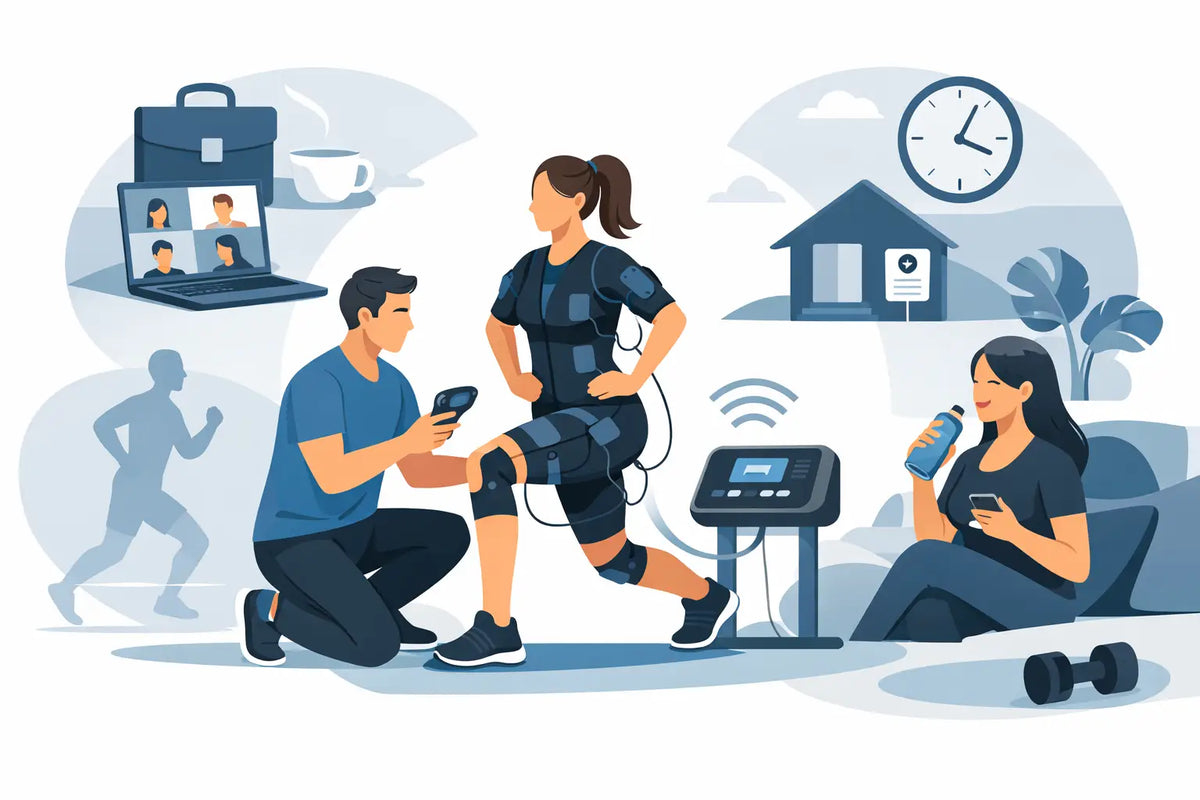
EMS changes the maths. By using electrical muscle stimulation alongside movement, it increases muscle recruitment during a shorter session. That means 20 minutes can feel serious. Not easy - serious. For professionals, parents, and anyone juggling work, family, and life, that matters.
The value is not just in saving time. It is in making consistency more realistic. A training method that fits your week will nearly always beat the perfect plan you cannot sustain.
What you are actually paying for
Some people hear “EMS” and think they are paying for a gadget. That misses the point. What you are really paying for is efficiency, structure, and a more guided experience.
A good EMS system combines the suit, the stimulation technology, adjustable intensity, targeted muscle groups, and programmed workout modes. That changes how training feels. Instead of guessing your way through another rushed home session, you follow a system with built-in progression.
That matters because most people do not fail from lack of effort. They fail from friction. Too many steps. Too much guesswork. Too many workouts that never quite feel effective. If EMS reduces that friction, its value goes well beyond the hardware.
Where EMS training delivers real value
EMS training tends to be most worth it for people who want one or more of four things: better consistency, stronger muscle engagement, less time spent training, and more motivation at home.
The first benefit is efficiency. With EMS, your muscles are being stimulated while you perform exercises, which can make short sessions feel far more demanding than their duration suggests. That is why people with packed schedules often stick with it.
The second is accessibility. Not everyone wants the gym environment. Some people do not have the time, confidence, or routine for regular gym visits. Training at home removes travel and lowers the barrier to starting.
The third is personalisation. Adjustable intensity and selectable muscle groups make a big difference. Beginners can start lower and build confidence. More experienced users can push harder and tailor sessions to their goals, whether that is muscle tone, cardio support, recovery, or general fitness.
The fourth is momentum. When workouts feel manageable in your real life, they stop being an all-or-nothing event. That is often the point where results start to happen.
The part nobody should oversell
EMS is powerful, but it is not a shortcut past the basics. It still works best when it sits inside a bigger picture that includes sensible nutrition, enough sleep, and regular use.
If someone buys an EMS suit, uses it twice, eats chaotically, and expects a transformation by next month, they will be disappointed. That does not mean EMS failed. It means no training method can carry the entire load on its own.
It is also worth saying that EMS is not automatically better than every conventional workout. If you already follow a solid training plan you enjoy, have time for it, and stay consistent, you may not need to change anything. EMS becomes most compelling when your current routine is not happening, not working, or not fitting your life.
Is EMS training worth it for weight loss?
It can be, but not for the reason many people assume. EMS does not “melt fat” while you sit still and scroll on your mobile phone. The better argument is that it makes effective training easier to keep doing.
Weight loss usually comes down to a sustainable calorie deficit supported by movement and muscle retention. EMS can support that by helping you train hard in less time, maintain or build muscle tone, and stay consistent enough for your efforts to compound.
That last point is the big one. A method you can repeat every week is far more valuable than a method that looks impressive but falls apart after ten days. If EMS helps you maintain discipline without needing huge blocks of time, then yes, it can absolutely be worth it for fat-loss goals.
Is EMS training worth it for muscle tone and strength?
For many users, yes. EMS is especially appealing if your goal is to feel firmer, stronger, and more switched on physically rather than chase elite lifting numbers.
Because EMS increases muscle fibre recruitment, sessions can produce a deep training effect even with low-impact movements. That can be useful for people who want to improve muscle tone and general strength but do not want long gym sessions or complicated programming.
There is a trade-off, though. If your main goal is maximum strength with heavy barbells, conventional strength training still has a clear role. EMS can support strength development, but it is not a direct replacement for highly specific heavy lifting.
For the average busy adult, that is rarely a dealbreaker. Most people are not trying to compete in powerlifting. They want to look better, feel stronger, move with more confidence, and get results they can actually maintain.
Who gets the best return from EMS?
The best fit is usually someone who values efficiency over tradition. They do not need fitness to become a hobby. They need it to become a habit.
That includes professionals with packed calendars, parents squeezing training around childcare, frequent travellers, and people who have started and stopped countless routines because life got in the way. For them, EMS can feel less like a novelty and more like a practical solution.
It also suits people who like guidance. App-based controls, structured modes, and progressive intensity make the process clearer. You are not left wondering if your workout was enough. You can feel it.
TWENTY Fitness leans into that reality well - not by pretending effort is optional, but by making effective training easier to fit into everyday life.
When EMS may not be worth it
There are cases where the answer is no. If you already love long gym sessions and have no trouble keeping them up, EMS may feel unnecessary. If you dislike wearing fitted training gear or want the social side of classes and gyms, it may not suit your style.
It may also feel poor value if you are chasing a passive fix. EMS works best when you actively move through the session and use it consistently. It is a training tool, not a lounge chair fantasy.
Cost matters too. An EMS system is an investment, and not everyone will prioritise it the same way. The better question is not whether it is cheap. It is whether it saves enough time, friction, and missed workouts to justify the spend. For some people that answer is immediate. For others, less so.
The real test of whether EMS training is worth it
Forget the hype for a second. The best way to judge EMS is not by asking whether it is better than every form of exercise on paper. Ask whether it solves the reason your current routine keeps breaking down.
If your issue is lack of time, lack of structure, or lack of consistency, EMS can be a very smart investment. If your issue is unrealistic expectations, no training method will rescue that.
Fitness that fits your life is usually the fitness that lasts. And if 20 focused minutes gets you training again, feeling stronger again, and showing up for yourself again, that is not a gimmick. That is value.
The right workout is not the one that sounds hardest. It is the one you will actually do next week, and the week after that.