How to Stay Consistent With EMS Every Week
A missed workout used to mean a full hour lost to travel, changing, training and getting home. That is exactly why so many fitness plans fall apart by week three. Learning how to stay consistent with EMS starts with a different expectation: your training has to fit your real life, not compete with it. A focused 20-minute session can be the part of the day you actually keep.
Consistency is not about feeling motivated every morning. It is about making the next workout so easy to start that a busy diary, low-energy evening or unexpected school pickup does not end your progress. With EMS, you already have an advantage: effective, guided training without the usual time burden. Now give that advantage a routine.
How to stay consistent with EMS when life gets busy
The fastest way to lose momentum is to create an ambitious plan that only works in a perfect week. You tell yourself you will train five times, at the same hour, with full energy and zero interruptions. Then work gets intense, the children are unwell, or you simply sleep badly. One missed session becomes two, and soon the suit stays in its bag.
Build a plan with room for real life instead. Choose two or three core EMS sessions each week and treat them as appointments with yourself. Pick windows that are genuinely repeatable, such as before your morning shower, during a lunch break at home, or shortly after the children are in bed. The best time is not the most impressive time. It is the time you can protect.
Keep a backup slot as well. If Tuesday evening disappears, you should already know that Thursday morning or Saturday afternoon is your replacement. This removes the mental debate that follows a missed session. You are not deciding whether to start again. You are simply moving the appointment.
Start with a frequency you can win
If you are new to EMS, doing less at first can produce better long-term results than going all-in for one intense week. Your body needs time to adapt, especially when sessions challenge multiple muscle groups efficiently. Follow your suit's guidance, allow adequate recovery, and build from a routine you can maintain.
For many people, two sessions a week is the ideal starting point. It feels manageable, creates a clear rhythm and leaves space to recover. Once that is automatic, a third weekly session may make sense depending on your goals, training mode and how your body feels. More is not always better. Repetition over months is what changes your shape, strength and confidence.
Make your EMS routine impossible to overthink
The biggest consistency killer is friction. Not lack of ambition. If every workout requires finding clothes, choosing a programme, deciding what to train and clearing a big chunk of time, your brain will find a reason to postpone it.
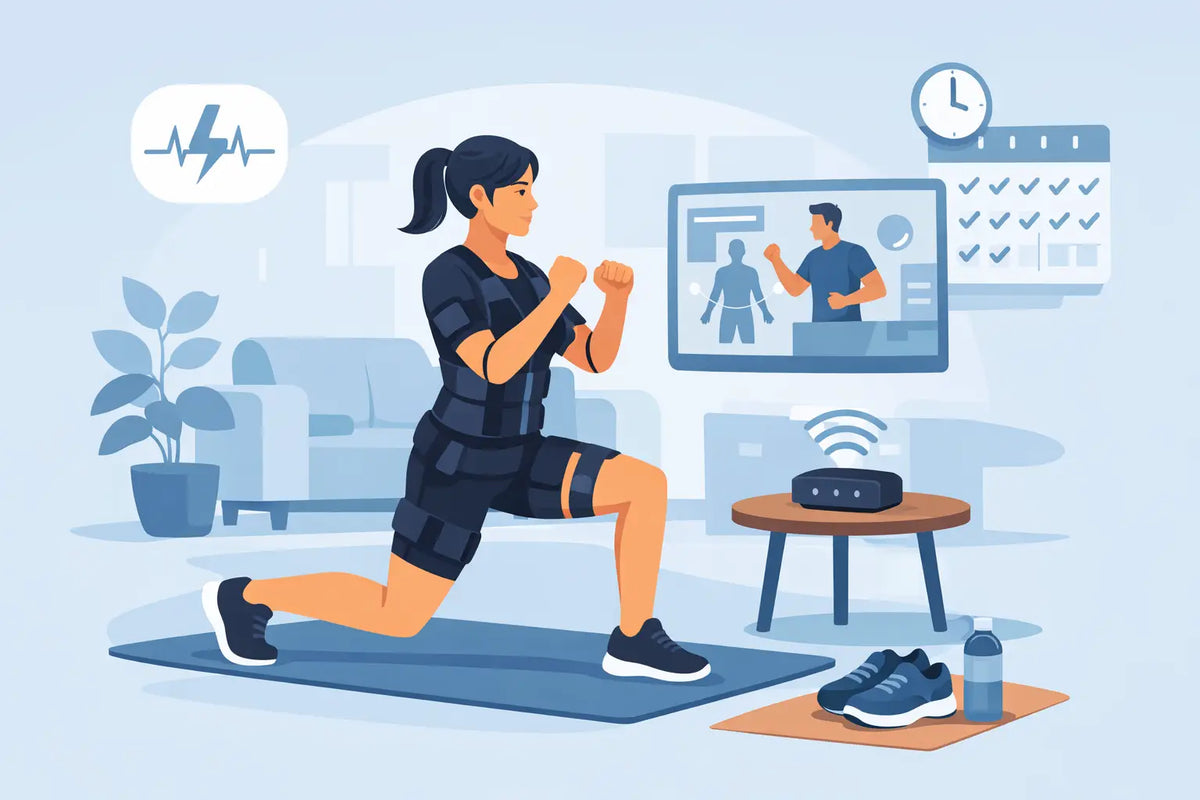
Prepare the simple things in advance. Keep your EMS suit charged and stored where you can see it. Set out the items you need the evening before a morning session. Have one go-to guided workout ready in the app for days when decisions feel like work. A clear setup turns “I should train” into “I can start now”.
It also helps to pair training with an existing habit. Put on your suit after making your first coffee, once you close your laptop for lunch, or before you settle down for the evening. This is called habit stacking, but the principle is straightforward: borrow the reliability of something you already do.
TWENTY Fitness is designed for this kind of practical rhythm. The app-based controls and training modes mean you can choose a session that matches the day rather than forcing every workout to look the same. That flexibility matters. A cardio-led session may suit a high-energy day, while yoga or relaxation can help you keep the appointment when pushing hard is not the right call.
Use intensity with purpose, not ego
EMS is personal. The right intensity is the level that gives you a strong, controlled contraction while allowing you to move with good form and breathe normally. It is not a competition to reach the highest setting as quickly as possible.
Chasing maximum intensity can make sessions feel intimidating, leave you overly sore, or turn training into something you avoid. Build gradually. Learn what each muscle group feels like, adjust the settings through the app and pay attention to your recovery. The goal is to finish feeling challenged and proud, not wiped out for the next three days.
Your intensity may change from session to session. Poor sleep, stress, hydration, other exercise and your general energy all affect how training feels. That does not mean you are failing or going backwards. It means you are responding intelligently. Staying consistent sometimes means choosing a lighter session instead of skipping completely.
If you have a medical condition, are pregnant, use an implanted electronic device, or have any concern about whether EMS is appropriate for you, seek advice from a qualified healthcare professional before starting. Always follow the product instructions and recommended usage guidance.
Create a minimum-version workout
Some days will be chaos. Your original training slot has gone, you are tired, and a full session feels like too much. This is where people usually choose between doing everything and doing nothing. Give yourself a third option.
Decide in advance what your minimum version looks like. It might be a shorter guided session, a lower-intensity mobility-focused workout, or simply putting the suit on and beginning the warm-up. The point is not to chase perfection. It is to protect the identity you are building: someone who follows through.
Often, starting is enough to change the mood. You may complete the whole session after all. If you do not, a lighter workout still keeps the habit alive and gives your body useful movement. One adjusted session does far more for your momentum than an all-or-nothing mindset.
Track proof, not just the scales
Body weight can move slowly and unpredictably. It responds to water retention, meals, hormones and stress, so it is a poor daily judge of whether your effort is working. If the scales are your only scorecard, you may lose motivation before the wider changes become visible.
Track your consistency first. Mark each completed EMS session on a calendar. Notice when your favourite jeans feel better, when stairs feel easier, or when you have more energy at 4 pm. Take occasional progress photos in similar lighting and clothing if physical transformation is one of your goals. These small pieces of evidence make your progress real.
You can also record the intensity levels that feel right for key muscle groups. Over time, seeing what you can comfortably control provides a powerful reminder that you are getting stronger. Results are not only a number. They are the confidence of knowing your body can do more than it could a month ago.
Do not let one missed week become your story
Holidays, deadlines, illness and family demands will interrupt even the best routine. The answer is not guilt. It is a quick return.
When you miss sessions, avoid trying to punish yourself with extra-long workouts or aggressive intensity. Restart with your next planned session, at a sensible level, and rebuild the rhythm. Think in weeks and months, not in flawless streaks. A consistent person is not someone who never misses. It is someone who does not let a missed session decide what happens next.
If you have been away from training for longer, begin again with the simplest possible session. Charge the suit, choose a familiar mode and commit to showing up once this week. Then do it again. Momentum rarely arrives before action. It is created by it.
Your schedule may never become quieter, and that is not the standard you need to meet. Make 20 minutes yours, protect it like it matters, and let every completed session remind you that your goals still have a place in your life.