Can Full Body EMS Training Work in 20 Minutes?
A packed calendar is not a lack of ambition. It is real life. Full body EMS training is built for the days when a gym session feels impossible, but doing nothing no longer feels like an option. With targeted electrical muscle stimulation and purposeful movement, you can make 20 minutes count.
That does not mean standing still while a suit does all the work. The best results come when EMS supports your effort: you move with intent, build a routine you can repeat, and gradually increase the challenge. No time? No excuses. Just a smarter way to show up for yourself.
What is full body EMS training?
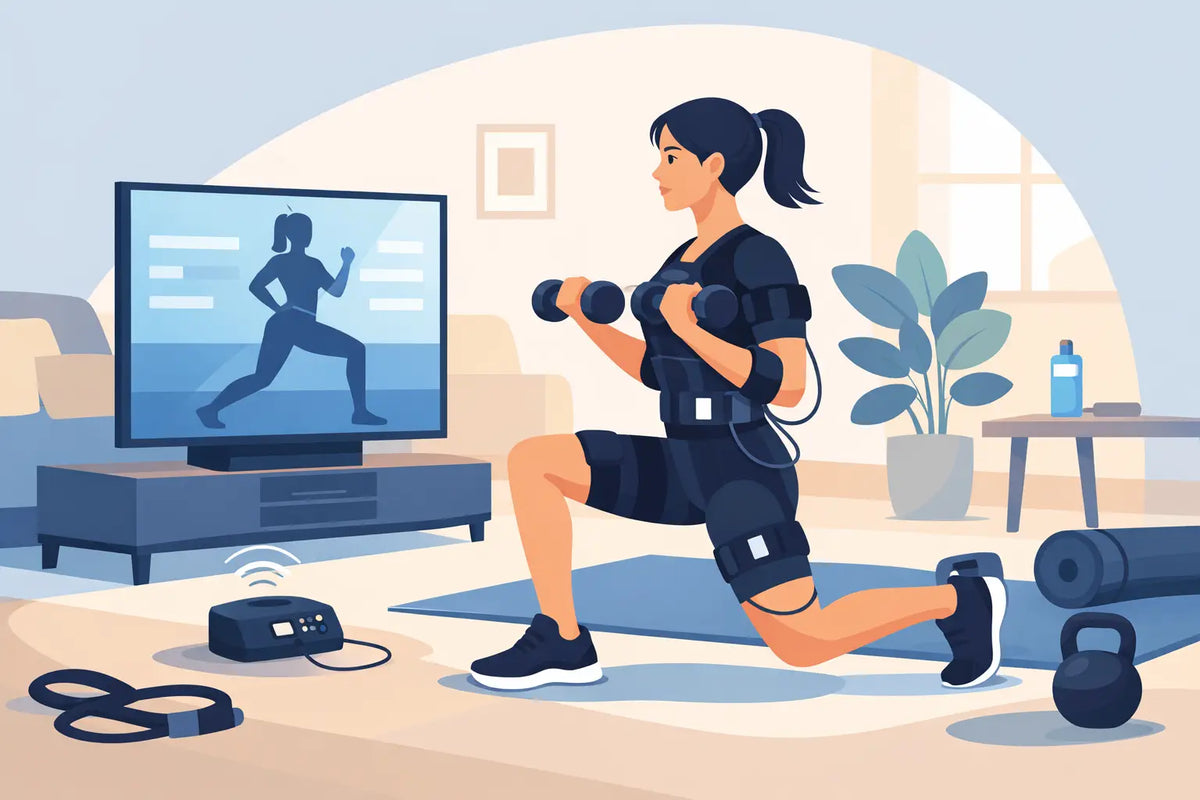
EMS stands for Electrical Muscle Stimulation. An EMS suit sends controlled electrical impulses through electrodes placed across key muscle areas, including the arms, chest, back, core, glutes and legs. These impulses encourage muscle contractions while you perform simple exercises such as squats, lunges, presses, planks or marching movements.
The difference is coverage. Traditional training might focus on one movement or one muscle group at a time. Full body EMS training can activate multiple major areas in the same session, helping you create a more focused whole-body workout without spending an hour moving between machines.
The sensation is often described as a firm pulse, tingle or tightening in the muscles. It should feel challenging, but it should not feel sharp or painful. You control the intensity, so the goal is not to switch everything to maximum. The goal is to find a setting that makes each movement more demanding while allowing you to maintain good form.
Why 20 minutes can be enough
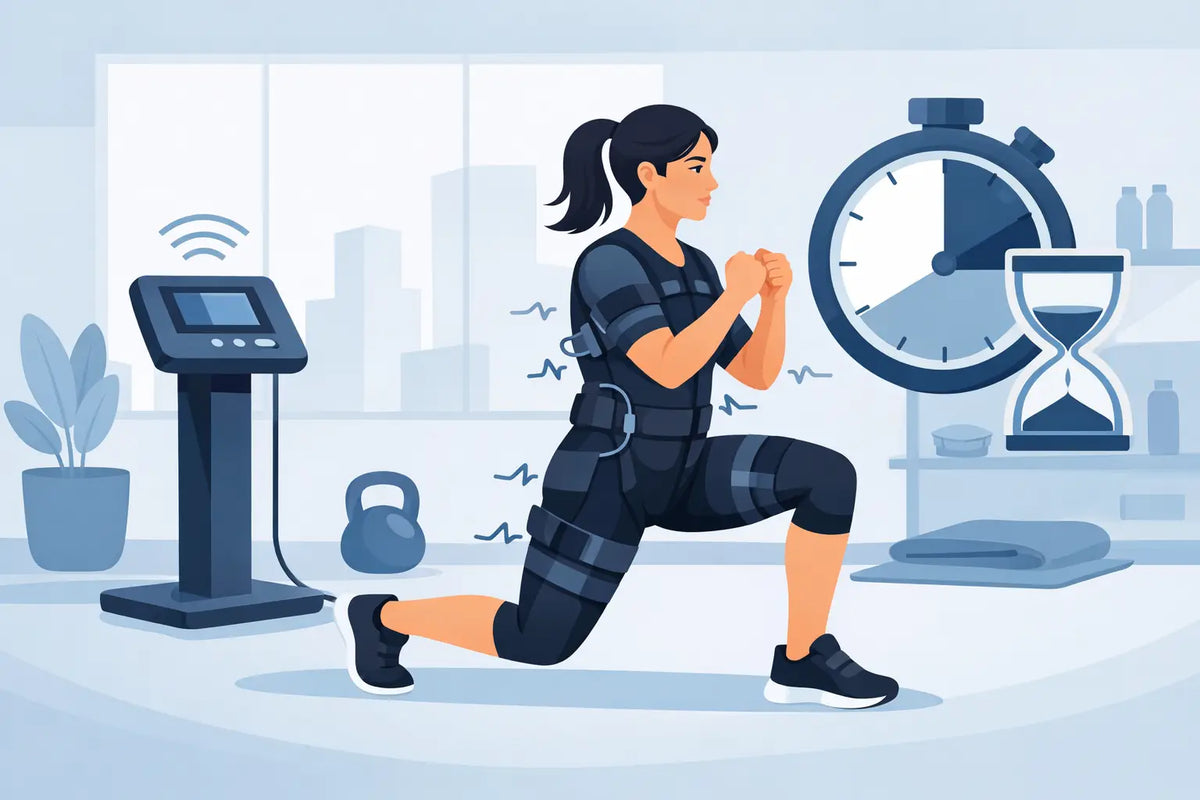
A short workout only works when it has structure. EMS adds intensity to basic movements by pairing voluntary muscle contractions with external stimulation. That means a controlled bodyweight squat can feel far more purposeful than a distracted set performed between emails.
For busy professionals, parents and anyone tired of the start-stop cycle, the biggest advantage is consistency. A 20-minute session is easier to fit around the school run, a lunch break, travel or the end of a long day. When training becomes practical, it becomes something you actually do.
There is a trade-off. EMS does not replace the value of walking, mobility work, sport, sleep or a balanced diet. It also cannot promise a certain body shape in a certain number of days. Fat loss still depends largely on your overall energy balance, and muscle development still needs progressive challenge, recovery and enough protein. What EMS can do is help make your strength-focused sessions more efficient and easier to maintain.
How a full body EMS session should feel
Your first session should be about learning, not proving anything. Start with low-to-moderate intensity and take time to understand how each muscle group responds. Your quads may tolerate one level while your core, glutes or arms need another. Personal adjustment matters.
A well-built 20-minute session usually begins with a brief warm-up. Think marching on the spot, hip circles, shoulder rolls and easy bodyweight squats. This prepares your joints, raises your body temperature and lets you settle into the sensation of the suit.
Then move into simple, controlled exercises. You do not need complicated choreography. Squats, reverse lunges, glute bridges, standing rows, press movements, planks and slow mountain climbers give you plenty to work with. Keep the range of movement comfortable. Breathe steadily. When the stimulation phase begins, brace your core and work with it rather than fighting against it.
Rest periods are part of the session, too. Use them to reset your posture, sip water and assess whether the intensity is right. If your form starts to collapse, reduce the setting or simplify the movement. More stimulation is not automatically better. Quality reps win.
With an app-controlled system such as TWENTY Fitness, you can select muscle groups and training modes to suit the goal of the day. A cardio-focused session may use more continuous movement, while a muscle-building session may lean into slower, stronger repetitions. Yoga and relaxation settings can also support lower-intensity movement and recovery days.
Choose the right intensity, not the highest one
The temptation with new fitness technology is obvious: turn it up and expect faster change. Resist it. Your body needs time to adapt to EMS, just as it does with heavier weights, longer runs or a new class.
A useful starting point is an intensity that creates clear, visible muscle contraction without causing you to tense up, hold your breath or lose control of the movement. You should be able to speak in short sentences and keep your joints aligned. If squats become shaky or your lower back takes over during core work, the setting is too high for that exercise.
Progress can be simple. Add a small amount of intensity once the current level feels manageable, improve the quality of your movement, add a few repetitions or choose a slightly more demanding variation. You do not need to progress every session. A sustainable plan is better than a heroic session followed by ten days on the sofa.
What results can you realistically expect?
The first win is often behavioural. You may feel more energised after training, more confident because you kept a promise to yourself, and more likely to continue. That matters. Results come from repeated sessions, not one intense workout.
Over several weeks, many people aim to feel stronger through everyday movements, improve muscle tone and build a more consistent routine. If weight loss is your goal, pair training with meals that support your needs rather than extreme restriction. If building muscle is the priority, make recovery, protein intake and progressive intensity part of the plan.
Your starting point changes the timeline. Someone returning after a long break may notice improvements in energy and movement confidence quickly. Someone already training regularly may use EMS as a time-efficient way to add challenge, but still need a more structured strength programme for specific performance goals. It depends on your baseline, frequency, nutrition, sleep and how hard you are prepared to work during those 20 minutes.
Take progress photos if that motivates you, but look beyond the mirror. Notice whether stairs feel easier, your posture feels stronger, your clothes fit differently or you have stopped negotiating with yourself every time it is time to exercise. Those changes build momentum.
Safety comes before intensity
EMS training is designed to be controlled, but it is not right for everyone. Do not use an EMS suit if you have a pacemaker or other implanted electronic device. Seek advice from a qualified healthcare professional before using EMS if you are pregnant, have epilepsy, heart or circulation concerns, a medical condition affecting nerves or muscles, or are recovering from surgery or injury.
Avoid placing or using electrodes over broken, irritated or numb skin. Stop the session if you experience pain, dizziness, unusual discomfort or a reaction that does not feel right. Hydrate well, allow recovery between demanding sessions and do not treat soreness as a badge of honour.
If you are new to exercise, begin with two short sessions per week and give your body room to respond. You can build from there. Consistency is the target, not exhaustion.
Make the system fit your life
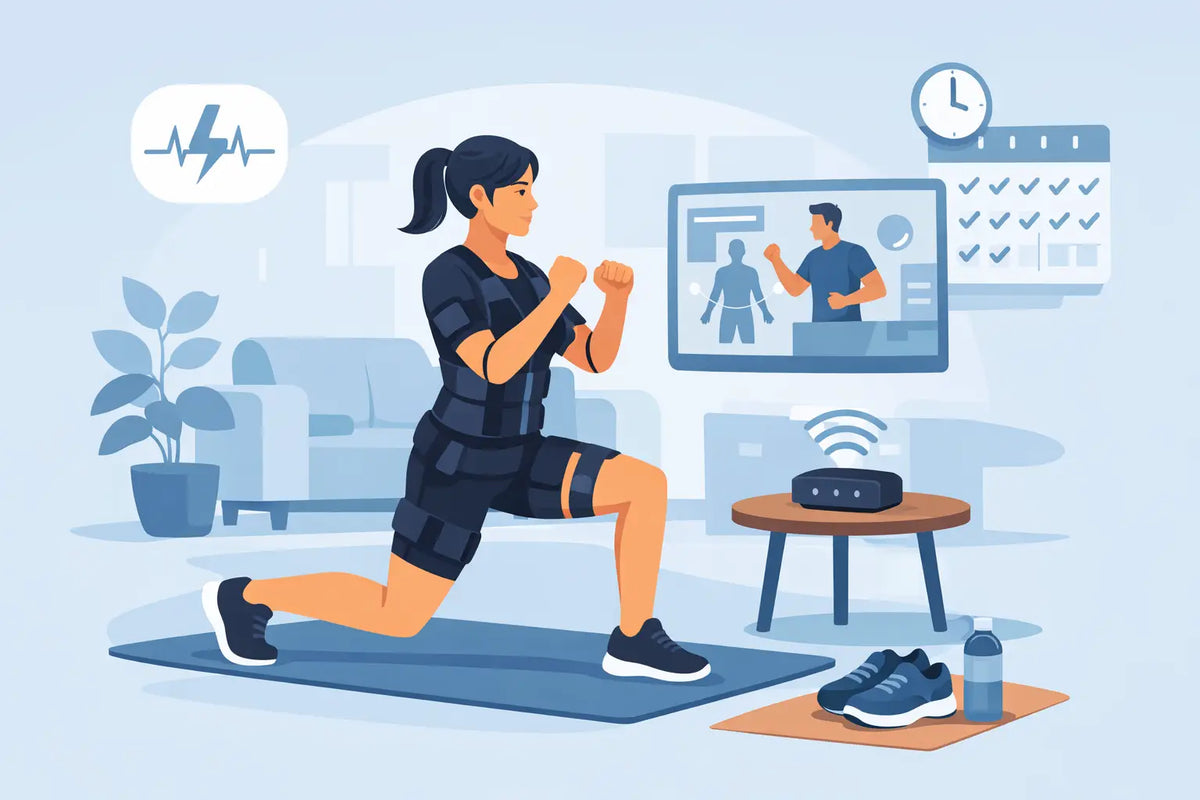
The best workout plan is the one that survives a busy week. Put your 20-minute sessions in the diary like any other commitment. Keep your suit charged, decide your workout before you begin and remove the small barriers that make skipping easy.
Train before the household wakes up, between meetings, after work or while dinner is in the oven. It does not have to look perfect to work. What matters is that you keep returning to it.
Twenty minutes will not change everything on its own. But 20 minutes, repeated with focus, can change how strong, capable and in control you feel. Start where you are, choose a level you can own, and make the next session happen.