8 Best EMS Exercises for Abs That Work
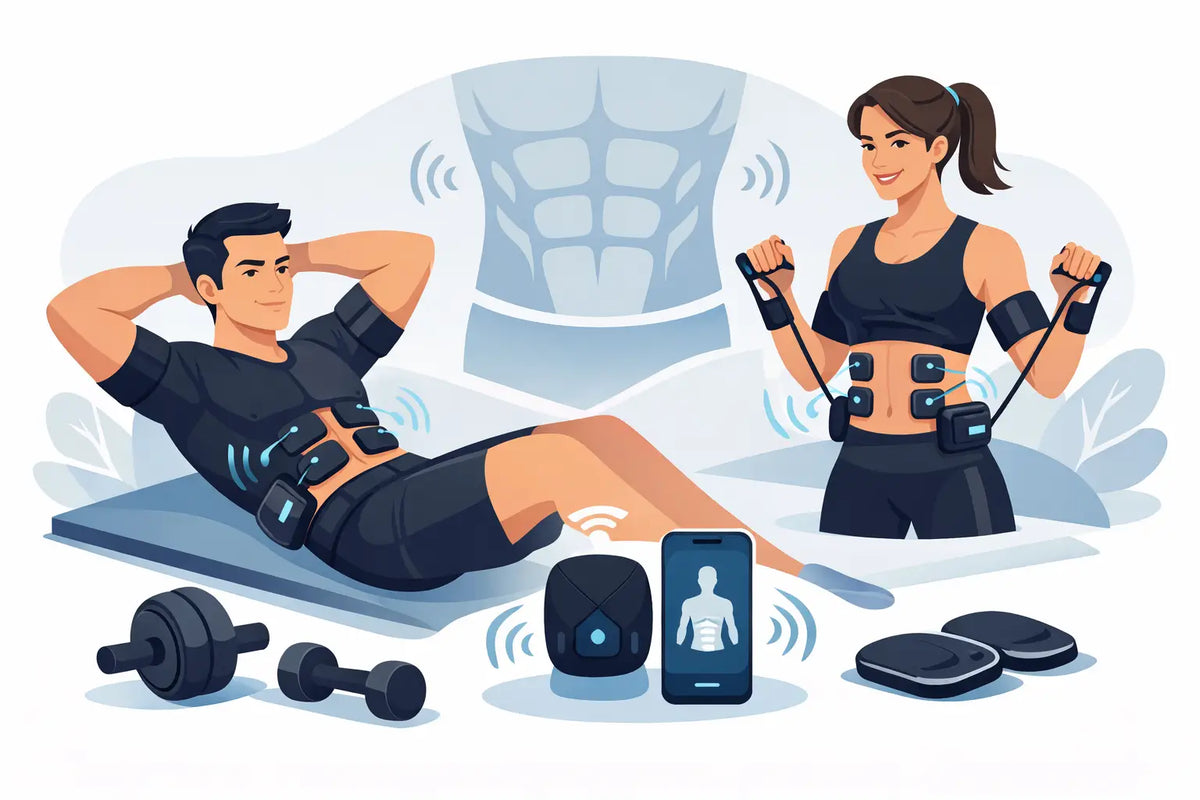
A stronger midsection is not built by doing endless crunches on the living room floor. It is built by training your abs with intent, enough tension, and enough consistency to make the effort count. That is exactly why the best EMS exercises for abs are so effective. They combine focused core movements with electrical muscle stimulation, helping you recruit more muscle fibres in less time and making a 20-minute session feel like real work.
For busy people, that matters. If you are trying to tighten your waist, improve posture, feel more stable in everyday movement, or finally see definition without spending hours in the gym, ab training needs to be efficient. EMS can help, but exercise choice still matters. Not every core move works equally well with stimulation, and not every ab session should feel like punishment.
What makes the best EMS exercises for abs?
The best movements do one simple thing well - they create controlled tension through the core while letting the stimulation do its job. That usually means exercises where you can brace properly, move with precision, and avoid throwing momentum around.
EMS works best when you are actively contracting the target area rather than rushing through reps. For abs, that means slowing down, staying deliberate, and choosing movements that train more than just the upper stomach. A strong core includes the rectus abdominis, deep stabilising muscles, obliques, and lower abdominal region. If your routine only includes standard crunches, you are leaving results on the table.
There is also a trade-off worth knowing. Harder is not always better. When EMS intensity is high, simple movements often outperform flashy ones because they let you keep form tight. If your torso is twisting everywhere and your lower back is taking over, the exercise is no longer doing what you want.
1. EMS plank hold
If you want one exercise that earns its place in almost every core session, it is the plank. With EMS, a basic forearm plank becomes far more demanding because the abs are being asked to brace against both bodyweight and stimulation.
The goal is not to survive for as long as possible. The goal is to hold a clean line from shoulders to heels while pulling your ribs down and tightening your midsection. Think shorter, stronger holds rather than sloppy endurance. Twenty to forty seconds can be plenty when the intensity is set correctly.
This move is especially useful for beginners because it teaches proper bracing. It also suits busy people who want low-impact training with a high return. If standard planks feel too easy, extend one leg slightly off the floor or shift into a high plank. If your lower back sags, reduce the hold time before increasing difficulty.
2. Dead bug
The dead bug does not look dramatic, which is exactly why many people underestimate it. Done properly with EMS, it becomes one of the smartest ways to train deep core control.
Lie on your back with knees bent at 90 degrees and arms raised. Brace your abs, press your lower back gently into the floor, then lower one arm and the opposite leg with control before returning to the start. Alternate sides without letting your ribcage flare or your back arch.
This exercise is brilliant for people who spend too long sitting at a desk or feel unstable during traditional ab work. It builds control before chasing intensity. That matters because visible abs are not just about hard contractions. They are also about posture, pelvic control, and keeping tension where it belongs.
3. Reverse crunch
For many people, the lower-ab area is where training gets messy. Hip flexors take over, legs swing, and the abs never really lead the movement. A reverse crunch fixes that when done slowly.
Start on your back with knees bent and feet off the floor. Draw your knees towards your chest by curling your pelvis up, not by kicking your legs. The movement should feel compact and deliberate. With EMS active, even a small range of motion can feel intense.
This is one of the best EMS exercises for abs because it targets the lower portion of the rectus abdominis without needing complicated equipment. The mistake to avoid is turning it into a leg throw. If momentum is doing the work, your abs are not.
4. Bicycle crunch, slowed down
Fast bicycle crunches are common. Effective bicycle crunches are rarer. When EMS is involved, speed is the enemy. Slow the movement down and focus on rotation from the torso rather than dragging your elbow across out of habit.
Bring one shoulder towards the opposite knee while extending the other leg, then switch sides with control. Keep your core braced throughout and avoid yanking your neck forward.
This variation works well because it hits both the front of the abs and the obliques. It is ideal if your goal is a more athletic-looking waistline rather than only training straight-on flexion. If you are new to core training, keep your feet higher and the range smaller. If you are more advanced, lower the extended leg closer to the floor while maintaining control.
5. Heel taps
Heel taps are simple, underrated, and extremely effective for targeting the obliques when paired with EMS. Lie on your back with knees bent, lift your shoulders slightly, and reach side to side to touch each heel.
The key is to stay lifted through the upper torso and keep the movement coming from your sides rather than flinging your arms around. You should feel a deep burn along the waist.
This exercise is a strong choice for anyone who wants more shape through the midsection without putting stress on the spine. It also fits nicely into short circuits because it is easy to learn and hard to cheat when done properly.
6. Mountain climber, controlled pace
Mountain climbers can become cardio chaos very quickly. That is not the version you want here. A controlled mountain climber, with knees driving towards the chest one at a time, is far more useful for EMS ab work.
Start in a high plank and alternate bringing each knee forwards while keeping your hips level and shoulders stable. Your abs should be resisting rotation the entire time.
This movement gives you a blend of core tension and elevated heart rate, which makes it useful if fat loss is part of your wider goal. It is not the best choice for everyone, though. If your wrists are sensitive or you struggle to hold plank position under stimulation, choose a floor-based move first and build up.
7. Seated knee tuck
A seated knee tuck is a strong option when you want direct ab engagement with a bit more dynamic movement. Sit slightly reclined with your hands lightly supporting you if needed, extend your legs, then draw your knees in towards your chest while keeping your core tight.
The challenge comes from resisting the urge to collapse through the chest or round excessively. Small, clean reps beat big, messy ones every time.
This is a good intermediate exercise because it blends upper and lower abdominal involvement. If you need to make it easier, keep one foot closer to the floor between reps. If you want more challenge, pause briefly in the extended position.
8. Side plank hold
Strong abs are not just about what you see from the front. The side plank targets the obliques and deep stabilisers that support your trunk in real life - when you carry shopping, change direction, lift a child, or simply stay pain-free through the day.
Set up on one forearm with legs stacked or one knee down for support. Lift your hips and hold a straight line from shoulder to ankle or knee. With EMS, this hold becomes a serious test of lateral core strength.
It is one of the best options for building a more complete core because it trains anti-side-bending rather than repetitive crunching. If standard side planks feel too unstable under stimulation, shorten the hold and prioritise quality.
How to structure an EMS ab session
The smartest ab sessions are focused, not bloated. You do not need ten exercises and forty minutes. Four to six well-chosen movements, performed with intent, is more than enough.
A practical approach is to pair one static hold, one lower-ab movement, one rotational or oblique exercise, and one dynamic finisher. For example, you might combine plank holds, reverse crunches, bicycle crunches, and controlled mountain climbers. That gives you tension, variety, and full-core involvement without wasting time.
If you are using an EMS suit, start with a moderate intensity that lets you contract properly. Chasing maximum stimulation too early usually backfires. You want strong muscle recruitment, not compensation, breath-holding, or poor posture. As control improves, intensity can rise.
For most people, two to three core-focused sessions per week is enough alongside wider full-body training. Daily ab punishment is not the shortcut it sounds like. Recovery still matters, especially when EMS increases the training demand.
Common mistakes that slow results
The biggest mistake is confusing sensation with progress. Yes, EMS can make your abs feel switched on immediately, but visible and functional results still come from consistency, progression, and sensible nutrition.
Another common issue is choosing exercises that are too advanced too soon. If you cannot maintain spinal position in a dead bug or plank, adding more movement will not fix it. Start with control, then build complexity.
Finally, do not treat core training as separate from the rest of your body. Strong abs show up faster when your routine also includes full-body resistance work, cardio, walking, and habits you can repeat week after week. That is where an efficient system like TWENTY fits so well - it makes consistency easier when life is busy.
Your abs do not need endless volume. They need the right tension, the right exercises, and a routine you will actually stick to. Choose movements you can control, let EMS amplify the work, and keep showing up. That is how 20 minutes starts to change everything.