EMS Cardio Training at Home That Fits Life
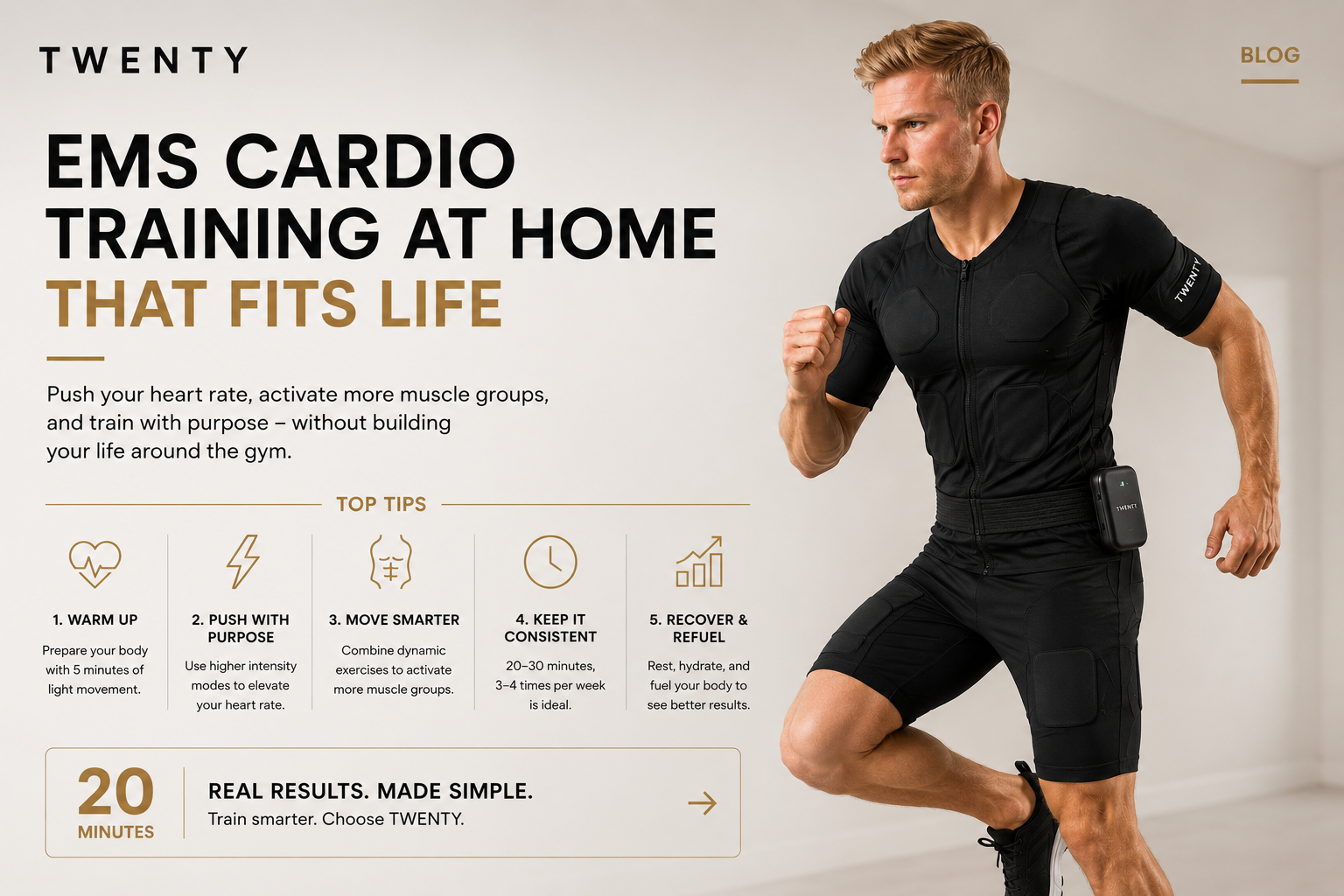
Some workouts ask for an hour, a commute, and a level of motivation most people do not have after a long day. EMS cardio training at home changes that equation. It gives you a way to push your heart rate, activate more muscle groups, and train with purpose in a shorter window - without building your life around the gym.
That matters if your routine is already full. Work runs late. School runs happen. Energy dips. The usual pattern is not a lack of ambition. It is friction. When training feels hard to start, consistency slips. When it fits into real life, results stop feeling so far away.
What EMS cardio training at home actually means
Cardio with EMS is not just standing still while a suit does the work for you. Done properly, it combines active movement with electrical muscle stimulation, so your body is working on two fronts at once. You are moving through cardio-based exercises while the suit sends controlled impulses to key muscle groups.
The goal is efficiency. As you squat, step, jog on the spot, or move through guided intervals, the stimulation encourages deeper muscle engagement. That can make a short session feel far more demanding than a typical home workout of the same length.
For busy adults, that is the real appeal. You are not chasing complexity. You are looking for a training method that helps every minute count.
Why this style of cardio suits modern life
The biggest barrier to fitness is rarely information. Most people already know they should move more, train consistently, and push themselves enough to improve. The harder part is doing it week after week when life is crowded.
EMS cardio training at home works because it reduces the usual points of failure. There is no travel time, no waiting for equipment, and no need to plan your evening around a gym session. You can train in a focused block and get on with your day.
It also helps people who get bored with traditional cardio. Long treadmill sessions and endless steady-state work are not for everyone. A guided EMS session feels more active, more structured, and often more motivating because you can feel the difference immediately.
That does not mean it is effortless. In fact, the trade-off is the opposite. You are choosing intensity over duration. Shorter sessions can work brilliantly, but only if you show up and train properly.
How the body responds during an EMS cardio session
A good EMS cardio session creates a layered training effect. Your heart and lungs are working because you are moving continuously or in intervals. At the same time, the suit is stimulating muscle contractions in selected areas such as the legs, glutes, core, or upper body.
That combination can increase the training demand of simple exercises. A bodyweight squat feels different when your quads and glutes are being actively stimulated. Marching on the spot turns into a more deliberate effort. Light movements can become surprisingly challenging.
This is one reason EMS appeals to people who want visible change but have limited time. You do not need a room full of machines to create a serious session. You need structure, progression, and the right intensity.
Still, it depends on the setup. If the intensity is too low, the session may feel underpowered. If it is too high too soon, technique can suffer and motivation can dip. The best results come from building up gradually and using guided settings that match your current fitness level.
Who gets the most out of it
This training style is especially effective for people who need fitness to fit around real responsibilities. If you are balancing work, family, travel, or simply an overloaded diary, efficiency is not a luxury. It is the only way consistency survives.
It can also suit people returning to exercise after a stop-start phase. Long sessions often feel intimidating when you are trying to rebuild momentum. A 20-minute guided workout feels more doable. And once a routine feels doable, it becomes repeatable.
That said, EMS cardio is not a magic fix. If your sleep is poor, your food choices are inconsistent, and you only train once every two weeks, the technology cannot cover for that. It is powerful, but it still works best as part of a bigger pattern of healthy habits.
What a smart home routine looks like
The sweet spot for most people is not doing as much as possible. It is doing enough, often enough. A few focused sessions each week can go further than occasional bursts of overtraining followed by ten days of nothing.
A simple routine might include two or three EMS cardio sessions across the week, supported by walking, mobility work, or lighter recovery days. This gives your body time to adapt while keeping your schedule realistic.
Short sessions are one of the biggest advantages here. Twenty minutes feels manageable before work, during lunch, or in the gap between finishing one task and starting the next. That is where consistency is won - not in perfect plans, but in plans you can actually keep.
If your goal is fat loss, cardio mode can be a strong tool because it supports calorie burn while making the workout more demanding. If your goal is general fitness and energy, it can help improve effort tolerance and make you feel sharper. If your goal is body tone, combining cardio sessions with strength-focused EMS days often works better than relying on cardio alone.
How to make EMS cardio training at home work better
Start by thinking less about punishment and more about precision. The best sessions are not random bursts of movement. They are guided, intentional, and matched to your level.
Choose movements you can perform well even as fatigue builds. Squats, step-backs, knee drives, marching, light jumping variations, and core-based intervals tend to work well because they keep you moving without becoming overly technical. The more complex the exercise, the more likely form will break down once stimulation and heart rate rise together.
Pay attention to intensity settings. There is a temptation to turn everything up and assume more is better. Usually, it is not. The right level is one that challenges you without fighting your movement quality. Good training feels demanding but controlled.
It also helps to track something simple. That might be how long you trained, how strong the settings felt, or how many intervals you completed cleanly. Progress is motivating when you can see it.
Common mistakes that slow results
One of the biggest mistakes is treating EMS cardio like passive recovery. If you want a cardio response, you need movement. The suit supports the session, but it does not replace effort.
Another mistake is going too hard in week one. It is easy to get excited by the feeling of a new system and push beyond what your body is ready for. The smarter move is to build tolerance. Better sessions next month matter more than heroic sessions this weekend.
Some people also expect every workout to feel identical. Real life does not work that way. Stress, sleep, hydration, and cycle changes can all affect how a session feels. Consistency beats perfection. A good session done today is more valuable than an ideal session you keep postponing.
Why guidance matters more than gadgets
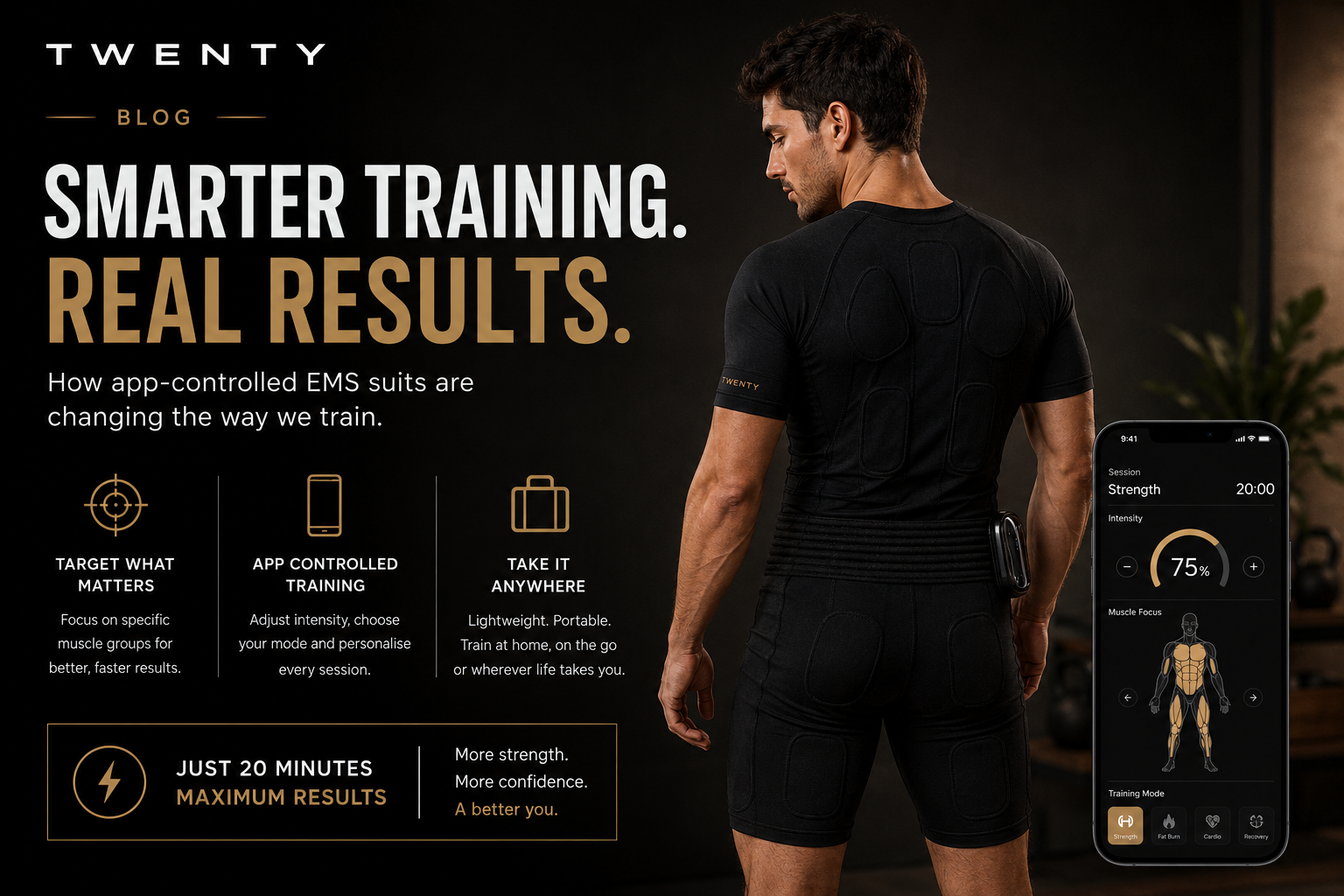
Technology is only useful when it removes friction. The strongest EMS systems do that by making training simple to start, easy to adjust, and clear to follow. Wireless design, app-based controls, and guided modes matter because they turn advanced training into something practical.
That is the difference between a piece of equipment and a real routine. If a system helps you choose your mode, target muscle groups, and move through a structured session without guesswork, you are far more likely to use it consistently. TWENTY Fitness is built around exactly that idea - powerful training that fits everyday life instead of interrupting it.
For most people, the real win is not novelty. It is momentum. When your setup is ready, your session is guided, and your workout fits into 20 minutes, the excuse list gets a lot shorter.
Is it enough on its own?
Sometimes yes, sometimes no. It depends on your goal.
If you want a more consistent routine, better energy, and a practical way to train around a busy schedule, EMS cardio at home can absolutely be enough to make a meaningful difference. If you are chasing more specific goals such as major muscle gain, race performance, or advanced athletic conditioning, it may work best alongside other forms of training.
That is not a weakness. It is just being honest about fit. The best training plan is not the one that sounds hardest. It is the one you can sustain and progress.
If your current routine is nothing, or almost nothing, then a focused EMS cardio session at home is not a compromise. It is a powerful place to start. And for many people, it becomes the reason they finally stop starting over.
You do not need more guilt, more wasted memberships, or another plan that collapses by Thursday. You need a system that respects your time, meets you where you are, and pushes you forward anyway. That is where real change starts.