EMS Suit Sizing Guide for a Better Fit
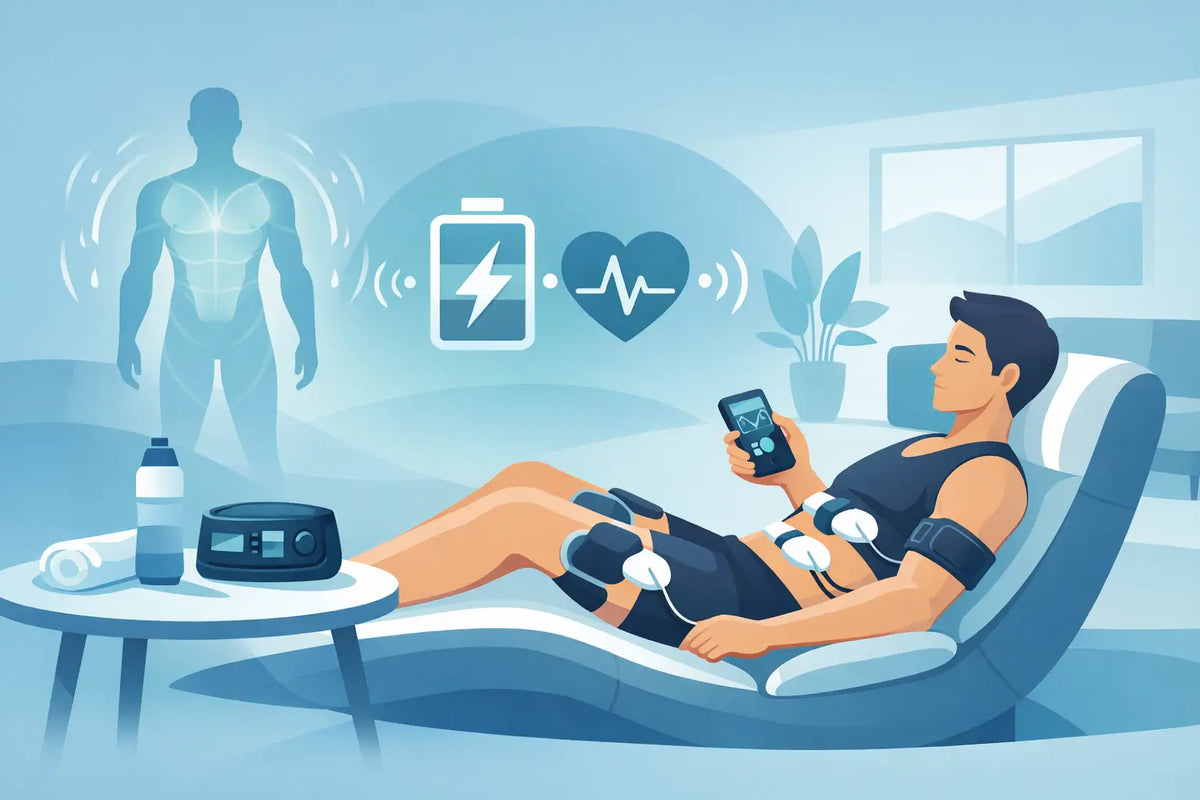
Get the size wrong, and even the smartest EMS system will feel underwhelming. A proper EMS suit sizing guide matters because this is not just about comfort - it affects electrode contact, training intensity and how confidently you move through every 20-minute session.
An EMS suit should feel close to the body, supportive and secure. Not restrictive. Not baggy. The goal is simple: strong, consistent contact between the suit and your muscles, so the stimulation lands where it should. If the fit is off, your workout can feel patchy, awkward or less effective than expected.
Why an EMS suit fit matters so much
Traditional gym kit gives you some leeway. An EMS suit does not. The fabric and electrode placement need to sit properly against the body, because the technology depends on contact. If there are loose areas around key muscle groups, the impulse may feel uneven. If the suit is too tight, you may feel distracted, compressed in the wrong places or limited during movement.
That balance is what makes sizing more important here than with standard sportswear. You are not only choosing what feels good when standing still. You are choosing what performs well during squats, lunges, core work, recovery sessions and full-body routines.
For busy people, that matters. If your training is built around efficiency, every session needs to count. A suit that fits well helps remove friction from the start.
EMS suit sizing guide: what “correct fit” actually means
The right size usually feels snug through the torso, hips, glutes and thighs, with enough stretch to move naturally. Around the arms and shoulders, it should stay close without pinching. You should not have to constantly adjust the suit once it is on.
Think performance compression rather than casual activewear. A little effort to put it on is normal. Deep pressure marks, numbness or restricted breathing are not. On the other hand, obvious folds, gaping fabric or shifting panels are signs that the suit is too large.
A good fit should give you three things at once: reliable muscle contact, comfortable movement and confidence. If one of those is missing, the size may not be right.
Snug is good. Squeezing is not.
Many first-time buyers size up because they worry a close fit will feel uncomfortable. That instinct makes sense, but with EMS, going too loose can work against you. The suit needs to hold contact through movement, not just when you first zip it up.
At the same time, the smallest possible size is not always the smartest choice. If the suit feels like a fight every time you train, or if you avoid certain movements because it pulls too hard, consistency suffers. The best size is the one that supports training, not the one that simply feels tightest.
How to measure yourself properly
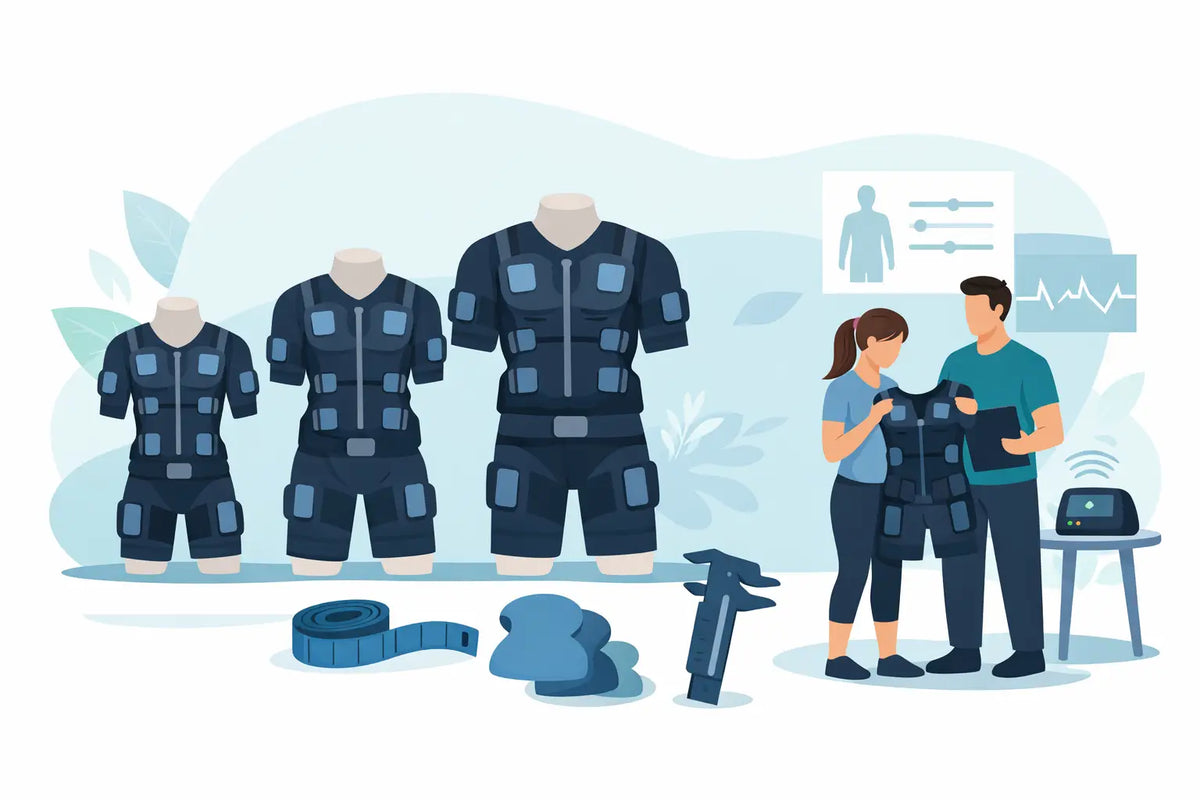
Before ordering, take fresh body measurements. Guessing based on what you usually wear is risky because sizing varies across sportswear brands, and EMS suits are designed for function first.
Measure your chest at the fullest part, your waist at the narrowest part, and your hips at the widest part. If the suit includes lower-body coverage, pay attention to thigh measurements too. Use a soft tape measure and keep it level. Measure over light clothing or underwear, not over jumpers or bulky layers.
Do not pull the tape too tight. You want your real body measurement, not your optimistic one. If you are between sizes, that is where the decision becomes more nuanced.
If you are between sizes
This is the most common sizing dilemma, and there is no single answer for everyone. It depends on your shape, your training preference and where you carry more of your size.
If your measurements sit between two sizes but your body shape is evenly proportioned, the smaller size often gives better electrode contact. If you carry more muscle through the thighs, glutes or chest, the larger size may be more comfortable and more realistic for movement. If one area fits perfectly but another feels borderline, prioritise the area where the suit needs the most stretch during training.
This is where honesty helps. If you want a size because it sounds better rather than because it fits better, stop and reset. Better sessions come from better fit, not a smaller label.
Body shape changes the sizing decision
Not every body fits neatly into a chart. Two people with the same waist measurement can have very different proportions through the shoulders, hips or legs. That matters with EMS because electrode placement and compression zones need to line up well.
If you have an athletic build with broader shoulders or fuller thighs, pay close attention to those areas. If you have a smaller frame but a fuller bust or hips, avoid choosing a size based on only one measurement. The best approach is to use the fullest key measurement as your anchor, then check whether the rest of the suit is designed to stretch and settle correctly.
This is also why men’s and women’s suit cuts matter. They are shaped differently for a reason. A good fit should work with your body, not ask your body to work around the suit.
Signs your EMS suit is too small
A too-small suit is not just uncomfortable. It can make training frustrating. You may notice pulling across the shoulders, pressure around the zip or closure points, or difficulty moving through simple exercises. Some people also find that very tight areas feel overstimulated while other zones feel under-engaged, because the suit is not sitting evenly.
Another clue is avoidance. If you keep delaying sessions because getting dressed feels like a chore, the fit may be too aggressive. Your EMS routine should feel efficient, not exhausting before the workout has even begun.
Signs your EMS suit is too big
A suit that is too large usually reveals itself during movement. The fabric may shift, wrinkle or bunch at the waist, knees or arms. Electrode zones can lose close contact, which may make intensity feel inconsistent from one side to the other or from one muscle group to the next.
You may also find yourself turning the intensity up more than expected just to feel engaged. That does not always mean the programme is weak. It can simply mean the contact is not optimal.
If the suit feels more like relaxed loungewear than performance gear, it is probably too big.
What to expect when you first try it on
Your first try-on should feel secure and slightly compressive, especially if you are used to looser workout clothing. That part is normal. Walk around. Raise your arms. Sit into a squat. Check whether the suit stays in place and whether the pressure feels even rather than extreme.
You are looking for a fit that settles after a minute or two, not one that gets more distracting as you move. Small adjustments are normal. Constant readjustment is not.
If your EMS system uses moisture or conductive preparation for better contact, remember that the fit may perform slightly differently during an actual session than in a dry try-on. That is another reason to avoid making a snap judgement in the first thirty seconds.
The biggest sizing mistakes people make
The most common mistake is ordering your usual clothing size without checking measurements. The second is choosing a looser fit for comfort, then wondering why the stimulation feels inconsistent. The third is focusing only on weight.
Weight alone is not a reliable sizing tool. Two people can weigh the same and need different sizes because their proportions are completely different. Height matters too, but again, only as part of the full picture.
Another mistake is assuming your size will stay the same forever. If you are training consistently and your body composition changes, your ideal fit may change with it.
When to rethink your size
If you have recently lost body fat, built noticeable muscle or moved between standard clothing sizes, it is worth checking your measurements again. An EMS suit should support your current body, not the version of you from six months ago.
This is especially relevant if you are using EMS as part of a serious transformation plan. Progress is the goal. A better fit can become necessary as that progress shows up.
TWENTY Fitness is built for people who want results without wasting time, and sizing is part of that equation. Get it right early, and your setup feels simpler, your sessions feel smoother and your effort goes where it should.
The best EMS suit is not the one with the most hype. It is the one that fits your body properly, moves with you and helps every minute of training work harder.