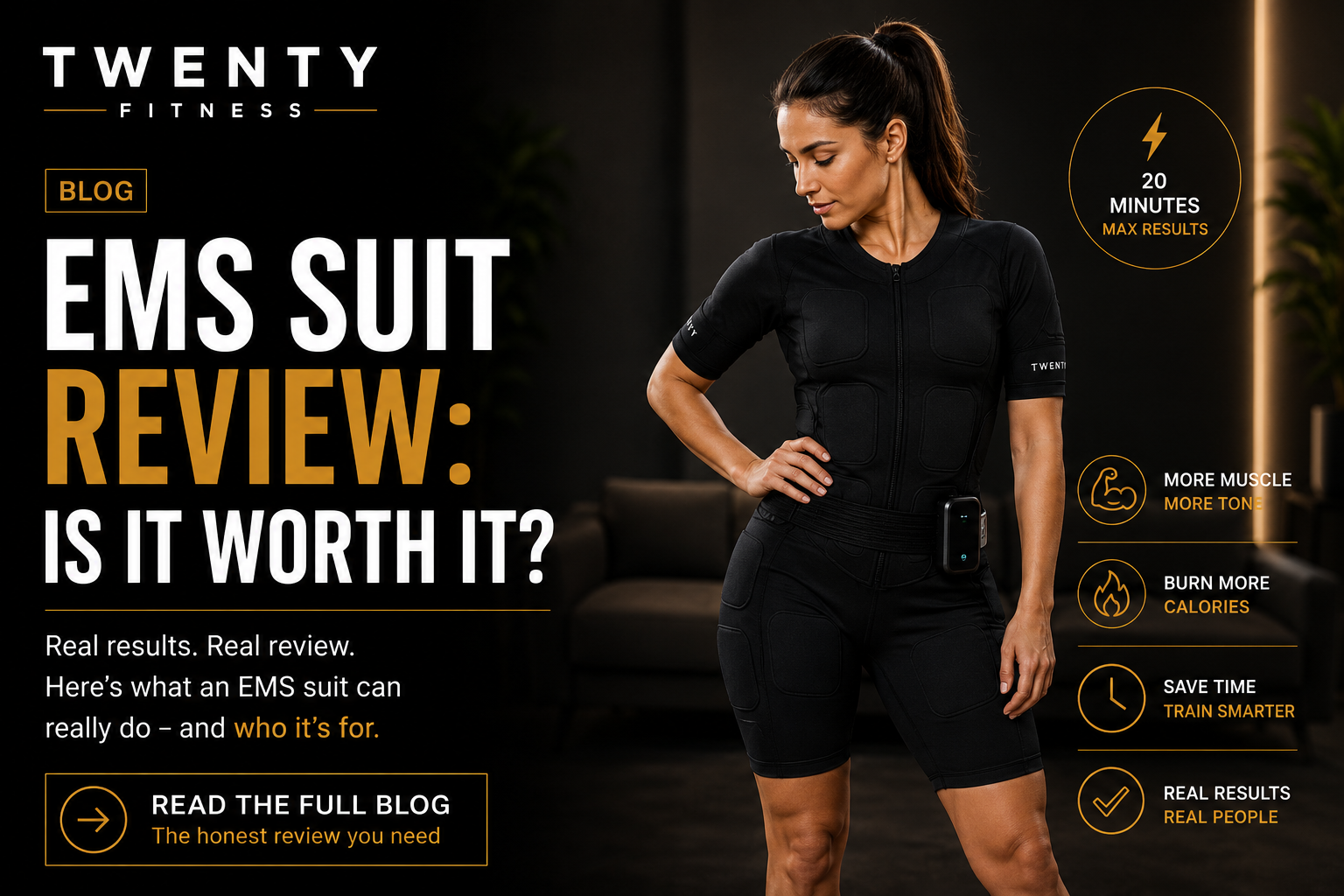
EMS Suit Review: Is It Worth It?
You can lose an hour getting to the gym, changing, training, showering, and getting home. That’s exactly why an EMS suit review matters. If a 20-minute session can genuinely replace part of that grind, it is not just a fitness gadget story. It is a question of whether your routine finally fits your life.
EMS suit review: what it actually is
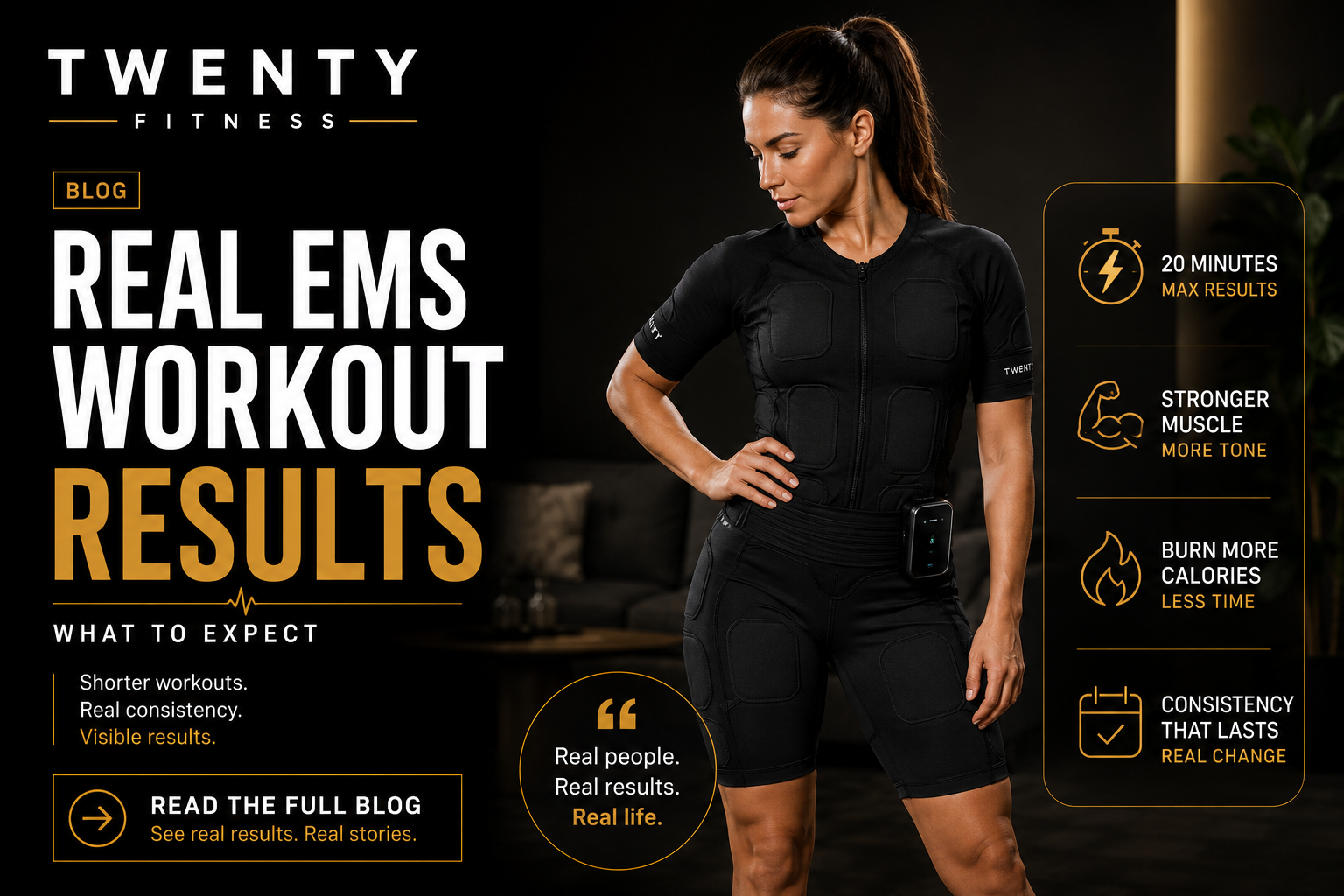
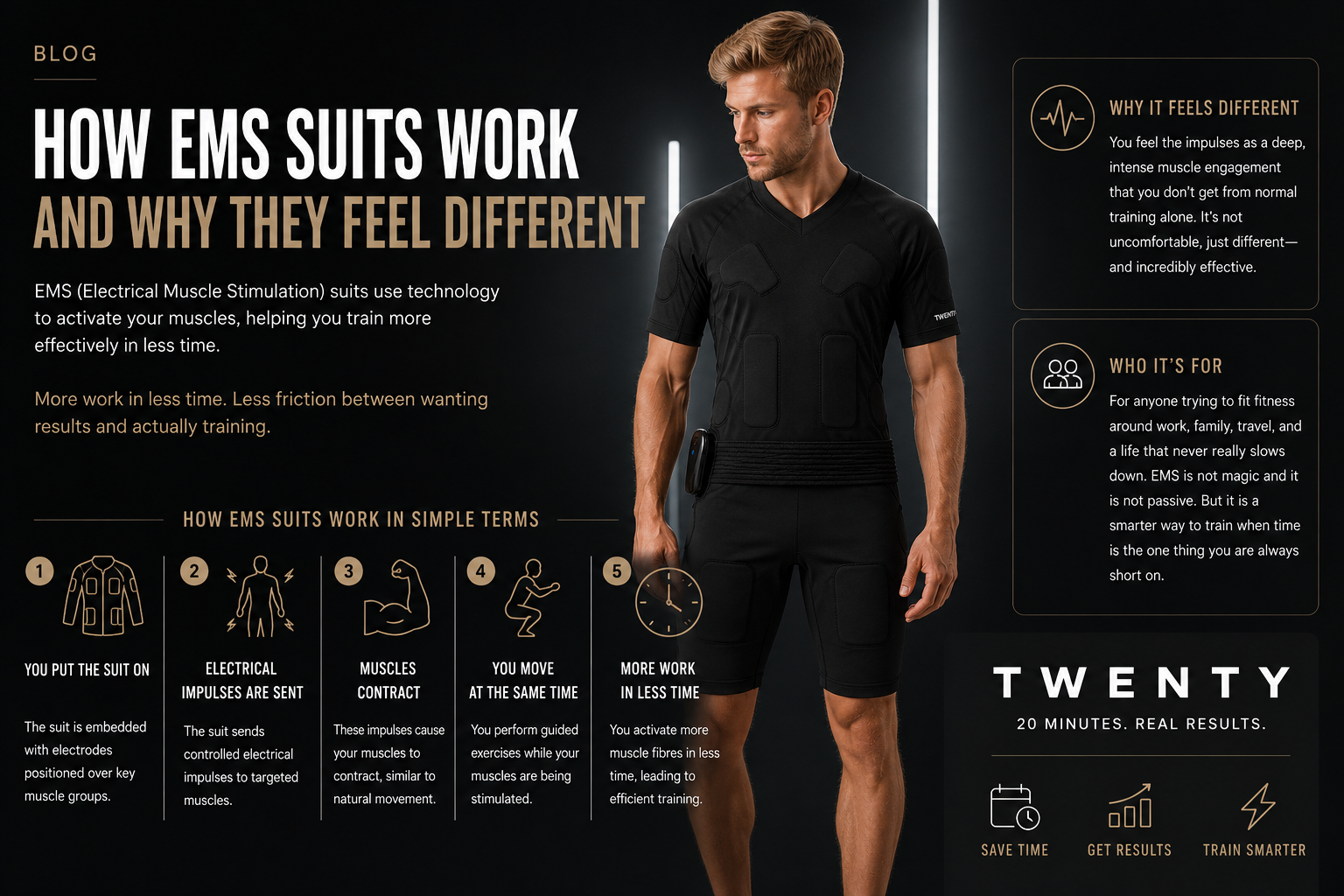
An EMS suit uses electrical muscle stimulation to trigger muscle contractions while you move through a workout. In simple terms, the suit sends controlled impulses to key muscle groups so your body works harder in less time. You are not lying still and hoping for magic. You still squat, lunge, hold, press, and engage. The difference is that the suit adds intensity in a way standard home workouts usually cannot.
That is the appeal for busy adults. You are not trying to become a full-time athlete. You want something efficient, guided, and realistic enough to stick with when work is full on, family life is loud, and motivation dips.
Who an EMS suit is really for
If you already love spending six days a week in the gym, an EMS suit may feel more like a performance tool than a replacement. But for most people looking into this category, the real question is consistency. Can this help you train more often because it removes friction?
For professionals, parents, and anyone tired of stop-start fitness habits, the answer can be yes. The best part of the experience is not just shorter sessions. It is having a clear system. Put the suit on, open the app, choose the focus, train, and move on with your day.
That said, it is not for everyone. If you hate wearing fitted kit, dislike sensation-based training, or expect passive fat loss without effort, you may be disappointed. EMS works best when you want support, not shortcuts.
What the workout feels like
Most first-time users ask the same thing: does it hurt?
The honest answer is no, not if the intensity is set properly, but it does feel unusual. You will notice rhythmic pulses across the muscles being trained. At lower levels, it can feel like a strong tingling or tightening sensation. As you increase intensity, the contractions become more demanding. During movements like squats or planks, you feel the muscles switch on very clearly.
This is where a good EMS system stands apart from novelty devices. It should let you adjust intensity by muscle group, so your legs do not have to work at the same level as your arms or core. That personalisation matters. It makes training safer, more comfortable, and more effective over time.
There is also a learning curve. Your first few sessions may feel intense even when the workout itself looks simple on paper. That is normal. The goal is not to max everything out on day one. The goal is to build confidence, control, and repeatability.
EMS suit review: the real benefits
The strongest case for EMS is efficiency. A focused 20-minute session can feel surprisingly demanding, especially when multiple major muscle groups are engaged at once. For people who struggle to fit in long workouts, that changes the maths. Training starts to feel possible again.
The second benefit is engagement. Many people say they can finally feel their core, glutes, or back working in a way they often miss with standard home exercise. That mind-muscle connection is not just a nice extra. It can improve how you move and make sessions feel more productive.
Then there is convenience. A wireless suit with app-based controls turns the experience into something much easier to repeat at home. No commuting. No waiting for equipment. No trying to piece together random online workouts. Just a guided session built around your goal, whether that is fat loss, muscle tone, cardio, recovery, or mobility.
For some users, the biggest result is psychological. When your workout no longer eats half the evening, it becomes easier to stay consistent. And consistency, more than any single session, is what changes your body.
What results should you expect?
This is where a balanced EMS suit review needs to be honest. You can get results, but they depend on how you use it.
If you train regularly, increase intensity gradually, and pair it with sensible eating, you may notice improved muscle tone, better body awareness, and stronger overall engagement within a few weeks. Some people also report better posture and less boredom compared with repetitive home routines.
If your main goal is weight loss, EMS is not a free pass. It can support calorie burn and help you train harder in less time, but nutrition and consistency still do the heavy lifting. If your goal is muscle gain, it can support strength and activation, though very advanced lifters may still want heavier traditional resistance work alongside it.
So yes, visible changes are possible. But the suit is a tool, not a miracle. The real win is that it helps many people do the work often enough to see those changes.
Where EMS suits can fall short
Not every EMS suit experience is equal. Some systems feel clunky, have limited controls, or do not fit well enough to deliver even stimulation. Fit matters more than people expect. If the suit does not sit properly against the body, the session can feel patchy or underpowered.
Price is another factor. EMS suits are usually not cheap, and that can put people off. Whether the cost is worth it depends on what you are comparing it to. If it replaces a neglected gym membership and removes the barrier that keeps you inactive, the value can be strong. If it ends up in a cupboard after three uses, it is expensive regret.
There is also the issue of expectations. Some buyers want the sensation of effort without the reality of effort. That mindset tends to lead nowhere. The best results come when the suit is part of a real training habit, even if that habit is only 20 minutes at a time.
What to look for before you buy
A strong EMS suit should give you control, not confusion. Adjustable intensity settings are essential, especially by muscle group. Guided training modes also matter, because most users do better when they do not have to build every session from scratch.
Wireless design makes a big difference in day-to-day use. If the setup feels awkward, motivation drops quickly. Comfort, fabric quality, and ease of cleaning also matter more than flashy claims. This is something you need to wear regularly, not admire once.
App support is another major plus. A smart app can make EMS feel practical rather than technical. It should help you select workout styles, progress intensity, and stay consistent without guesswork.
That is where brands like TWENTY Fitness have an advantage. The strongest systems do not just sell a suit. They create a guided at-home training experience that feels simple enough to maintain when life gets busy.
Is an EMS suit worth it?
For the right person, yes.
If your biggest barrier is time, and you want structured training that feels efficient, motivating, and easy to repeat at home, an EMS suit can be a smart investment. It can help you train with more intensity in less time, stay engaged, and rebuild fitness momentum without rearranging your whole life.
If you want effortless results with zero discipline, it will not deliver. Nothing does.
That is the trade-off at the centre of any honest EMS suit review. You are paying for efficiency, convenience, and support. You still need to show up. The difference is that showing up suddenly feels much more realistic.
And that matters more than most people realise. The best fitness plan is not the one that looks impressive on paper. It is the one you can actually do on a Tuesday night when work ran late, dinner still needs sorting, and your energy is low. If an EMS suit helps you win that moment, it is doing something far more valuable than saving time. It is helping you take control again.