Article: An EMS Weight Loss Success Story That Feels Real
An EMS Weight Loss Success Story That Feels Real
The turning point was not a dramatic before-and-after photo. It was a Thursday evening when Maya finished a 20-minute session at home instead of skipping exercise for the fourth week running. That is what a believable EMS weight loss success story often looks like: less perfection, more follow-through.
Maya is a composite example based on the realities many busy adults face. She had a demanding job, two school-age children and a gym membership she barely used. She wanted to lose weight, feel firmer and stop feeling like her health was always being pushed to next week. What changed was not her willpower. It was finding a routine that finally worked with her life.
The problem was never motivation alone
For years, Maya treated fitness as an all-or-nothing project. A good week meant long gym sessions, carefully planned meals and an early bedtime. A hectic week meant none of it happened. Work ran late, family plans took over, and the thought of travelling to the gym for an hour felt impossible.
That cycle is familiar. Most people do not fail because they do not care. They fail because their plan demands more time and energy than their normal week can give.
Maya did not need another punishing programme. She needed a lower-friction way to train consistently. EMS made sense because it paired short, focused movement with electrical muscle stimulation, helping her make more of the exercises she was already able to do.
The key was managing expectations. EMS is not a magic switch for fat loss, and no suit can outwork a lifestyle built around inactivity, poor sleep and constant overeating. But it can make training feel more efficient, more targeted and easier to repeat. For someone who had been stuck in stop-start mode, that mattered.
Her EMS weight loss success story started with 20 minutes
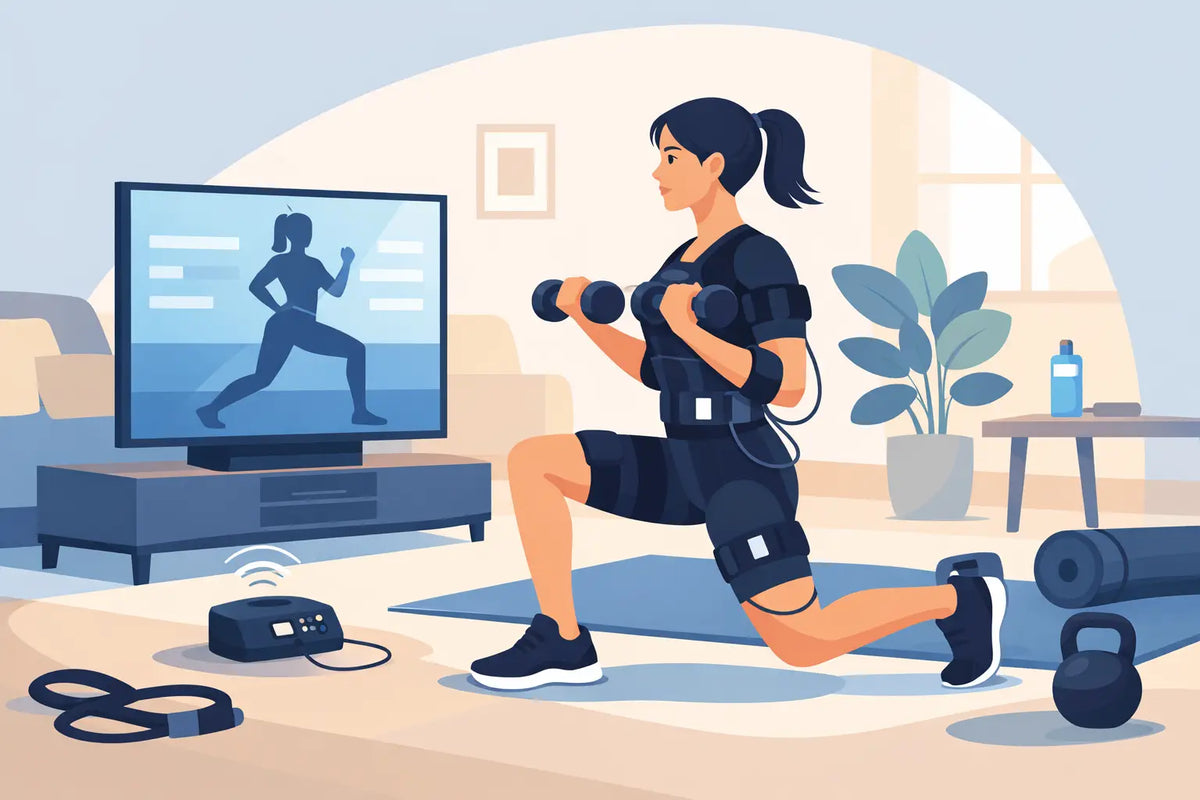
Maya began with three 20-minute sessions each week. She used guided, low-impact workouts built around squats, lunges, glute bridges, presses, core work and controlled cardio movements. The suit’s app controls allowed her to increase or reduce intensity by muscle group, so the experience felt challenging without being overwhelming.
The first few sessions were humbling. EMS contractions can make simple movements feel far more demanding than expected. Maya learned quickly that higher intensity was not automatically better. Good form, gradual progression and recovery came first.
That approach helped her stay in the game. Instead of chasing exhaustion, she aimed to complete each session well. Some days she trained before the children woke up. Other days she did it after dinner, with no commute, changing room or wasted time.
By the end of the first month, her most meaningful result was not on the scales. It was consistency. She had completed more workouts in four weeks than she had managed in the previous three months.
The changes that made the difference
The suit gave Maya a practical training structure, but her results came from the habits she built around it. She stopped trying to transform everything overnight and focused on a few repeatable decisions.
She made protein a priority at meals, especially breakfast and lunch, which helped her stay satisfied through busy afternoons. She kept easy options at home for the evenings when takeaway felt tempting. She walked more, usually in short bursts: the school run, a call taken outside, ten minutes after lunch.
She also stopped treating rest as a failure. When she slept badly or felt unusually sore, she lowered the session intensity, chose a gentler mode or took a day off. Sustainable progress needs recovery as much as effort.
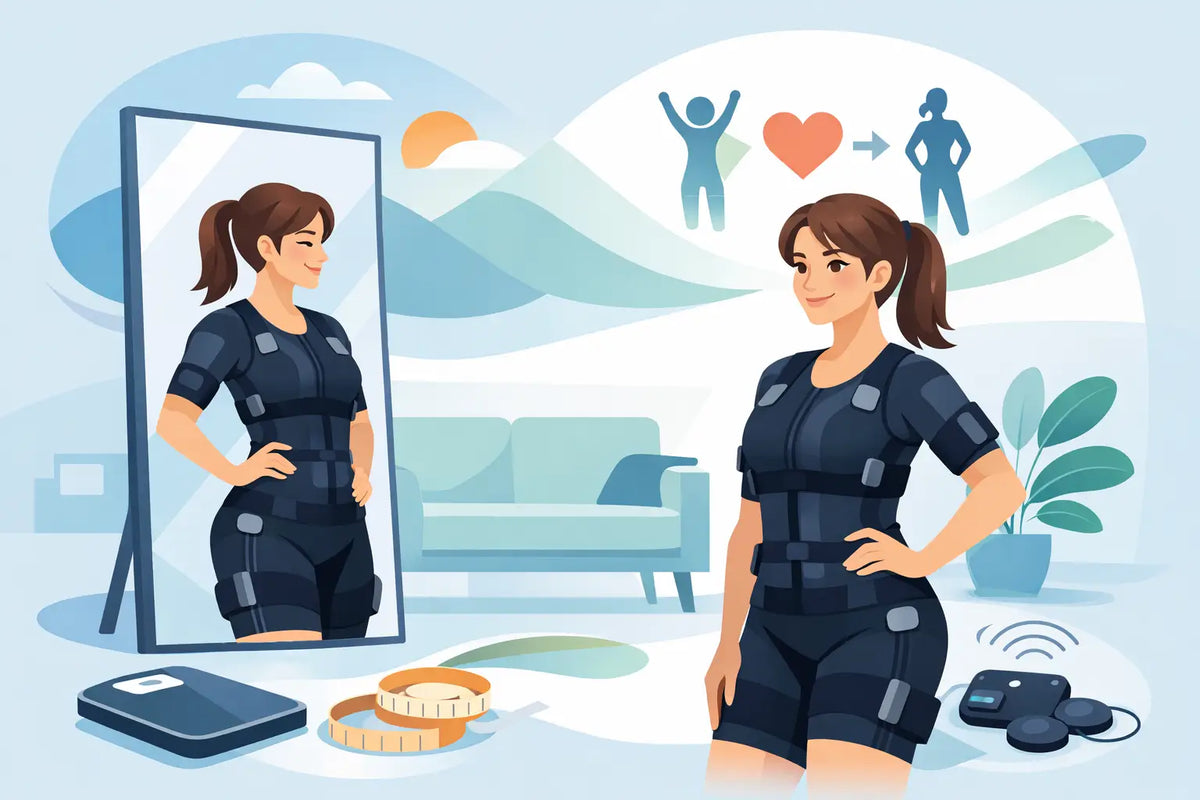
After eight weeks, Maya noticed that her clothes felt looser around the waist and hips. She had more energy in the afternoon and less dread around movement. She was also stronger. Carrying shopping, climbing stairs and playing with the children no longer left her feeling drained.
At twelve weeks, the scale had moved too, but not in a straight line. Some weeks showed little change. Hormones, water retention, stress, sleep and salt intake all affected the number. What stayed consistent was her routine and the gradual change in how she looked and felt.
Why short sessions can create lasting momentum
Twenty minutes sounds modest, particularly if you are used to the idea that a workout only counts if it leaves you shattered. But a shorter session can be powerful when it removes the biggest barrier: getting started.
EMS training activates muscles while you move, adding intensity to bodyweight and functional exercises. That can make a carefully programmed 20-minute workout feel productive, particularly for people who want focused full-body training without spending hours in a gym.
The real advantage is not that you can do less forever. It is that you can build a reliable baseline. Three short sessions completed every week are more valuable than an ambitious five-day plan abandoned after ten days.
For Maya, the convenience changed her identity. She stopped saying, “I am trying to get back into fitness,” and started seeing herself as someone who trains. That shift has a knock-on effect. When exercise becomes normal, eating well, moving more and protecting your sleep become easier choices to make.
Results depend on what you do beyond the suit
A strong EMS weight loss success story should be honest about the trade-offs. EMS can support calorie-burning exercise, muscle engagement and a more consistent routine. It does not guarantee a certain amount of weight loss, and it should not be sold as a replacement for balanced nutrition or everyday movement.
Your starting point matters. Someone returning to exercise after a long break may notice early improvements in strength, energy and body shape. Someone already training regularly may use EMS to add variety, target specific muscle groups or fit a quality session into a packed schedule. Results also vary with body size, training history, food intake, stress, sleep and medical factors.
If you have a medical condition, are pregnant, have a pacemaker or another implanted electronic device, seek advice from a qualified healthcare professional before using EMS. Safety is part of serious training.
How to create your own realistic success story
Start smaller than your ambition. Choose two or three sessions a week and put them in your diary like any other commitment. Pick a time you can defend, whether that is before work, during a lunch break or after the house is quiet.
Keep the intensity sensible at first. Learn how the stimulation feels, focus on controlled movement and give your body time to adapt. Progress comes from adding challenge gradually, not from turning every setting to maximum on day one.
Measure more than body weight. Take a waist measurement, notice how your clothes fit, track the sessions you complete and pay attention to your energy. A photo every four weeks can show changes that daily mirror checks miss.
Most importantly, make your goal specific enough to act on. “Lose weight” is a valid goal, but “complete three 20-minute workouts a week for the next month” gives you a clear route towards it. The outcome matters, but the actions are where confidence is built.
TWENTY Fitness is designed for this kind of real-life progress: guided EMS training that fits around demanding days, not a fitness fantasy that requires you to rearrange your entire life. No time? Build the time you actually have into a routine that works.
Maya did not wait for a quieter month, a perfect meal plan or a sudden burst of motivation. She started with 20 minutes, repeated it, and let the small wins become proof that she could change. Your first session does not need to be perfect. It just needs to happen.