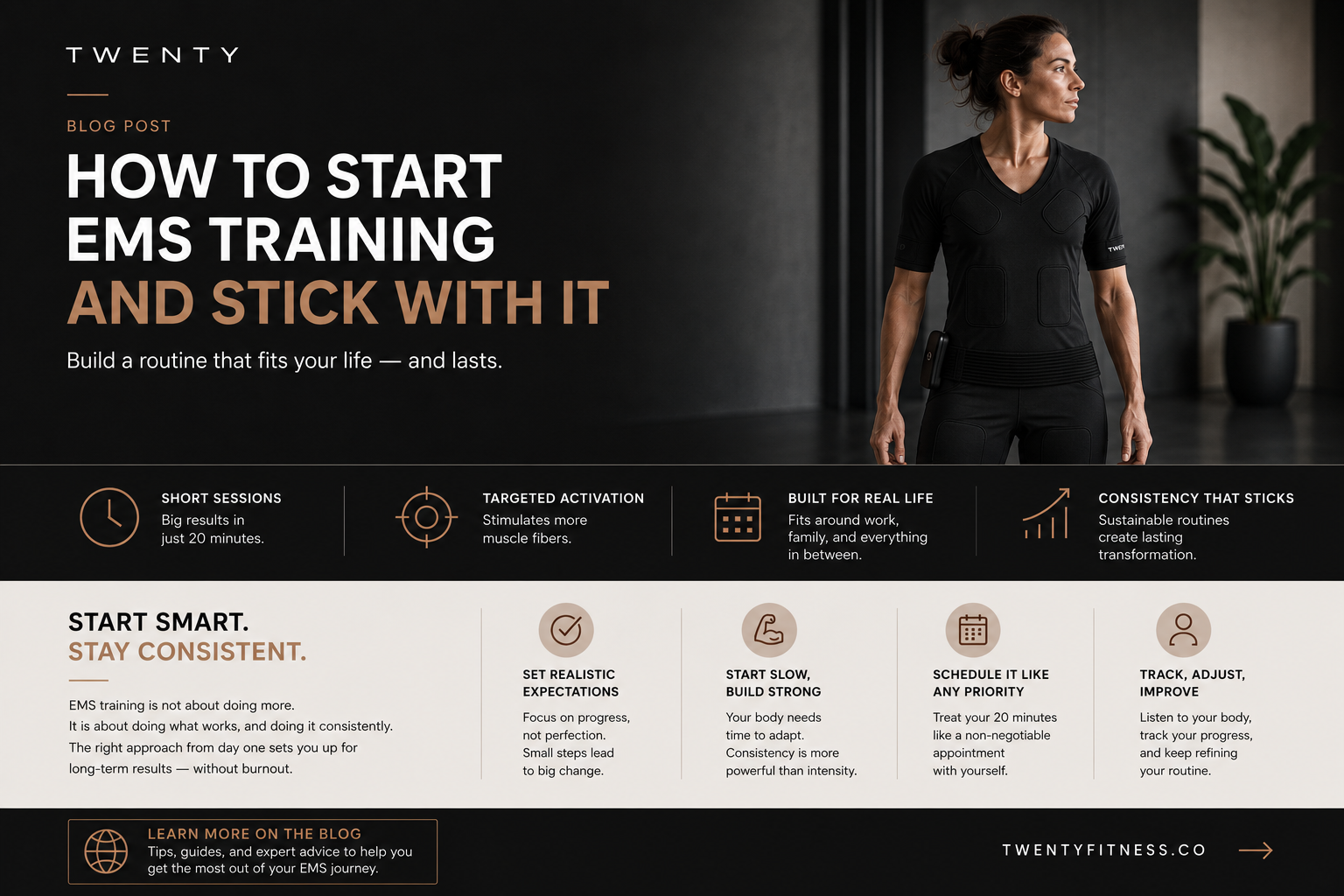
How to Start EMS Training and Stick With It
You do not need another fitness plan that looks great on Sunday and falls apart by Wednesday. If you are wondering how to start EMS training, the real goal is not just getting switched on. It is building a routine you can actually keep when work runs late, the school run takes over, or motivation drops.
EMS training works because it cuts through the usual friction. Short sessions. Clear structure. Targeted muscle activation. Done properly, it can help you build consistency faster than traditional routines that ask for hours you do not have. But there is a right way to begin, and it starts with setting realistic expectations.
How to start EMS training without overdoing it
The biggest beginner mistake is treating EMS like a shortcut that needs no strategy. It is efficient, not effortless. Your muscles are still working hard, even if the session is only 20 minutes.
Start with the mindset that less is more in the first two weeks. Your body needs time to adapt to the electrical impulses, the suit fit, the movement patterns, and the recovery demand. Going too hard too soon does not speed up results. It usually means unnecessary soreness, patchy consistency, and the feeling that the whole thing is more intense than it needs to be.
A better approach is simple. Begin with two sessions a week, leave at least 48 hours between them, and focus on learning how different intensity levels feel across each muscle group. This is not about proving toughness. It is about finding a training level you can repeat.
Start with setup, not intensity
Before your first session, get the basics right. EMS works best when the suit fits properly, the contact points sit correctly against the body, and your settings are adjusted with purpose rather than guesswork.
Hydration matters more than many people expect. Well-hydrated muscles tend to respond better, and the session generally feels smoother. Drink water beforehand and do not treat this step like a minor detail. It is part of the training.
Then focus on suit prep. A secure fit helps keep stimulation even and comfortable. If the suit is too loose, the sensation can feel inconsistent. If it is badly positioned, some muscle groups may work harder than others for the wrong reasons. Take an extra minute here. That minute pays you back.
If you are using an app-controlled system, begin by selecting a mode that matches your goal, but keep the session conservative. Fat burn, muscle build, cardio, yoga, and recovery modes all create different experiences. For a complete beginner, the smartest move is usually a foundational full-body session with moderate intensity, not the highest setting you can tolerate.
Your first two weeks should feel controlled
When people ask how to start EMS training, they often expect a dramatic first-week transformation. That is the wrong marker. In the beginning, success looks like finishing sessions feeling challenged but in control, recovering well, and wanting to train again.
In week one, aim for two short sessions built around basic movements. Think squats, lunges, glute bridges, standing rows, presses, and core holds. You do not need complicated programming. EMS amplifies simple exercises, so quality matters more than variety.
In week two, you can increase either intensity or movement complexity slightly, but not both at once. That trade-off matters. If you raise the stimulation level and add tougher exercises together, it becomes harder to tell what your body is responding to. Progress is easier to manage when you change one variable at a time.
A lot depends on your starting point. If you already train regularly, you may adapt quickly. If you are returning after months or years off, your body may need a gentler ramp-up. There is no prize for pretending those two situations are the same.
What a beginner EMS session should include
A good beginner session is structured, not random. You want a short warm-up, a focused block of simple movements, and a proper cool-down.
Your warm-up should prepare joints and raise body temperature without burning energy. Light mobility, bodyweight squats, arm circles, marching, and controlled trunk rotation are enough. Once the suit is active, choose movements that let you stay balanced and keep good form. Slow, controlled reps usually work better than fast, sloppy ones.
This is where many people get surprised. EMS can make basic exercises feel far more demanding than they look. A static squat hold with the right stimulation can challenge you more than a long gym set. That is why form matters. If your posture collapses, the session becomes less effective and less comfortable.
Finish with a cool-down and give your body a chance to come back down. Gentle stretching, easy walking, or a recovery mode can help. Treat the end of the session as part of the session, not an optional extra.
How hard should EMS feel?
It should feel strong, clear, and deliberate. It should not feel chaotic, painful, or impossible to control.
There is a difference between productive intensity and too much stimulation. Productive intensity makes the muscles work hard while still allowing you to breathe steadily and move well. Too much intensity makes you tense up, rush the reps, or avoid full range of motion. That is not better training. It is just more noise.
Most beginners do best when they build intensity muscle group by muscle group. Your legs may tolerate more than your core. Your glutes may feel different from your arms. That is normal. Personalised adjustment is one of the real strengths of modern EMS systems, so use it properly.
Recovery is part of the result
If you want visible progress, recovery has to be built into the plan. EMS training is efficient because it creates a strong stimulus in a short time. That also means your body needs time to adapt.
Expect some muscle soreness early on, especially after the first few sessions. Mild soreness is normal. Sharp pain, unusual fatigue, or lingering heaviness that disrupts your week is a sign to ease off. More is not always better, particularly with a technology that can make every minute count.
Sleep, hydration, and protein intake all matter here. You do not need to become obsessive, but you do need to support the work you are asking your body to do. If your routine is built around speed and convenience, keep recovery simple too. Drink enough water, eat like someone who is trying to feel stronger, and do not stack hard sessions back to back.
The best schedule is the one you can repeat
Forget fantasy routines. The best EMS plan is the one that still works when life gets busy.
For most beginners, two sessions a week is the sweet spot. It gives you enough frequency to learn the system, build momentum, and see changes without turning fitness into another demand you resent. After a few weeks, some people move to three sessions depending on goals, recovery, and overall activity levels.
If your goal is fat loss, EMS works best alongside daily movement and sensible nutrition. If your goal is muscle tone, progression and recovery matter more than chasing sweat for its own sake. If your goal is simply getting your fitness habit back, consistency beats intensity every time.
That is where a home-based, guided system can make a real difference. TWENTY Fitness is built around this exact problem: helping busy people train effectively without needing long gym sessions, complicated equipment, or perfect timing. The easier training fits into life, the more likely it is to last.
How to know if it is working
Results rarely begin with the mirror. They usually begin with signals that are easier to miss if you only look for dramatic before-and-after moments.
You may notice better muscle awareness first. Then improved posture. Then sessions that feel smoother at the same intensity. Clothes may fit differently before the scales say anything useful. Energy often improves when consistency improves. These are real wins, not placeholders.
Physical change follows repeated effort. That means your first month should be judged by adherence, recovery, and progression, not perfection. Ask yourself whether you are training regularly, increasing control, and finishing sessions feeling stronger. If the answer is yes, you are on track.
Common mistakes when starting EMS training
Most setbacks come from impatience. People start too intensely, train too often, skip hydration, or expect every session to feel extreme. None of that helps.
Another common mistake is using EMS as a passive experience. The stimulation supports the movement, but you still need intention. Good posture, controlled reps, and focus on the target muscles make a real difference. This is active training, just compressed.
Finally, do not ignore comfort. If the fit feels off, if the settings feel wrong, or if certain areas seem far too intense compared with others, adjust. Better setup usually means better training.
Starting well is not about doing the most. It is about doing enough, often enough, to build trust in the process. Keep it simple, train with purpose, and let consistency do the heavy lifting. Twenty minutes can change a lot, especially when you stop waiting for the perfect time to begin.